

 Brent Nyitray
 Fairlington Blade
 Let the mutherfuker burn!
 jnc4p
jnc4p Kevin S. Willis
 Michigoose
 lmsinca
 markinaustin
 Arcanaut
 novahockey
 quarterback
 ScottC
 yellojkt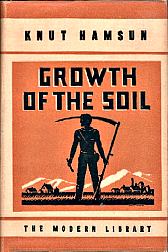
A slew of literary works could be fairly be classified work ethic literature. A celebration of work and, necessarily, an intention to inspire the reader to labor, appear to be cardinal features of such literature.
Working, laboring, receives, surprisingly and not surprisingly, receives more than its fair share of attention in literature. Surprisingly because literature is often taken up with the extraordinary. Few of us have any real desire to read about the ordinary. We’re already conversant, likely too conversant, with the ordinary world and we hardly need to read about it. And for most of us, the ordinary almost certainly involves work. We, the human race, work a lot.
Not surprisingly because we appear to have an imminently understandable desire to be feted and inspired and work ethic literature does both those jobs. A celebration of work in literature extends, or is often extended by the reader, to work in general. Inasmuch as readers are often workers, a celebration of work celebrates what they do. Thus,work ethic literature tends to be a celebration of the readers themselves.
That said, work ethic literature can cut. Distinctions between work that is valuable, worthwhile, ennobling, and work that is degrading, dehumanizing, work that effectively neuters the worker, are hardly unknown to work ethic literature. Work, in many case, isn’t enough. It’s got to be the right kind of work. Novels that preach that real men till the soil or make things that you can drop on your foot are, for example, not hard to find.
That message, however, almost never gets through in part, I suspect, because we seem to be rather good at deriving the messages we want from artistic works.
In his memoir Jarhead, Anthony Swafford reveals that as far as soldiers are concerned every war film is a pro-war film. Make the most brutal anti-war film you can, swath war in as much brutality as you can, and, as far as soldiers are concerned, it’s pro-war because they tend to identify with the characters who come through it all whole and strong and pity, but not identify with, the dead and wounded.
That also seems to happen with work ethic literature. I don’t doubt that any one of the lawyers I know would regard the most vicious literary assault on those who don suit and tie and apotheosis of the real worker, the guy or gal who works with his hands, wears a baseball cap, and would die before he would betray his union brothers, as a celebration of what they, the lawyers, do everyday.
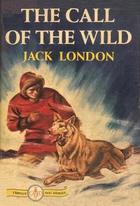
That just happens. Antigone tends to become, from what I’ve seen, a kind of free speech heroine, in the eyes of students, as opposed to someone who worships death and constitutes a real threat to the civil order. Spartacus seems to become some kind of early advocate of democracy, like a founding father born far, far too early, not a brutal, trained killer. Jack London celebrates rugged individuals slugging it out, laboring mightily, in the wilderness. Again, give it to one of the lawyers I know and it will, in his or her eyes, probably become a celebration of everything he or she does at the office.
In short, most will probably regard a celebration of work as a celebration of their work and glide merrily over and altogether miss even the most obvious assaults on the work kind of work they do.
Inasmuch as celebrations tend to be inspiring, work ethic literature tends to be inspiring. The next time you just don’t feel like buckling down and getting the job done, read a chapter of two of Growth of the Soil by Knut Hamsum or Legionary: The Roman Soldier’s Unofficial Manual and all should become clear.
Ayn Rand, precisely because her works are appallingly bad, makes a rather good case for work ethic literature. Rand’s works are awful. The characters are ridiculous. The dialogue is laughably clunky. The ideas, such as they are, are adolescent. The philosophy, such as it is, is a deplorable materialism as dull and uninspiring as anything the communists Rand so justifiably loathed produced. For all that,her works will make you feel like working. It’s difficult to set down one of Rand’s books without the feeling that the best, most heroic thing that one could do at this precise moment is seize hold of some part of the world and proceed to labor like mad. And that is a feeling many of us seem to enjoy.
Fortunately, there are any number of work ethic authors possessed of numerous virtues and lacking Rand’s shortcomings. Melville, London, Hamsun, Faulkner, Steinbeck, Tolstoy, and on and on.
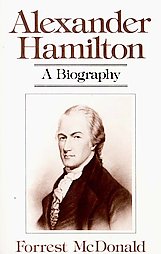
Biographical literature is of course a rather rich vein of work ethic literature. Biographies of those who accomplished a great deal are often biographies of persons who accomplished a great deal by keeping nose to grindstone. Forrest McDonald’s biography of Alexander Hamilton is a case in point.
I imagine I should end by admonishing you to crack open some representative of work ethic literature so you’ll be willing to buckle down and focus. Very well. Consider yourself duly admonished.

Filed under: Uncategorized |
 All Things in Moderation
"Inasmuch as celebrations tend to be inspiring, work ethic literature tends to be inspiring. The next time you just don't feel like buckling down and getting the job done, read a chapter of two of Growth of the Soil by Knut Hamsum or Legionary: The Roman Soldier's Unofficial Manual and all should become clear."I'm going to give that a try. I often don't feel like buckling down, though I know that time is precious and I probably should. "For all that,her works will make you feel like working."Yes—as a railroad tycoon! Or a steel magnate.
LikeLike
As I am reading this post at work, I feel like saying something humorous or self-deprecating about my current work ethic. But I really appreciate the seriousness of post, so I'll just say:Thank you.
LikeLike
Not all that serious actually. And definitely not a post that would inspire work.Curiously, television and theater, as far as I can see, don't seem to be inclined to work ethic pieces. Films do, but not television and theater.
LikeLike
As I've never really thought about the relationship between literature and work ethic, I enjoyed you making the connection. And here I always believed I learned my work ethic from my Dad and not Tolstoy. Interesting. And while my kids were young I was always telling them to keep their heads down and work, lol.What I find fascinating about work is that some people are defined by their work and others merely work to pay the bills and their real life begins when they leave the workplace. It doesn't mean they work less hard just that they value different aspects of their lives. I think sometimes it's by choice but other times, like now perhaps, the choice is out of our hands to some extent.
LikeLike
In television series, people work, but the vast majority of the shoes don't seem concerned with work, but rather after-work and social relationships.
LikeLike
"merely work to pay the bills and their real life begins when they leave the workplace"I've had lots of conversations on that point. I like my work, but even in my dream job, i would not want to be defined by it.
LikeLike
I read Richard Brookhiser's 2000 bio of Hamilton and, yes, that man had a work ethic.
LikeLike
"And here I always believed I learned my work ethic from my Dad and not Tolstoy. Interesting."I really think Dad, not Tolstoy, should get the credit.That said, if you don't root for Levin over Vronsky after Levin does the mowing with the peasants, then you're just an awful, awful person.
LikeLike