On the Glories of Work Ethic Literature


A slew of literary works could be fairly be classified work ethic literature. A celebration of work and, necessarily, an intention to inspire the reader to labor, appear to be cardinal features of such literature.

Working, laboring, receives, surprisingly and not surprisingly, receives more than its fair share of attention in literature. Surprisingly because literature is often taken up with the extraordinary. Few of us have any real desire to read about the ordinary. We’re already conversant, likely too conversant, with the ordinary world and we hardly need to read about it. And for most of us, the ordinary almost certainly involves work. We, the human race, work a lot.

Not surprisingly because we appear to have an imminently understandable desire to be feted and inspired and work ethic literature does both those jobs. A celebration of work in literature extends, or is often extended by the reader, to work in general. Inasmuch as readers are often workers, a celebration of work celebrates what they do. Thus,work ethic literature tends to be a celebration of the readers themselves.

That said, work ethic literature can cut. Distinctions between work that is valuable, worthwhile, ennobling, and work that is degrading, dehumanizing, work that effectively neuters the worker, are hardly unknown to work ethic literature. Work, in many case, isn’t enough. It’s got to be the right kind of work. Novels that preach that real men till the soil or make things that you can drop on your foot are, for example, not hard to find.

That message, however, almost never gets through in part, I suspect, because we seem to be rather good at deriving the messages we want from artistic works.

In his memoir Jarhead, Anthony Swafford reveals that as far as soldiers are concerned every war film is a pro-war film. Make the most brutal anti-war film you can, swath war in as much brutality as you can, and, as far as soldiers are concerned, it’s pro-war because they tend to identify with the characters who come through it all whole and strong and pity, but not identify with, the dead and wounded.

That also seems to happen with work ethic literature. I don’t doubt that any one of the lawyers I know would regard the most vicious literary assault on those who don suit and tie and apotheosis of the real worker, the guy or gal who works with his hands, wears a baseball cap, and would die before he would betray his union brothers, as a celebration of what they, the lawyers, do everyday.

That just happens. Antigone tends to become, from what I’ve seen, a kind of free speech heroine, in the eyes of students, as opposed to someone who worships death and constitutes a real threat to the civil order. Spartacus seems to become some kind of early advocate of democracy, like a founding father born far, far too early, not a brutal, trained killer. Jack London celebrates rugged individuals slugging it out, laboring mightily, in the wilderness. Again, give it to one of the lawyers I know and it will, in his or her eyes, probably become a celebration of everything he or she does at the office.

In short, most will probably regard a celebration of work as a celebration of their work and glide merrily over and altogether miss even the most obvious assaults on the work kind of work they do.

Inasmuch as celebrations tend to be inspiring, work ethic literature tends to be inspiring. The next time you just don’t feel like buckling down and getting the job done, read a chapter of two of Growth of the Soil by Knut Hamsum or Legionary: The Roman Soldier’s Unofficial Manual and all should become clear.

Ayn Rand, precisely because her works are appallingly bad, makes a rather good case for work ethic literature. Rand’s works are awful. The characters are ridiculous. The dialogue is laughably clunky. The ideas, such as they are, are adolescent. The philosophy, such as it is, is a deplorable materialism as dull and uninspiring as anything the communists Rand so justifiably loathed produced. For all that,her works will make you feel like working. It’s difficult to set down one of Rand’s books without the feeling that the best, most heroic thing that one could do at this precise moment is seize hold of some part of the world and proceed to labor like mad. And that is a feeling many of us seem to enjoy.

Fortunately, there are any number of work ethic authors possessed of numerous virtues and lacking Rand’s shortcomings. Melville, London, Hamsun, Faulkner, Steinbeck, Tolstoy, and on and on.

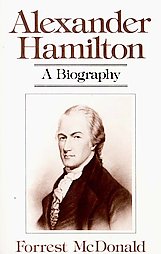
Biographical literature is of course a rather rich vein of work ethic literature. Biographies of those who accomplished a great deal are often biographies of persons who accomplished a great deal by keeping nose to grindstone. Forrest McDonald’s biography of Alexander Hamilton is a case in point.

I imagine I should end by admonishing you to crack open some representative of work ethic literature so you’ll be willing to buckle down and focus. Very well. Consider yourself duly admonished.

A refreshing counter to the standard anti-Wall Street narrative

I’ve been banging this drum for a while, but today Peter Wallison has an excellent op-ed in the WSJ about how the housing market collapse caused the financial panic in 2008, and the sources of that housing collapse.

Read the whole thing, but key take-aways are:

1) Starting in 1992, the government required Fannie Mae and Freddie Mac to direct mortgage financing towards people below the median income level. The original quota was set at 30%, but that grew to 55% by 2007, necessitating a drop in lending standards.

2) By 2008, over 70% of the 27 million existing sub-prime mortgages were held by Fannie or Freddie.

3) While the housing bubble created by this policy attracted private investors towards the higher yields and low default rates to be achieved from sub-prime borrowers in this environment, by 2008 the private MBS market acconted for less than one third of total sub-prime borrowing.

4) The popping of the housing bubble in 2007 created the conditions that led to the financial panic of 2008, and the subsequent downturn in the economy.

Again, read the whole thing, but Wallison concludes:

The narrative that came out of these events—largely propagated by government officials and accepted by a credulous media—was that the private sector’s greed and risk-taking caused the financial crisis and the government’s policies were not responsible. This narrative stimulated the punitive Dodd-Frank Act—fittingly named after Congress’s two key supporters of the government’s destructive housing policies. It also gave us the occupiers of Wall Street.

Is Social Security promising too much?

The question of whether SS is sound on an actuarial basis came up on an earlier thread, and I decided to do some analysis to see whether a person of average income can expect to get more out of Social Security than he puts in.

My hypothetical person, Harry, was born in 1945, began work in 1967 at the age of 22 and retired in 2010 at the age of 65. In every year of Harry’s career he earned the average income for an American in that year, as reported by the US Census (an Excel file). The data was separated out by sex, so I took the weighted average of the 2 for each year. I then used the Social Security benefits calculator to input each year’s income and establish what Harry’s monthly benefit would be based on his annual earnings. I used the historical payroll tax to determine how much Harry would have contributed to SS in each year of his career. Note that Harry’s contribution was half of the posted rate, as his employer paid the other half. Finally, I used historical US Treasury yield data to determine an average rate of interest earned on his contributions.

This is what I found.

In 1967, Harry earned $4,509 of income, which grew to $38,336 in 2010, the year he finally retired. Throughout his career, he averaged $19,769 dollars in annual income. He paid a total of $51,779 in payroll taxes over his 44 working years. The average 1 year and 10 year Treasury yield between 1967 and 2010 was 6.35%. Using this average yield compounded annually, Harry’s contributions will have earned a total of $108,779 by 2010, making his total contributions to Social Security $160,558.

Given Harry’s annual income, his calculated monthly SS benefit will be $1,501, for an annual total of $18,012. This means that he will have recouped his contributions within 8.9 years of his retirement, or by the time he is 74. If we assume that his remaining contributions continue to accrue interest until they actually get paid, and we assume a currently very generous interest rate of 3%, his contributions will last for 10 years, or until he is 75.

Now, according to these CDC tables, when Harry was born in 1945, his life expectancy was roughly 68 years. And by the time he started working at the age of 22 in 1967, his life expectancy had climbed to about 73 years, almost enough for him to get back what we now know his full contribution to Social Security would end up being. But having made it to 65 in 2010, he could expect to live over 18 more years. Meaning that, at $18,012 per year in SS benefits, Harry can expect to receive $324,216 in benefits…more than twice his contributions and earned interest over the course of his working life.

Recall here that Harry is just average. Average income, average contributions, average life expectancy at retirement. Seems to me that the government has promised the average person far more in SS benefits than they have been expected to contribute to the system. Can the US really be expected to honor such crazy promises in perpetuity?

All posts deserve a headline, don’t you think?

What is going on here? I have tried vainly to comment numerous times this evening. PL is broken . . . is this next? Please say no!

Bits & Pieces (Tuesday Night Classic Country)

I came across Texas Lightning around 2003. I wish they would produce more, or that I could find it, but it’s a little tricky. They’re a German country band with an Australian lead singer (whose voice is just gorgeous) who sings the great majority of their stuff in English.

I tried to embed this track, but they are apparently restricted from being embedded. So, just go listen on YouTube to Texas Lightning’s “No No Never”.They also did a great cover of Abba’s Dancing Queen, but just ignore the video, if you follow the link. It doesn’t have anything to do with Texas Lightning, it’s just the only video I could find that had a decent audio track. They did a beautiful cover of Blue Bayou, but I can’t find it anywhere. Dang it.

Stickin’ with the countrified music for a minute, I’d never seen the video for Whiskey Lullabye. I do like the song, but the extra movie stuff makes it kinda long, and tiresome. Still love me some Allison Krauss, however. And, yes, that’s Ricky Schroeder.
Why do I love Allison Krauss? That’s easy enough:

Wanted to include some Kris Kristofferson, but couldn’t find a good copy of “Duvalier’s Dream”. But I’ve loved that song since 1975, when I was six years old. That might explain something.

Okay, next: not country music.

Ever heard “Blindness” by Metric? Another song I love. Probably may favorite Metric song. Although “Raw Sugar” has a lot to recommend it, too.

In honor of National Coming Out Day, I present Air’s “Venus”.

In honor of Bread’s soft-rockin’ soundtrack to Goodbye Girl, here’s a completely unrelated song also named “Goodbye Girl” by Pluto.

In honor of awesome covers, I present Axel Wolph’s cover of Robert Plant’s “Johnny and Mary”:

If that’s too rockin’ soulful for you, you could also try Placebo’s cover of “Johnny and Mary”. A very New Wavey sound.

Finally, Leslie Anne Levine by the Decemberists. And the Decemberist’s metaphor (I suspect) for our military adventurism in Afghanistan and Iraq. That’s my eclectic collection for the night.

— KW

HERE WE GO AGAIN…

Too Big to Fail NOT Fixed 

What if European banks crumble?  Do we have the strength to deal with the repercussions?  Probably not, says Simon Johnson.

First, the resolution authority under Dodd-Frank is purely domestic — there is no cross-border dimension.


Second, it has never been clear that any government agency would be willing to use such resolution powers preemptively — before losses grow so large that they threaten to rock the macroeconomy.


Third, who would lose money in any potential liquidation? The fundamental premise of the resolution authority is that some creditors could face losses, but they would be imposed in an orderly and predictable manner to avoid undermining confidence and destabilizing the financial system. Any such thinking today seems far-fetched.


Good bedtime read and fodder for our resident banker!

The 4th and Cell Phones

California Gov. Jerry Brown has vetoed legislation that would have required police to obtain a warrant before searching a mobile phone belonging to someone they have placed under arrest. Wired is reporting that essentially anything on your phone — and by extension “the cloud” — is subject to search if you are arrested in California. See more at Wired

I’m not that tech savvy, but you better believe I keep my phone locked. And if you have nothing to hide? Three felonies a day: vague and broad federal laws have made honest citizens into federal felons.

This gives me the creeps. But I do know that this just reinforces my belief that I’ll never talk to the police without a lawyer present. Details on that here.

Update: For your holiday shopping

In a Reflective Mood

I came across an interesting piece this morning and while I am already in a reflective mood I thought I might just share it. Today would have been my nieces 34th. birthday. Some of you know a little about her story but that’s not really what I’m interested in sharing today. There has been a lot of criticism from the Plumline about what we are attempting to do here at ATiM and so I thought I’d share both my thoughts and a quote from a piece I read this morning.

I love a good ideological fight and I appreciate both passion and resolve. What I don’t find particularly beneficial to the fight is pitting citizen against citizen. We have a long tradition here of right vs. left and consequently we end up with a lot of middle of the road legislation that doesn’t always solve our problems. I think the health care debate was one such battle. In the midst of demeaning and knocking the feet out from under our enemies, each other, we ended up with a bill that could only have been drafted by someone in the middle. I blame Obama and a dysfunctional Congress for that and I’ll tell you why.

He and others were much more interested in defending and preserving a system that is putting access to health care out of reach of many Americans. Instead of defending and championing the people he was fighting for Obama was appeasing those who were fighting against him, while the rest of us were laying claim to self-righteousness. In the midst of this epic battle great animosity was created, sides were taken, superlatives embraced and those of us who hoped for a healthier tomorrow for all citizens lost our leader and our way. We consequently ended up with a bill that only inches our way forward when we needed a bold design for the future.

I believe we can embrace our enemy as a fellow traveler without impugning their motives or humanity. That’s what drives me. I will fight and advocate for those who have and are suffering but choose not to make such an enemy of those I disagree with that I lose sight of their genuine belief that their solutions are, or may be, better than mine. I hold out hope that citizens can come together and form a more perfect union. I also believe the greed of a few has changed the future of many and to me that is the epic battle I want to fight and hope that others will realize that championing the middle class, working class, working poor and uneducated is what will bring prosperity back to this country. We may disagree on how to do this, therein lies the battle line, but as long as we all want a prosperous nation again I don’t see a reason to disparage the motive of other citizens. I do think however the motives of our leaders can be called into question and is another venue for a great ideological battle and legitimate questions as to who actually benefits from legislation can and should be raised.

My niece died 3 years, 7 months and 2 days ago at the age of 30. She was sick, but her insurance coverage was rescinded in the middle of a fight for her life, and I believe most people who are mothers, fathers, aunts, uncles, brothers and sisters would agree that we need to find a way beyond a health care system that carries such a risk. Maybe I’m wrong but I believe most other Americans wouldn’t intentionally wish this on a family. The question is how do we move forward in a way that does the most good with the least amount of threat to both individual freedom and prosperity.

Here’s that quote:

Before you disappear, before you can no longer hear
my words from beyond the beyond and inside the ground,
before your run ends in downfall and rout and retreat,
let this old heart beating with the Earth and the stars
and the need for not one child, not one, to die for lack of love,
let me tell you one last secret found in the abyss of despair.
It is true that he who is mighty is he who makes of an enemy
a friend, mighty and wise is he who offers the foe
a way out, a bed to sleep in, a meal to share.
But not without a fight. Not without a fight.


LMS, I tried to post the following as a comment, but I was thwarted.  So forgive the appendage to your thought provoking post that follows.  Mark.

The ACA would have put your niece in a better position to maintain coverage.

Let me defend moderation, here.

1]  Every nation that is “like us” that has developed UHC has done it by evolving from what went before.

Canada has socialized insurance.  UK has socialized medicine.  Switzerland has private insurance, regulated; and regulated hospitals.  Switzerland evolved in the 90s from a system just like ours in most ways.  Germany, France, and Japan have mixed systems with private regulated insurance, private docs, and widespread clinic care. All these nations have UHC which costs half as much as ours, or less, and which has gross statistical results as good as ours, or better.

2]  We have a shortage of docs and of nurse practitioners, and pharmacists.  In our “like” countries, nurse practitioners and pharmacists do pick up more of the first response than we have them do here.

These shortages must be addressed if we are to achieve widespread clinic care [and we know that even here, clinic care is far cheaper than the “national average” and a relative drop in the bucket when it can substitute for ER care].

3]  Certain end of life choices must be borne by the individual rather than by the group, because the cost/benefit is individual, not societal.

I am 68 and my five year colonoscopy, by my count, is the first time that I have cost the system as much as one year of my continuing pay into it.  In other words, I am still a net contributor to the group plan and hope to be until I die.  My friend Jimmy, who turned 66 on Thursday, has been treated for cancer the entire year he has been on medicare.  His 20% [he had no gap or advantage policy] will likely not be paid by him, or his estate, most of which is exempt from creditors [homestead, truck, tools of his profession].  There came a point when further chemo was considered irrelevant, 9 weeks ago.  He has chosen hospice since.  The trickiest propositions are the end of life balloon of cost and the nursing care balloon.  Rosanne and I have nursing care insurance.  I do not know how Switzerland and Germany do this, but I am interested to read about it.

THE ONLY REALLY TOUGH PROBLEM, IMO.

4]  I think it is natural to evolve to the Swiss-and-or-German model but not toward the UK or even toward Canada.  In any case, ACA was a step in the direction of Swiss, not the direction of UK.  It will address near universality and pure insurance cost, but not basic medical cost.  For that we have to go back primarily to

INCREASING SUPPLY AND REDUCING DEMAND.

5]  While we are evolving and training the suppliers, and promoting healthier lifestyles, we can address the efficiency issues as well.

a]  automated computerized record keeping;

b]  doctor-lawyer evaluation panels for malpractice claims, aimed at reducing actual malpractice, but also at filtering out the weak claims at an early stage;

c]  first dollar payment by the patient, and co-pays, to reduce overindulgence as described by NoVaH;

d]  ending price discrimination by the pharmaceutical manufacturers by opening the borders to pharmacy inports – I note that we are actually subsidizing Euro drug makers as much as we are American ones, now;

e]  attempting to have an adult discussion about what a “basic” care package entails;

and

f]  getting the non exigent poverty cases OUT of the ERs.  

6]  As a lawyer for small business folks and employers I actually had to read the bill.  It is intentionally not onerous on small business; it will not be a job killer from that perspective.  But it cannot contain basic medical costs because of the shortage of basic medical personnel, which it only addresses in “pilot” programs.

If instead of evolving toward Switzerland we had chosen the UK model, the shortage would have been immediately and shockingly felt as docs scrambled to leave the program, unless it had been structured at such a high cost as to simply absorb most of the tax resources of the federal government.

Max Baucus had in mind the evolution of which I speak, according to some interviews with him that I saw during the period.  I think BHO did, too.  In short, I argue “Fuggedaboud” single payer.
———————————–
The Libertarian view questions the government’s role in HC. If ECA were repealed and Medicaid were repealed; if the VA was shut down and Medicare repealed, at least prospectively; does anyone posit that the supply of medical services would expand to meet the need?

No.  No one suggests that outcome.  Ron Paul hopes for it, but he does not predict it.  Would the body politic accept that as status quo?  What do you think?  LMS’s niece, 100 times over?


Into The Mystery

Case closed
I was certain in my youth
God knows
Had my scientfiic proof
And in my mind
I thought I saw the truth
I never looked beyond my lenses
Never saw that it was you
I mentioned that I am a father of children with autism in my introductory post. I thought I might write a little about that. Both of my sons have a diagnosis of Pervasive Developmental Disorder – Not Otherwise Specified. PDD NOS is a bit of a mouthful, so I like the new term—atypical autism. AA is a lot easier to say, even if it does give rise to some amusing images.  Having twins meant that one saved the other who then returned the favor. We’ve used Primo and Secondo, characters from the movie Big Night, as their pseudonyms, so I’ll keep to that.
I’m a let them get dirty, don’t sweat it if your child doesn’t hit the milestone from What to Expect kinduva guy. Kids seemed to thrive pre-Dr. Spock, so let them grow at their own pace. Still, at some point you realize on a deep level that something’s not quite right. We brought up our concerns at their 2 year check-up and got some reassurance. To my everlasting shame, I held back on evaluation. Most of the time, it’s not a big deal. That isn’t the case for my sons.
It was in their second year of life when our concerns grew serious. I’m tempted to say it’s like a stomach ache that doesn’t go away. That happened to the husband of a friend of mine. His stomach troubles turned out to be pancreatic cancer. He didn’t make it. Our children are seen at an excellent pediatric practice. There’s a developmental specialist every other Friday. Once those concerns wouldn’t go away, we made an appointment with her. Incidentally, there’s no coverage for that initial screening. $100 is no big deal for us, but it’s gotta be hard for parents who are just getting by. We quickly got the word that he’s delayed and possibly autistic. I can’t say as it was a shock at that moment.
Out of the Question
Can’t catch the wind inside my fist
No, it’s Out of the Question.
Try to trap you and I know I missed
Out of the Question
You’re closer than the air I breathe
but Out of the Question
and Into the Mystery
I do not know if getting a diagnosis four or five months earlier would have made a difference. Here’s two things that a parent of a developmentally delayed child learns quickly. Every second counts. It is important to get therapy yesterday. Hell, do it in six months ago! Here’s the other thing that you’ll learn. You’ll be waiting months for an appointment. Following that initial appointment, we had a few words of advice, whatever books we could find. We were on our own for a few months, but I think they made a difference. The big point was to engage Secondo. Get him out of his world and into ours.
I wound up inventing a game they still love, though it’s harder on my back now. Hug, beso (kiss), blast-off. The idea being that Primo or Secondo runs from the kitchen to me sitting on the sofa. I give him a big hug, then a kiss, then toss him onto the sofa. It’s a lot easier with a 2 year old than a kindergartener! That summer was pretty much a matter of teaching what should come naturally. It felt great to finally be doing something.
We then got in line. We were told to contact Dr. Jean Thomas, who was head of psychiatry at Childrens National Hosptial. Trust me folks, if you’re told by a professional that this is the specialist you should see, you get in line. It doesn’t hurt that Dr. Thomas works at a premier hospital for pediatric care. At one point, I’d actually given up on getting through with them. The gates may not be barred, my friends, but they’re sticky. Fortunately, Dr. Thomas left a message with us and we got through to Intake.  One also leans the magic words to get past the gatekeepers.
My heart
Brings me to my knees
There’s God
Forest before the trees
Move me
Like the wind will stir the leaves
I give way to the Mystery
Like the Branches in the breeze
The initial evaluation was an interesting experience. You have two terrified parents and a clueless toddler. The team consisted of Dr. Thomas, a colleague, and what I presume were a couple of interns. One problem was that we had to sit in the waiting room for a better part of an hour. Secondo wasn’t at his best by then, which may not have been a bad thing. At the end of it all, we got the news that he had autism and to make a follow-up appointment. My wife broke down upon getting the news. Not that she was crushed by the news, but it was almost a relief to finally have it verified. The hospital isn’t that far from where she used to work frequently, so I dropped her and Secondo off on my way back to work. I’m not sure how I felt that day. I knew it would be a long journey, just didn’t know the path.
We had a follow-up appointment a couple of weeks later. Dr. Thomas introduced us to Dr. Bhavin Dave (he’s Indian). Dr. Dave had interned at Kennedy Krieger (another fine institution in this area) and was about to take up the position of head of Pediatric Psychiatry. Here’s a tough choice. You’re directed to this one person. Mind you, we knew relatively little about the developmental specialist. Still, when you’re clueless and told this is THE PERSON, it’s a tough decision. t was a difficult choice at the time, but we figured it’d be good to get in on the ground floor. We were one of his first patients. He’s become a valued family friend. Early on, I think it was more about keeping my wife and I in the game than counseling Secondo.
And I’m Out of the Question
Can’t catch the wind inside my fist
No, it’s Out of the Question.
Try to trap you and I know I missed
Out of the Question.
You’re closer than the air I breathe
but Out of the Question.
and Into the Mystery
In parallel with this track, I learned a lot about the Americans with Disabilities Act. I’m not necessarily a small government guy (big shock there), but I have always been deeply skeptical of a federal role in education. Some of this comes from having a mother in the primary system—she’s a semi retired speech therapist. It seemed like massive amounts of paperwork for modest amounts of funding. Education has always seemed like a local responsibility to me.
Well, my sons would not be thriving in kindergarten were it not for federal interference in education. To be exact, something called Child Find. It’s a system designed to detect developmentally delayed children and get them services so that they can thrive. My wife and I are pretty well prepared for educating kids. I have a BA in Physics and Mathematics and a PhD in Condensed Matter Physics . My wife actually trained for elementary education before finding her calling as an interpreter. [Bachelor’s at Redmond in Education and a Masters in Translation and Interpretation from the Monterey Institute for International Studies). I’m not throwing the degrees out there to brag. Rather to note that we’re two highly educated parents who are well prepared for the task of getting our children ready. And we didn’t have a fucking clue what we were getting into.
I think we could have cobbled together something, but it wouldn’t have been close to what the “system” did for them. I’m overwhelmed by the care given to my sons. And yeah, it’s because of that interfering federal government. We probably could have worked out something. We both make good money and probably afford specialized schooling. Providing we had a clue what to get. My best friend at work has a son on the spectrum. They didn’t realize his needs until he was hitting kindergarten and dealt with a serious quack. Then I think about parents of delayed kids who couldn’t afford expensive services and specialized education. There was a story in the Post a few years about a woman whose son was “cured” of autism. They went through enormous stress and bankruptcy. How the hell could a family of limited means thread this gauntlet?
OK. End of political sermon. This is one case where I came in general agreement with small government conservatives. Then I saw what effective government could do. It opened my eyes.
Truth is there for finding
But the logic that’s involved.
It’s a mystery unwinding
Not a problem to be solved
I have twin sons. To my thinking, they saved each other. We picked up on Secondo’s delays a lot faster because of direct comparison with Primo. At the point when Primo’s language took off, Secondo seemed to plateau. We pushed for an evaluation earlier than I think we would have had it not been for the comparison. Primo helped to save Secondo. Secondo later returned the favor.
Coming into their second year of life, we had a family friend caring for them in our home. We got Secondo into a pre-K program for developmentally delayed children. It seemed unfair for Primo to stay at home on his own, so we enrolled him in the neighborhood preschool. I think it was two or three days a week, several days a week.
Now, Primo is brilliant. I know it’s natural for a dad to brag, but I don’t know of many kindergarteners that understand exponents. [I’m not kidding. He wrote 6 squared and I assumed that he’d seen it somewhere. He informed me that it meant 6 times 6. OMG.] He was an early reader and has been obsessed with symbols from an early age. We assumed that we had a very bright boy, clueless to the fact that wasn’t all that was going on.
In the first week at the neighborhood preschool, the teacher had concerns. Primo was the old child in his class and was totally freaked out. He’d obsess on the calendar. He wouldn’t join in circle time. He eventually got to the point where he would be willing to sit on a little chair outside the circle. By now we were “pros” at the system and so called Child Find. The plan was that he would continue at the neighborhood preschool and go to the special needs program on other days of the week.
I got a call in August two years ago. They asked why we were going with the morning program. It was mainly to try and match the schedules of the special needs program and the regular preschool I was told that Secondo could continue with his previous teacher (yay!) and asked if we’d be interested in enrolling Primo in a new class that would be half developmentally delayed children and half “peer models”. Yay!!!!!
Out of the Question
The wind inside my fist
No, it’s out of the Question.
Try to trap you and I know I missed
Out of the Question.
You’re closer than the air I breathe
But out of the Question.
And Into the Mystery
Since then, Primo spent 2 years in Bridget Mancke’s class and Secondo joined him the following year. It is overwhelming to me how far they have come. It is not easy raising kids with autism. I want to post about that at a later date. I figured that the story of getting into the system was enough for one.
My kids are in kindergarten now and I think it’s going OK. We’ve had some relapses related to potty training, but I think we’ve got it under control. Other matters are really tough right now. Still, they’re in regular classes and thriving. I’ll take it for now and tell you about day to day at a later date.
Oh yeah, you might be wondering why I keep lapsing into verse. The lyrics are from a song by David Wilcox, Into the Mystery. I was introduced to David Wilcox by my wife almost ten years ago. We’ve seen him perform three or four times. I was searching for the right metaphor and then I realized that David had it right ten years ago. I’m almost 6 years Into the Mystery. It’s a rewarding journey, but oh can it be tough.
Update: thanks to whoever (Kevin?) fixed the link. I also meant to add a picture. This was taken this past summer during their annual Costa Rica vacation. You talkin’ to me?

BB

Bits & Pieces (Sunday Night Open Mic)

Believe it or not, most of the time I’m not jealous of New Yorkers. I don’t much give a sh*t that they think they live in the center of the universe, and the rest of us are satellites which merely revolve, enviously, around the center of the universe that is NYC.

However, there’s a place of Brooklyn that serves fried chicken and waffles in a magical way.

That’s right. That’s a red velvet cake waffle. OMG. 
…

The best and the rest from The Daily:

Solyndra has it’s first fall guy. There ya go, problem solved.

Top Obama advisers worried about Solyndra.

A great little graphic of The Ten Year Afghanistan War.

A poll of vets regarding military service and the Afghanistan War.

Pakistan is considering charge the doctor who may have helped us nab Bin Ladin with treason.

The world’s oldest drivable car was built in 1884 and is steam driven. It still works, and it’s going up for auction.

Why (or should I say how) national Democrats always have and always will disappoint me.

Steve Jobs, the $1 a year billionaire.

Peter Ha recalls Steve Jobs.

The many, many tributes to Steve Jobs after his passing.

OWS is, in fact, the Herbal Tea Party.

Also . . .

Lee Stranahan makes the observation that I was suspecting, re: OWS. Protesting is mega-fun!

— KW