Tort Reform Shmort Reform

One of the problems in discussing tort reform is that there seems to be a lack of agreement on what we are trying to accomplish. Evaluating the success, or lack thereof, of tort reform varies depending on whether you think the goal is to lower malpractice premiums for physicians (not very good at it), stop frivolous lawsuits (OK at it), lower the cost of health care (not very good at it), prevent outrageous verdicts (good at it but other reform could do this too), line the pockets of insurance companies (pretty good at it), promote justice (bad at it) or all of the above. The evaluation process is further complicated by the many variables that cause health care costs and insurance rates to increase and the near impossibility of isolating the role tort reform and law suits play in such trends. Overall, I think tort reform is red herring…well, unless you’re a medical practice attorney (plaintiff or defendant) then it’s a big deal.

For clarification, I am simply going to discuss tort reform as it applies to medical malpractice claims. There are two reasons for that, one is because I can speak knowledgeably about the topic and the second is that it is the sort of tort reform that is discussed when addressing health care reform. Maybe we can goad Quarterback into posting on class action reform at some point in the future (I think that would be worthwhile). I am also going to focus mostly on Michigan because I have personal experience with tort reform in Michigan and because they actually have adopted pretty comprehensive tort reform measures that have been in place since 1986.

Frivolous Lawsuits

Most attorneys can tell a story or two about dealing with a frivolous case and preventing or deterring them is something that should be pursued. Even if the case is quickly dismissed it will cost a party a couple grand in attorney fees (wait, why am I complaining about this?). In Michigan, one of the ways frivolous medical malpractice suits are deterred is through the requirement that plaintiffs file an Affidavit of Merit (“AOM”) signed by a qualified physician with their complaint. The AOM must contain specific things, but basically it’s a physician saying the claim is not frivolous. I’m not sure this is quite the deterrent tort reform proponents think it is. I knew of at least two law firms that had physicians who actually had offices at law firms. That isn’t to say it doesn’t work at all. Statistics show the number of medical malpractice claims filed have declined over the last 10-20 years. I just think the drop in malpractice suits is due to damage caps, which I’ll get into later, rather than fewer frivolous claims.

Another measure aimed at deterring frivolous claims is a loser pays system. I’m dubious of such a system since I think it promotes settlement more than anything and therefore does not particularly promote justice, a criticism that can be aimed at most tort reform measures. Michigan has a tame version of the loser pays system enforced through a requirement that all cases go to “Case Evaluation”, a form of mediation. Case Evaluation involves each party writing a summary of their case and making a presentation to a 3 member panel of attorneys. The panel values the case and each party can accept or reject the panel’s recommendation. Basically, if you reject the recommendation and it ends up a better deal than an eventual jury verdict, you are on the hook for the other side’s legal fees (possibly in addition to whatever the verdict is). Again, I think this mostly promotes settlement which isn’t inherently bad, but isn’t inherently good either.

Damage Caps

While ostensibly aimed at preventing runaway jury verdicts like the infamous $2.7 million verdict (later reduced to $480,000) in the McDonalds coffee case, damage caps are probably best at reducing the number of lawsuits in general. The reason for this is simple; lawyers, unlike more altruistic professional like doctors (I kid), like to make money. In Michigan, punitive damages are not allowed (goodbye $2.7 million) and non-economic (read pain and suffering) damages are limited at two different levels. The first level is currently $411,300 and the second is $734,500. Basically the first level applies unless you have a brain or spinal injury or lose a limb. To show how this deters filing a case, take a 70 year-old retiree who was relatively healthy, goes to the hospital and dies during surgery. Since she wasn’t working, her damages are basically limited to the lower cap amount plus medical bills. So the most an attorney could get is one-third of $411,300 minus expenses. However, most cases aren’t open and shut so the settlement is likely to be much lower. Add the expenses of an expert witness, depositions etc and that cases take 2 years or so to get to trial and it’s easy to see why an attorney would turn down a perfectly legitimate case (this is where a loser pays system may actually increase litigation expenses since an attorney may take on that case if the other side is scared of having to pay attorney fees). Perversely, the 70 year-old’s case is worth a lot more if she ends up alive and brain damaged, paralyzed or missing a limb. It’s pretty easy to see that while this saves money it doesn’t promote justice which is why some states have found caps to be unconstitutional (see Georgia and Illinois).

Health Care Costs

Most recently, tort reform has been talked about in the context of reducing health care costs. The CBO said the money saved would be a drop in the bucket and I tend to think that is true, particularly with respect to decreasing malpractice premiums and the amount paid out in settlements and verdicts. However, that doesn’t really address the cost of defensive medicine which is nearly impossible to measure. To be blunt, I think defensive medicine is largely nonsense. First, the cost of defensive medicine is almost always derived from polls or surveys of physicians who would most benefit from tort reform so color me skeptical. Second, when a doctor submits a bill for a service to Medicare, Medicaid or a private payer they essentially swear the services were medically necessary. So if a test was performed simply to avoid a lawsuit and it was not medically indicated they are committing fraud. Lastly, I think the motivation of being paid for the test is stronger motivation than the less likely scenario of being sued as a result of not performing a particular test.

Are You Done Yet?

This is already too long so a few more thoughts. First, after Texas passed tort reform, doctors rushed to practice there (wait, I thought they were altruistic) which led to more money being spent on health care, not less. Second, there are Constitutional concerns with Congress telling juries all over the country how much cases are worth. Since, tort reform is generally supported by Republicans and opposed by trial lawyer loving Democrats you get a lovely situation where small government conservatives support this big government intrusion and big government liberals (like me) get to point that fact out (yes, I realize this makes me a hypocrite, too). Lastly, there are other measure out there like joint and several liability and the collateral source rule among others, but they involve more legalese and would make this post even longer. I am happy to discuss those in another post or in the comments.

Morning Report

FYI, I do one of these on my other blog. It is easy enough to just copy it over here. Let me know if you find this worthwhile or not. Sold2u.

Vital Statistics: S&P futures -4, Eurostoxx – 1.5%, 10 year bond yield 2.18%, US dollar +21bp, Oil down 1.10 to 84.48, EURIBOR / OIS + 1.7bp.

JP Morgan reported earnings this morning. EPS and revenues were better than estimates, but the stock is down slightly based on earnings quality issues. They expect the Durbin rule to reduce consumer banking net by $600MM. They are very cautious about 2012 investment banking revenue, and headcount continues to fall. Euro exposure is about $15 billion, of which 65% is sovereigns. Tier 1 (Basel III) was 9.9%. Mortgage origination was $37B. Refis will drive business for the near future.

Harrisburg, PA filed for bankruptcy yesterday, mainly due to an ill-advised incinerator project that dwarfs the city’s budget. Harrisburg’s munis have been in the doghouse for a while, and this is not a surprise. Most are insured at any rate. The state will probably end up taking over the city’s finances. While the downturn has caused fiscal issues for many localities, we have not seen the mass bankruptcies / muni bloodbath that Meredith Whitney has been predicting.

Martin Feldstein has an editorial in today’s NYT link: How to Stop the Drop in Home Values discussing yet another plan to halt the decline in house prices by intervening in the market. This one involves reducing principal to 110% of the value of the house, and making the new mortgage full recourse – in other words, the bank can go after the other assets of the homeowner. The government and the banks would split the costs of the principal reduction. Washington seems fixated on this idea that foreclosures are reason why house prices are falling, and if we just stop the foreclosures, prices will stop falling. As I have argued in another post Robert Samuelson: The only thing we have to fear is fear itself this is premised on the idea that house prices are too low at the moment. Which is nonsense. If anything prices are sort of back in their historical relationship with incomes, but since incomes are falling, so should housing.

The magical thinking is on full display here: “

Without a program to stop mortgage defaults, there is no way to know how much further house prices might fall. Although house prices in some areas are already very low, potential buyers continue to wait because they anticipate even lower prices in the future.

Before the housing bubble burst in 2006, the level of house prices had risen nearly 60 percent above the long-term price path. So there is no knowing how far prices may fall below the long-term path before they begin to recover.”

Martin’s underlying assumption is that buyers are stupid. They aren’t. They won’t believe the government has the ability to support the housing market. And they aren’t going to start paying up for “fairly priced” property. For that matter, underwater homeowners need buyers to bid property back into “overvalued” territory. Anyone who has spent any time in the financial markets as a professional understands that markets don’t work that way, especially ones where underwater sellers dominate.

The low lending standards of the bubble years allowed first time homebuyers to purchase property without a downpayment. Essentially, the housing market “borrowed” first time homebuyers form the future. The only buyers left in this market are pros and the very young first time homebuyer. The very young first time homebuyer is lucky to have a job and is saddled with student loan debt. They are years away from amassing the downpayment that is needed in this tight credit environment. That leaves the pros. And they aren’t going to pay up for a fairly priced (at best) asset. Though some are moving into the MBS market, they are more or less front-running the Fed.

"Free Trade" ?

I don’t see how anyone on the right or the left can deny the influence of money in politics. I don’t think it’s a partisan issue. The middle class keeps slipping further and further behind and last time I checked they weren’t all Democrats.

On Wednesday afternoon, the House was steamrolling toward passage of a trio of free-trade agreements without a whisper of objection from the Republican side. Finally, hours into the debate, Rep. Walter Jones (R-N.C.) rose to appeal to his fellow Tea Partyers to heed the people who elected them.

“Here we have roughly 9.1 percent unemployment in this country, due in no small part to the Washington elite jamming these job-destroying trade agreements down our throats,” Jones pleaded on the House floor. “It’s time we started listening to the will of the American people, doing what’s in the best interest of the American people, not in the best interest of the foreign nationals who desperately want to take our jobs.”

It was a passionate speech but useless. Lawmakers, including the overwhelming majority of Tea Party Republicans, voted in support of the three trade deals, which had been at the top of corporate America’s wish list.

For all the talk of populist foment – the Tea Party on the right and the new Occupy Wall Street movement on the left – business interests remain firmly in control. Forced to choose between their voters and their donors, lawmakers don’t hesitate before choosing the latter.

There is little doubt about where the Tea Party faithful stands on free trade. A year ago, a Wall Street Journal-NBC News poll found that 61 percent of Tea Party supporters thought free-trade agreements had hurt the country, compared to 53 percent of Americans overall who held that view. Shortly after that, a Pew Research Center poll found that only 24 percent of Tea Party supporters thought free-trade agreements were good for America.

Bits & Pieces (Hump Day Edition)

Anyone who didn’t follow Tao’s link to Critical Massachusetts blog documenting the protests, apparently, of parental injustices by his children (and dog) must do so now.

Finally, the true story of the founding of our country can be told:

I’d totally go see that movie.

Corporate Zombies are a bigger problem than perhaps some believe. Re: Your Brains:

And, speaking of work ethics (as we were earlier), this is pretty much the story of my life:

— KW


Odd State of the Law, Rx Drug Edition

It is currently the state of the law that if you think you were injured by a brand name Rx you can sue, claiming failure to warn of the consequences absent a label warning, but if you think you were injured by a generic Rx you cannot sue, claiming failure to warn absent a label warning.

In 2009, the Supremes decided Wyeth v. Levine, 6-3.  It held that the approval of the label by the FDA does not immunize the drug company from failure to warn, basically because drug companies can provide more info than FDA approves.

In June, the Supremes decided Pliva v. Mensing, 5-4.  The Hatch-Waxman Amendments allow generics to gain FDA approval if they are equal to brand named drugs.  FDA regs state that because the generic’s approval is based on the listed drug’s approval, its “labeling must be the same”.  The majority said that therefore, unlike brand name drugs, generics can not change their warnings.  Thus “failure to warn” cases against generics are precluded by the generics’ duty to a fixed label, under federal law.

The opinion recognizes the oddity.  It says that this makes no sense to the plaintiff, who would have had a lawsuit if she had been prescribed the named brand. It also says it is up to Congress not to make unusual and bizarre laws.

On its face, it is an odd result dictated by judicial restraint, in both cases.  However, legal critics say the majority overlooked the fact that the generic maker can ask FDA for permission to upgrade the warning label.  Sotomayor seized on this in her dissent calling it a “dilution of the impossibility standard.”  Another criticism is that if Congress intended for brand name drugs to be liable for failure to warn, then Congress would have had to affirmatively state that this rule did not apply to generics in H-W.  A final criticism is that the whole case relies on pre-emption of state tort law by the federal regulation.  Sotomayor addressed that in her dissent, saying that H-W did nothing to address preemption and thus the 2009 case should be seen as controlling on that issue.

Kennedy voted with the majority both times but did not write.

These cases are in QB’s area, not mine, and I look forward to his comments.  I also want to know from NoVaH if there is an effort to get Congress to clarify.  You would think the industry had an interest here, but the interest is obviously divided between the brand names and the generics.

I know Mike and ‘goose probably have some good points to offer.  But all are welcome to fill my insight gaps, here.

Weak Tea

The success Mitt Romney has thus far enjoyed seems, as far as I can see, to raise serious questions about the effectiveness of The Tea Party. Amidst all the attention paid to The Tea Party (understandable given the last national election) it’s difficult not to notice that The Tea Party does not, at the moment at least, seem poised to deliver the Republican nomination to a Tea Party Candidate.
Worse still, The Tea Party hasn’t even given us a credible candidate for the nomination.
One could, I think, be forgiven for not being willing to take The Tea Party all that seriously.

My 2008 Defense of Glass-Steagall

I originally posted this in 2008. I meander a little bit. Re-reading it, it sounds like I’m suggesting a lot of things were the result of the Glass-Steagall repeal that were largely unrelated . . . so this argument is flawed. But, I post it as an anchor point for others to advocate a return to Glass-Steagall or to object to any such foolishness. That being said, here it is:


Each time we repeal the Depression era legislation meant to prevent the sorts of collapses we saw in the late 20s/early 30s financial markets, we end up with a financial crisis. Has it ever occurred to those folks that those rules were there for a reason?

In 1933, the Glass-Steagall Act established the Federal Deposit Insurance Corporation, and one very important thing that it did was prevent large private banks–i.e., investment banks–from receiving deposits–i.e., servicing the little guy, and thus end up putting the little guy’s money at risk in speculative corporate and real-estate investments. The idea being to keep investment banks from becoming flush with the savings of middle- and lower-class folks and playing with that money in the marketplace–in no small part to allow for the creation of the FDIC, and keep the government from having to bail out the big investment banks if they ended up losing all their customers’ deposits in the stock market or in real estate speculation.

Between 1933 and 1999–that’s 66 years–we never saw a banking crisis like the one we face now. The closest would be the S&L collapse, and that was in no small part because of a 1982 law letting S&Ls do with their money the sorts of things Glass-Steagall forbade large investment banking firms to do. In 1999, Glass-Steagall was repealed. 8 years later, the financial industry in America is in a mess.

And fixing it doesn’t require a lot of new regulation, or new oversight. There was some corruption here, but most of the mess was made the old-fashioned, completely legal way. The quick fix is pretty simple: Bring Back Glass-Steagall.

Of course, the important issue right now is not how to fix this, but who to blame: Democrats or Republicans? While in the political class they are both blaming each other, the correct people to blame–as it almost always is in this sort of circumstance–is pretty much everybody.

This is a bi-partisan mess. And, certainly, providing incentives to lend to folks with bad credit–out of a misplaced sense of compassion or feeling that too few loans to minorities with poor credit was a sign of racism–was a bad idea. That’s what conservatives are pointing to, and they have a point, but that’s hardly the whole cause of the problem.

Repealing Glass-Steagal was also a very bad idea (and lobbied for by both Democrats and Republicans, and signed by Clinton), because it allows too much intermixing of financial service entities, putting them all in the same leaky boat. Just as the S&Ls failed because they could legally invest in all sorts of crappy investments in order to book short term profits and attract customers with unrealistically high interest rates, allowing investment banks to buy bundled mortgages put both sectors at risk–if the mortgage industry had a crisis, then mortgage companies and investment banks could fail. If the investment banking industry had a crisis, it could mean real problems for the mortgage industry, and so on.

Now, there are lots of other reasons we’re in the subprime crisis. But turning mortgages into vehicles for investment profit that could be sold to investment banks in order to “realize” as-yet-non-existent profits did more to provide incentives to banks and fly-by-night mortgage firms to make risky loans than any requirement that banks serve communities that were poor credit risks. Although that certainly played a part.

There’s a limit to what regulation can do, but requiring consumer loans to be fixed-interest with 10% down, no exceptions, and no “interest free” or balloon mortgages would be one thing that would probably help in the future. The other thing would be to reinstate Glass-Steagall, and make it illegal to sell bundled mortages to investment banks (and book, and award bonuses, on the supposed future profits of these risky loans). Split the lending and investment banking and insurance industries again. Sandbox them, so the crisis in one are much less likely to spill out into all the others.

While they (the banks and insurance companies) lobbied hard to be able to merge all the financial services under one roof (investment banking, consumer banking, insurance), it doesn’t look like that was a very good idea. Additionally, the laws were changed without even a casual glance back at history. When regulations are in place, and the free market has had no need to “correct” for poor performance in the free market, once those regulations are removed, the free market will naturally start building towards a massive “correction”. Which is what happened. Again!

What casual glance back at history could they have made? How about the Saving’s and Loan Crisis? Tightly regulated, with low caps on the interest rates they could offer customers and unable to legally offer credit cards, take ownership positions in real estate, and so on (mostly depression era limitations imposed on them because of the inherent risks), they were low-profit affairs. Then, as high interest rates drove customers away from the S&Ls and into more profitable investments and accounts, the S&Ls suffered–but, at the time, in such a way that put their businesses at risk of failure, but not in a way that would ever have cost the tax payers billions of dollars.

To help the S&Ls remain solvent in face of sky-rocketing interest rates, the Jimmy Carter administration raised the caps that the S&Ls could offer their customers. Not so bad. Then, in 1982, the Garn-St. Germain Depository Institutions Act that apparently helped propel the S&Ls into insolvency while intending to make them more solvent. It was co-sponsored by a Democrat and a Republican, and enjoyed wide house and senate support at the time. Deregulation of this sort always seems to enjoy broad, bi-partisan support. Yet, when the crisis inevitably come, each party points their fingers at the other party and says: “This is your fault!”

What’s odd to me is how hard the financial indsutries lobbied for the repeal of the regulations that, in many ways, protected them, even while preventing them from making money in markets they felt they could serve. S&Ls lobbied for Garn-St. Germain, and the same investment banks and insurance companies that are imploding are some of the ones that lobbied from the repeal of Glass-Steagall. From 1933 (passage of Glass-Steagall) to 1999 (repeal), we never had the sort of the banking and financial problems that cropped up in the space of 8 years. It was almost like they couldn’t wait to commit corporate suicide, and just wanted those pesky regulations that had kept them from doing it out of their way.

Accountability and transparency are important. But firewalls between sectors of the capital markets may not be such a bad idea. While it may limit the profits of banks and insurance companies, it also insulates them against problems that will happen in those markets. And it would be best that if the housing market ever bubbles and collapses again, it doesn’t start taking down investment banks and insurance companies simultaneously. If an insurance company insures a number of banks that hold mortgages, while at the same time investing in bundled mortgages, what’s going to happen when the housing market swings into a down period and foreclosures start happening? That company is going to be hit from both sides. It would be much easier for that company to remain solvent if it insured banks against losses in the mortgage industry, while having the money it draws from to pay out someplace completely out of real estate.

But what’s going to come out of Washington, especially in an election year? Two things. First, lots of pointing fingers and indignant blame from the same people who cooperated in making all this happen in the first place. Second, new regulations (instead of re-instating old one’s that worked) that are designed to protect and prop-up the political class in Washington, rather than being designed to protect the consumer and the small individual with a few bucks in the bank.

Yay, Washington.

On the Glories of Work Ethic Literature


A slew of literary works could be fairly be classified work ethic literature. A celebration of work and, necessarily, an intention to inspire the reader to labor, appear to be cardinal features of such literature.

Working, laboring, receives, surprisingly and not surprisingly, receives more than its fair share of attention in literature. Surprisingly because literature is often taken up with the extraordinary. Few of us have any real desire to read about the ordinary. We’re already conversant, likely too conversant, with the ordinary world and we hardly need to read about it. And for most of us, the ordinary almost certainly involves work. We, the human race, work a lot.

Not surprisingly because we appear to have an imminently understandable desire to be feted and inspired and work ethic literature does both those jobs. A celebration of work in literature extends, or is often extended by the reader, to work in general. Inasmuch as readers are often workers, a celebration of work celebrates what they do. Thus,work ethic literature tends to be a celebration of the readers themselves.

That said, work ethic literature can cut. Distinctions between work that is valuable, worthwhile, ennobling, and work that is degrading, dehumanizing, work that effectively neuters the worker, are hardly unknown to work ethic literature. Work, in many case, isn’t enough. It’s got to be the right kind of work. Novels that preach that real men till the soil or make things that you can drop on your foot are, for example, not hard to find.

That message, however, almost never gets through in part, I suspect, because we seem to be rather good at deriving the messages we want from artistic works.

In his memoir Jarhead, Anthony Swafford reveals that as far as soldiers are concerned every war film is a pro-war film. Make the most brutal anti-war film you can, swath war in as much brutality as you can, and, as far as soldiers are concerned, it’s pro-war because they tend to identify with the characters who come through it all whole and strong and pity, but not identify with, the dead and wounded.

That also seems to happen with work ethic literature. I don’t doubt that any one of the lawyers I know would regard the most vicious literary assault on those who don suit and tie and apotheosis of the real worker, the guy or gal who works with his hands, wears a baseball cap, and would die before he would betray his union brothers, as a celebration of what they, the lawyers, do everyday.

That just happens. Antigone tends to become, from what I’ve seen, a kind of free speech heroine, in the eyes of students, as opposed to someone who worships death and constitutes a real threat to the civil order. Spartacus seems to become some kind of early advocate of democracy, like a founding father born far, far too early, not a brutal, trained killer. Jack London celebrates rugged individuals slugging it out, laboring mightily, in the wilderness. Again, give it to one of the lawyers I know and it will, in his or her eyes, probably become a celebration of everything he or she does at the office.

In short, most will probably regard a celebration of work as a celebration of their work and glide merrily over and altogether miss even the most obvious assaults on the work kind of work they do.

Inasmuch as celebrations tend to be inspiring, work ethic literature tends to be inspiring. The next time you just don’t feel like buckling down and getting the job done, read a chapter of two of Growth of the Soil by Knut Hamsum or Legionary: The Roman Soldier’s Unofficial Manual and all should become clear.

Ayn Rand, precisely because her works are appallingly bad, makes a rather good case for work ethic literature. Rand’s works are awful. The characters are ridiculous. The dialogue is laughably clunky. The ideas, such as they are, are adolescent. The philosophy, such as it is, is a deplorable materialism as dull and uninspiring as anything the communists Rand so justifiably loathed produced. For all that,her works will make you feel like working. It’s difficult to set down one of Rand’s books without the feeling that the best, most heroic thing that one could do at this precise moment is seize hold of some part of the world and proceed to labor like mad. And that is a feeling many of us seem to enjoy.

Fortunately, there are any number of work ethic authors possessed of numerous virtues and lacking Rand’s shortcomings. Melville, London, Hamsun, Faulkner, Steinbeck, Tolstoy, and on and on.

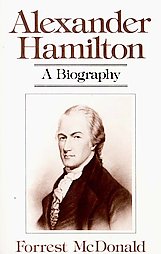
Biographical literature is of course a rather rich vein of work ethic literature. Biographies of those who accomplished a great deal are often biographies of persons who accomplished a great deal by keeping nose to grindstone. Forrest McDonald’s biography of Alexander Hamilton is a case in point.

I imagine I should end by admonishing you to crack open some representative of work ethic literature so you’ll be willing to buckle down and focus. Very well. Consider yourself duly admonished.

A refreshing counter to the standard anti-Wall Street narrative

I’ve been banging this drum for a while, but today Peter Wallison has an excellent op-ed in the WSJ about how the housing market collapse caused the financial panic in 2008, and the sources of that housing collapse.

Read the whole thing, but key take-aways are:

1) Starting in 1992, the government required Fannie Mae and Freddie Mac to direct mortgage financing towards people below the median income level. The original quota was set at 30%, but that grew to 55% by 2007, necessitating a drop in lending standards.

2) By 2008, over 70% of the 27 million existing sub-prime mortgages were held by Fannie or Freddie.

3) While the housing bubble created by this policy attracted private investors towards the higher yields and low default rates to be achieved from sub-prime borrowers in this environment, by 2008 the private MBS market acconted for less than one third of total sub-prime borrowing.

4) The popping of the housing bubble in 2007 created the conditions that led to the financial panic of 2008, and the subsequent downturn in the economy.

Again, read the whole thing, but Wallison concludes:

The narrative that came out of these events—largely propagated by government officials and accepted by a credulous media—was that the private sector’s greed and risk-taking caused the financial crisis and the government’s policies were not responsible. This narrative stimulated the punitive Dodd-Frank Act—fittingly named after Congress’s two key supporters of the government’s destructive housing policies. It also gave us the occupiers of Wall Street.

Is Social Security promising too much?

The question of whether SS is sound on an actuarial basis came up on an earlier thread, and I decided to do some analysis to see whether a person of average income can expect to get more out of Social Security than he puts in.

My hypothetical person, Harry, was born in 1945, began work in 1967 at the age of 22 and retired in 2010 at the age of 65. In every year of Harry’s career he earned the average income for an American in that year, as reported by the US Census (an Excel file). The data was separated out by sex, so I took the weighted average of the 2 for each year. I then used the Social Security benefits calculator to input each year’s income and establish what Harry’s monthly benefit would be based on his annual earnings. I used the historical payroll tax to determine how much Harry would have contributed to SS in each year of his career. Note that Harry’s contribution was half of the posted rate, as his employer paid the other half. Finally, I used historical US Treasury yield data to determine an average rate of interest earned on his contributions.

This is what I found.

In 1967, Harry earned $4,509 of income, which grew to $38,336 in 2010, the year he finally retired. Throughout his career, he averaged $19,769 dollars in annual income. He paid a total of $51,779 in payroll taxes over his 44 working years. The average 1 year and 10 year Treasury yield between 1967 and 2010 was 6.35%. Using this average yield compounded annually, Harry’s contributions will have earned a total of $108,779 by 2010, making his total contributions to Social Security $160,558.

Given Harry’s annual income, his calculated monthly SS benefit will be $1,501, for an annual total of $18,012. This means that he will have recouped his contributions within 8.9 years of his retirement, or by the time he is 74. If we assume that his remaining contributions continue to accrue interest until they actually get paid, and we assume a currently very generous interest rate of 3%, his contributions will last for 10 years, or until he is 75.

Now, according to these CDC tables, when Harry was born in 1945, his life expectancy was roughly 68 years. And by the time he started working at the age of 22 in 1967, his life expectancy had climbed to about 73 years, almost enough for him to get back what we now know his full contribution to Social Security would end up being. But having made it to 65 in 2010, he could expect to live over 18 more years. Meaning that, at $18,012 per year in SS benefits, Harry can expect to receive $324,216 in benefits…more than twice his contributions and earned interest over the course of his working life.

Recall here that Harry is just average. Average income, average contributions, average life expectancy at retirement. Seems to me that the government has promised the average person far more in SS benefits than they have been expected to contribute to the system. Can the US really be expected to honor such crazy promises in perpetuity?