Morning Report

Vital Statistics:

Last Change Percent
S&P Futures 1221.8 11.9 0.98%
Eurostoxx Index 2313.7 41.960 1.85%
Oil (WTI) 87.28 1.210 1.41%
US Dollar Index (DXY) 76.75 -0.168 -0.22%
10 Year Govt Bond Yield 2.19% 0.00%

European leaders begin a 6-day summit on Greece and the banks today. Merkel and Sarkozy are having differences over the mechanics of the European Financial Stability Facility. The WSJ has an article this morning about the exposure French banks have to Greece. While a Greek default will not make them insolvent, they will have to raise capital and de-risk. Societe Generale’s stock has been cut in half over the last 3 months. EURIBOR / OIS spreads have retreated from their peak a month ago, but are still elevated.

In earnings, Mister Softee posted better than expected sales on strong corporate demand. It is now a value stock, sporting a single digit P/E. I remember when MSFT was a growth stock in the late 90s, trading at 56x 2000 EPS of .86. Earnings have increased 10% a year to a current estimate of $2.83. Meanwhile, the stock has been cut in half over the same time period. The gulf between the perceptions of growth investors and value investors is huge. And once growth investors decide the fizz is gone, it is a long long way down until value investors get interested. AAPL investors beware.

Occupy….Main Street?

One of the ongoing themes here at ATiM as well as in the wider media, and perhaps a motivating factor for the otherwise aimless and inexplicable happening (event? movement? protest?…what the hell is it, anyway?) known as Occupy Wall Street is that while the finance industry got saved by taxpayers during the financial crisis of 2008, the average person….the 99% in the lingo of the OWS crowd…was left on the outside looking in. Unemployment remains high, housing prices remain low, and the economy is growing at a glacial pace, leading many to resent the bailout of banks (along with, as never seems to be mentioned, insurance companies, car manufacturers and, of course, quasi-government agencies) and to pose the rhetorical question: While Wall Street was getting bailed out, what did Main Street get?

Well, allow me to point out what it got. Or, more accurately, gets.

Earlier today I posted a comment pointing out just how much gets spent on “Main Street” every year. But even the huge dollar numbers don’t do justice to the sheer number of federal programs aimed at providing aid to the self-declared 99%. Consider the following, not at all comprehensive, list, headed by the government department tasked with administering the aid.

Department of Agriculture

Agriculture Management Assistance Program
Business and Industrial Guaranteed Loan Program
Child and Adult Care Food Program
Commodity Marketing Assistance Loans and Loan Deficiency Payments
Commodity Supplemental Food Program
Crop Insurance Program
Dairy Indemnity Program
Disaster Supplemental Nutrition Assistance Program (Florida only)
Emergency Conservation Program for Agricultural Producers
Emergency Farm Loans Program
Emergency Food Assistance Program
Farm Operating Loans Program
Farm Ownership Loans Program
Farm Storage Facility Loans Program
Noninsured Crop Disaster Assistance Program
Outreach and Assistance for Socially Disadvantaged Farmers and Ranchers Competitive Grants Program
Rural Housing Loans Program
Farm Labor Housing Loans and Grants Program
Housing Repair Loans and Grants Program
Rural Rental Assistance Program
Rural Rental Housing Program
School Lunch and Breakfast Program
Senior Farmers Market Nutrition Program
Special Milk Program
Special Supplemental Program for Women, Infants, and Children (WIC) Program
Summer Food Service Program
Supplemental Nutrition Assistance Program
WIC Farmers’ Market Nutrition Program

Department of Education

Advanced Placement Test Fee Program
Byrd Honors Scholarships
Child Care Access Means Parents in School Program
Early Intervention Program for Infants and Toddlers with Disabilities
Education Consolidation Loans
Federal Pell Grants
Federal Perkins Loan Program
Federal Supplemental Educational Opportunity Grants
Federal Work Study
Graduate Assistance in Areas of National Need
Jacob K. Javits Fellowship Program
PLUS Parent Loan
Stafford Loans for Students
TRIO Student Support Services

Department of Health and Human Services

Advanced Education Nursing Traineeships
Assets for Independence Program
Child Care and Development Fund
Clinical Research Loan Repayment Program
Community Food Nutrition Program
Consolidated Health Centers
Contraception and Infertility Research Loan Repayment Program
Disaster Assistance for Older Americans
General Research Loan Repayment Program
Head Start and Early Head Start
Health Disparities Research Loan Repayment Program
Health Professional Scholarship Program
Immunization Grants
Low Income Home Energy Assistance Program
Medicaid Program
Medicare Program
National Health Service Corps Loan Repayment Program
National Health Service Corp Scholarship Program
National Research Service Awards
National Vaccine Injury Compensation Program
Nursing Education Loan Repayment Program
Pediatric Research Loan Repayment Program
Prescription Drug and Other Assistance Programs
Preventive Health and Health Services Block Grant
Social Services Block Grant
State Children’s Health Insurance Program
Temporary Assistance for Needy Families
Undergraduate Scholarship Program for Individuals from Disadvantaged Backgrounds

Department of Housing and Urban Development

Adjustable Rate Mortgage Insurance
Basic FHA Insured Home Mortgage
Combination Mortgage Insurance for Manufactured Home and Lot
Doctoral Dissertation Research Grants
Early Doctoral Student Research Grants
HUD Public Housing Program
Home Equity Conversion Mortgages
Home Rehabilitation Mortgage Insurance
Manufactured Home Loan Insurance
Property Improvement Loan Insurance
Mortgage Insurance for Disaster Victims

Department of Labor

Disaster Unemployment Insurance
Dislocated Worker Program
EBSA COBRA Premium Assistance
Health Coverage Tax Credit
Longshore and Harbor Workers Compensation
National Emergency Grants
Unemployment Insurance

Small Business Administration

7a Small Business Loan
Business Physical Disaster Loans
Certified Development Company Loan Program
Economic Injury Disaster Loans
Small Business Investment Company Program
Home and Property Disaster Loans
Microloan Program

Social Security Administration

Child’s Insurance Benefits
Disability Benefits
Disabled Surviving Divorced Spouse Benefits
Disabled Widow(er)’s Insurance Benefits
Divorced Spouse Benefits
Independently Entitled Divorced Spouse’s Benefits
SS Medicare Program
Mother’s or Father’s Insurance Benefits
Parent’s Insurance Benefits
Retirement Insurance Benefits
Spouse’s Insurance Benefits
Surviving Divorced Spouse Benefits
Widow(er)’s benefits
Supplemental Security Income

Again, as long as this list may appear, it is not comprehensive. And note that, unlike the Wall Street bailouts, these are not one-off programs. They are on-going benefits with annual budgets, year after year. Note also that few of these benefits are available to the demonized 1% that the OWSers are making such a fuss about. Perhaps the 1% ought to think about Occupying Main Street.


Instead of joining Occupy Main Street, I’m going to join this movement:

Bits & Pieces (Thursday Night Open Mic)

Nick Pitera is a one-man Disney movie. His Aladdin is dead-on but, beyond that, his vocal range is very impressive.

So, what’s his day job? An animator for Pixar. I hate him.

Speaking of people to hate. This kid covering Lady Gaga’s “Paparazzi” is apparently 11 years old. I was drawing comic books filled with stick figures at age 11.

Or, he was 11 at the time. Anyhoo, his name is Greyson Chance and he’s well on his way to Beiber-dom. You will, I expect, be hearing a lot about him in the near future. Especially if you have any Beiber-loving-aged children. He’s been on Ellen. I just stumbled across him, but clearly he’s about 10 minutes from exploding all over pop culture.

That’s been your pop culture minute. — KW


Joe Biden: oppose Obamajobs, oppose rape prevention.

Is this the new civility, the new elder statemanship, the new gravitas? — QB

Morning Report

Vital Statistics:

Last Change Percent
S&P Futures 1206.4 -0.2 -0.02%
Eurostoxx Index 2307 -23.050 -0.99%
Oil (WTI) 85.74 -0.370 -0.43%
US Dollar Index (DXY) 77.161 0.096 0.12%
10 Year Govt Bond Yield 2.17% 0.01%

Initial Jobless Claims came in at 403k, slightly higher than the 400k estimate. Later this morning, we will get Leading Economic Indicators, Philly Fed, and Existing Home Sales. It will be interesting to see if the Existing Home Sales confirms some of the increase in activity we are seeing from the homebuilders. Yesterday we saw some big prints in the call options for Toll Brothers and D.R. Horton. (14,000 contracts). It looks like others are positioning themselves ahead of earnings announcements. NVR’s earnings were a mixed bag this morning. Something to keep an eye on.

Other companies reporting today / last night: PM, LLY, EBAY, NUE

Steve Wynn went on another epic rant on his earnings conference call yesterday. Here is the audio and transcript: Wynn Resorts 3Q conference call

—————————————————————————————

Thought I’d add a link to Huntsman’s WSJ op-ed on TBTF. Not being a financial guy, I was surprised by the following numbers:

More than three years after the crisis and the accompanying bailouts, the six largest American financial institutions are significantly bigger than they were before the crisis, having been encouraged to snap up Bear Stearns and other competitors at bargain prices. These banks now have assets worth over 66% of gross domestic product—at least $9.4 trillion, up from 20% of GDP in the 1990s. There is no evidence that institutions of this size add sufficient value to offset the systemic risk they pose.

The major banks’ too-big-to-fail status gives them a comparative advantage in borrowing over their competitors thanks to the federal bailout backstop. This funding subsidy amounts to roughly 50 basis points, or one-half of a percentage point in today’s market.

Huntsman on TBTF

— Mike

Manufacturing Inequality

I’ve been arguing for a long time that the dire claims of vastly increased income inequality, and particularly the claim that only the super-rich have made any gains since 1980, are wildly exaggerated at best and complete bunk at worst. James Pethokoukis has a post at Enterprise Blog making this case and citing academic papers supporting it.

On the claim that only the rich have gained, he links to a 2006 column on Brad DeLong’s cite by Jason Furman, now deputy director of Obama’s National Economic Council, making among others the point that all we have to do is use our eyes and our common sense to realize that, yes, we are all better off, with better standard of living than we had thirty years ago. Economic analyses purporting to show that the middle class has made no gains in thirty years plainly are at odds with reality. Believe what your eyes tell you, not the statistical magic tricks of (consistently) committed liberals invested in “rising inequality.” To pat myself on the back, I made this argument many times in the comments at PL, to the great outrage of “fact-based” liberals–great outrage but never any effective answer.

Similar statistical hanky panky underlies most of the claims of wildly increased disparities in wealth, like the now ubiquitous alarm that “400 people own more wealth than the bottom 150,000,000!” These measures almost invariably arrive at a predetermined conclusion by counting only the kinds of “wealth” that are most concentrated among the wealthy. But I’ll revisit that one later.

H/T Glenn Reynolds

Morning Nuggets

Mmm. Why have donuts when you can eat crispy processed O-shaped bits of wheat-and/or-corn paste briefly baked on an industrial conveyor belt? Well, sorry, you can’t—at least not like this. Dunkin’ Donuts Cereal is gone with the wind. 

This News Briefs from the Daily. It talks about the Onion Field Killer, but I was more struck by record number of deportations. The Obama administration (a) isn’t messin’ around and (b) apparently decided the answer to the constant rhetorical question: “What are you doing to do, deport them all?” was “Yes, that’s exactly what we’re going to do.”

The problem with protest groups like OWS? There’s no screening. Anybody can come in, claim to be part of the “movement”, and go straight to causing mayhem.

Apparently, a lot of folks at the Occupy Wall Street protests are having their wealth redistributed for them. Smell that? Does it smell like irony?

NewsBusters say the media is not being harder on Obama than GOP candidates, but, even if so, I don’t recall this comparison being made between how the media was treating the Democratic candidates and George W. Bush in 2004. Which would be a more apples to apples comparison.

Is this the OWS folks Declaration of Independence? Thomas Jefferson might be proud (the blood of patriots and tyrants is the natural manure of the Tree of Liberty, after all) but it’s not 1776. Also, I though the grievances in 1776 were a little more concise. Might just be history bias.

If you sold your Apple Stock recently, MG Seigler says your an idiot. My dad sold $10,000 of Apple stock at $14 a share shortly before Steve Jobs came back (with my encouragement). If I’m calculating the splits right (I’m no financial expert), the two 2:1 splits means that each $14 share would be worth $1600 now. For a total of $1,143,514.00 dollars. You want to talk about being an idiot when you sold your Apple stock . . .

Most of that $10,000 went into dot.com stocks that evaporated. Yay, irrational exuberance! I invest in coffee cans now.

Bits & Pieces-Game One Baby (Open Thread)


Would you like a massive taxpayer subsidy with that?

The Post runs a “5-myths” feature in the Sunday Opinion section. I was excited to see this one on healthy eating, as it an issue that cross-sects health care policy and the dreaded nanny state stuff that gets people excited. I also wanted to link to a non-Reason source for a change. But then I noticed the writer works for Reason. Crap.

Seems like all the rage in the anti-obesity efforts are “food deserts” and encouraging exercise. For example, the First Lady’s “Let’s Move” campaign addresses both of those topics.

I think the impact of “food deserts” are overstated. And I think we won’t make any progress in having a more fit society until we deal with what is driving it: federal agriculture policy, subsidies and price supports.

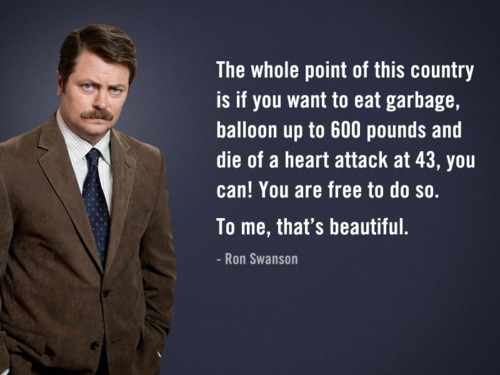
We can spent loads of time, effort and resources in encouraging and promoting healthy food and exercise habits. When those efforts fail, and they will, we can take a different approach and start banning and taxing unhealthy foods, a tactic that tramples all over personal and parental responsibility and is more about about raising revenue than discouraging consumption. Because, as the man says:

So taxpayers are funding cheap food, which gets us fat, so we in turn get lectured to about better choices and exercise. And when that fails they ban the stuff or tax us more.

Based on some basic research and a few documentaries, it seems that back in the 1970s agriculture policy shifted to put an emphasis on cheap food, and more specifically, cheap calories. Obviously there are a lot of factors at play here, but I’d encourage you to take a look at this Health Affairs commentary from last year: Agricultural Policy And Childhood Obesity: A Food Systems And Public Health Commentary Elsewhere, the author was quoted as saying: “What we’ve done is create a generation of kids who are both overweight and undernourished because the calories they’re getting are not good ones.” Heckuva job, brownies*.

My knee-jerk reaction is to end the subsidies, but the author here offers a more balanced approach. That’s my answer for everything anyway, but I’m certain we aren’t entitled to artificially cheap beef and soda.

After all, it’s all things in moderation.

*If someone asks if there are nuts in the brownies, you can say no. There is price supported sugar or artificially cheap high fructose corn syrup.

FINOs

I thought I’d share a post by Randy Barnett at Volokh, from which the title of this post derives its name, FINOs (federalists in name only). Senate Republicans have apparently attached S.197 to their jobs bill. The justification for S.197 includes this little nugget:

“EFFECT ON INTERSTATE COMMERCE- Congress finds that the health care and insurance industries are industries affecting interstate commerce and the health care liability litigation systems existing throughout the United States are activities that affect interstate commerce by contributing to the high costs of health care and premiums for health care liability insurance purchased by health care system providers.”

S.197

That health care and insurance affect interstate commerce, so that Congress can regulate them under the Commerce Clause, is one of the major pillars of the DoJ’s defense of PPACA. Not only that, but the Senate Rs are also saying that state courts where health care liability is litigated also affect interstate commerce and can be regulated by Congress under the Commerce Clause.

Here’s Prof. Barnett’s post
FINO Republicans

A RINO Looks At Romney

As a registered Republican who voted for George W. Bush in 2000 (to no effect since I had long moved from Florida to Maryland so at least I don’t have that debacle on my conscious) and lost faith in the concept of compassionate conservatism, I am a Republican in name only (RINO) in search of a new home. While I have come to empathize with many progressive causes (having a spouse who is a public school teacher will do that for you), I still feel a duty to steer my erstwhile party towards policies which will aid and grow our country. Over the next few posts of mine, I am going to go down the list of candidates and note how I feel about them.

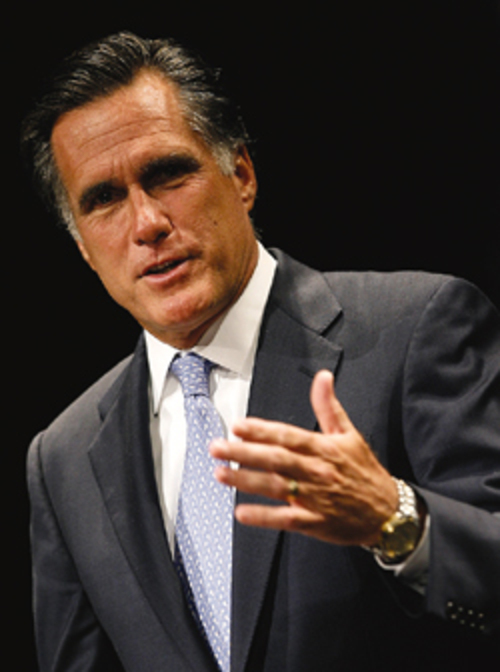
Which brings us to Mitt Romney, the 2012 Republican nominee. Make no mistake about it, he will get the nomination. And while at this time four years ago Hillary Clinton was considered a lock on the Democratic nomination and Mitt’s hold seems a little more tenuous, but he will prevail in the end. Why? Because he is who the money men want. There are only two ‘Establishment’ candidates in the field and Jon Huntsman continues to get no traction whatsoever.

What is astoundingly odd is how tepid his support his. There even seems to a rather stealth Anybody But Romney movement working the fringes. I can only second guess what the motivation is but I suspect it is fear that Romney is a closet moderate. Heck, he was the governor of Massachusetts for christsakes. That alone makes him unacceptable to a broad swath of the Republican base who have been taught to despise anything on sight from the People’s Republic of Taxachusetts.

The biggest monkey on his back is ObamaRomneyCare. It is testament to the ability of the right wing flackmedia to shift the Overton Window that the goalposts have moved so far. Individual mandates were once the Republican straw alternative to universal coverage and single-payer. That individual mandates flew in Massachusetts scared someone somewhere. What should be his signature achievement, because it has been co-opted by moderate Democrats, has become his albatross.

His other claim to fame, his private sector career as a vulture capitalist, is also a rather double-edged sword. While making millions of money in finance is about as gold-star a credential as needed for the players who pull the strings, it’s not going to play well with populists either in general or within the tea party portion of the GOP. He keeps trying to make sympathetic gestures towards the lower middle class but they always come off as awkward and patronizing. Come to think of it ‘awkward and patronizing’ covers much of his campaign style. He is as close to Al Gore stiff as you will ever find in a Republican. Folksy, he ain’t.

He is really too slick for his own good and his waffling and back-pedaling is a tag that is going to dog him. Ultra-right wingers don’t trust him and probably for good reason. While he tries to parrot the current talking points, they just don’t feel right coming out of his mouth. He is insincere and smarmy and it’s clear where his loyalties lie.

The real drama for the next four months (and the campaign should be over by mid-March) is like watching a Columbo movie. You know who the candidate is, the suspense is in figuring out how he gets there.