Morning Report: Capping off a terrible week for bonds 7/15/16

Vital Statistics:

Last Change
S&P Futures 2160.0 3.0
Eurostoxx Index 337.5 -1.0
Oil (WTI) 46.1 0.4
US dollar index 87.0 0.1
10 Year Govt Bond Yield 1.57%
Current Coupon Fannie Mae TBA 103.3
Current Coupon Ginnie Mae TBA 104.2
30 Year Fixed Rate Mortgage 3.49

Markets are higher this morning in spite of a massive terrorist attack in France. Bonds and MBS are down.

Lots of stronger-than-expected economic data this morning

The Consumer Price index rose 0.2% versus expectations of 0.3%. On an annualized basis, it rose 1%. Ex food and energy, it is up 2.3% YOY. Note the Fed prefers the Personal Consumption Expenditure index and not the CPI.

Retail sales came in stronger than expected – up 0.6% versus expectations of 0.1%. Retail sales had a sluggish start to the year, which partly drove the lousy 1.1% Q1 GDP growth rate. I wouldn’t be surprised to see some strategists and the Fed take up Q2 GDP estimates on this number.

Industrial Production rose 0.6% last month and manufacturing production rose 0.4%. Both numbers beat estimates. Capacity Utilization rose to 75.4%, again better than expectations.

It is hard to believe, but the 10 year bond has picked up 20 basis points in yield since Monday morning. This is the biggest weekly loss in a year.  Whether that was “the top” remains to be seen: markets can have ferocious sell-offs in the context of a bull market. At the end of the day, the US is going to be driven by foreign bond trading. The German Bund went from -18 basis points on Monday to nearly 0% this morning.

Larry Fink of Blackrock says that a .75% 10-year yield wouldn’t surprise him.

Wells Fargo reported a 4% YOY increase in net income for the second quarter. Mortgage origination was up 2% YOY. Citi beat numbers.

Morning Report: Professionals are exiting the foreclosure market 7/14/16

Vital Statistics:

Last Change
S&P Futures 2162.0 16.0
Eurostoxx Index 338.8 3.0
Oil (WTI) 45.6 0.8
US dollar index 86.9 -0.2
10 Year Govt Bond Yield 1.53%
Current Coupon Fannie Mae TBA 103.2
Current Coupon Ginnie Mae TBA 104.2
BankRate 30 Year Fixed Rate Mortgage 3.47

Stocks are higher this morning after the Bank of England declined to cut interest rates. Bonds and MBS are down

Initial Jobless Claims fell to 254k in a holiday shortened week.

Consumer comfort increased last week to 44.7 from 43.5

Producer prices increased 0.5% in June, versus expectations of a 0.3% increase. On a YOY basis, they increased 0.3%. Higher energy prices drove the increase, however we are a long way from seeing true inflationary pressure. Inflationary pressure won’t build until we start seeing wage inflation, and there we have a dichotomy: Firms with highly skilled labor are having to raise wages to keep top talent, while technology is depressing wages for people in jobs that will eventually be replaced by robots and expert systems. Note the Fed’s Beige Book characterized wage growth as “modest to moderate.” This is Fed-speak for “almost imperceptible.” That said, wage growth appears to have broken free from post-crash 2% level and is beginning to register in the mid 2%s.

JP Morgan reported better-than-expected earnings this morning. Mortgage banking revenue was up 2% QOQ and 5% YOY. Portfolio growth and and production revenue increases were offset by lower servicing revenues. The stock is up 2.5% pre-market.

Has the big rally in prices for foreclosed homes run its course? RealtyTrac suggests that it may have, as more and more “mom and pop” investors are winning foreclosure auctions and the professionals are pulling back from the market. Professional investors accounted for almost 10% of all home purchases in the depths of the housing bust, now they account for about 2.5%. There are some fears that this signals another housing bubble. FWIW, home prices are stretched compared to incomes, however that ignores the effect low interest rates are having. Housing bubbles are rare things – prior to the 2006 bust the last bubble in real estate popped in the 1920s. Anyone reading this will probably never see another one.

Speaking of foreclosures, the people who got foreclosed on early in the housing bust basically missed out on about 10 years of house price appreciation. To add insult to injury, many sold into a cheap housing market (to the professional investors mentioned above) and moved into expensive rentals (managed by the professional investors above).

Earnings season has just started, and the S&P 500 is at record highs. Is this rally for real? It will depend on earnings, which have been declining the past several quarters. The other thing that will drive the market is share buybacks. With the world’s central banks driving down interest rates, they are lowering Corporate America’s cost of capital. Many companies are choosing to issue debt to retire stock. This move is essentially a no-brainer for corporate CFOs who don’t have much in the way of profitable expansion opportunities. When you can issue debt for 4% to retire stock with a cost of capital of 10%, you do it.

The flip side of ultra-low interest rates is a boring, risk-averse economy. This has been a conscious choice among policy-makers (remember “Make banking boring again”?). Of course a major problem is that usually global economies de-leverage after asset bubbles, but that hasn’t happened this time around. As global debt levels rise, they act as sand in the gears for the economy, slowing it down. Ironically, the policy-makers who drove this are concerned first and foremost about inequality, and the unintended consequence of their policy has been an economy that gooses asset prices and retards business formation (which means less jobs). This increases inequality even further – the opposite of what they intended.

Of course the endgame for these policies is Japan, which is discussing new fiscal measures to try and pull their economy out of a 25-year bust.

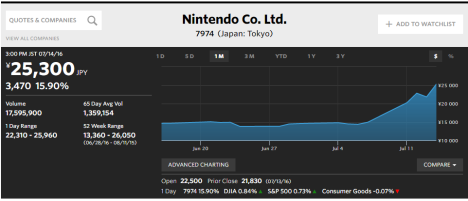
Speaking of Japan, do you have kids that are playing Pokemon Go? (the latest craze). This has really caught investors by surprise: Nintendo stock is up 76% over the past week.

Nintendo

Morning Report: Bond yields rise on a weak 10 year auction 7/13/16

Markets are higher this morning on no real news. Bonds and MBS are up.

Bond yields rose dramatically yesterday on hopes of future stimulus. The 10 year was trading around 1.52% yesterday after lower than expected demand at a Treasury auction. Yesterday, Germany auctioned 10 year bunds at a yield of -.05%. Yields worldwide are heading lower this morning. Note that MBS are still largely ignoring the volatility, although we did see some reprices yesterday.

Mortgage Applications rose 7.2% last week according to the MBA. Purchases were flat, while the refi index rose 11%. Note this was a short holiday week and we still saw a big increase in refis.

Import prices rose 0.2% MOM and are down 4.8% YOY. The strength in the US dollar (or as Bill Gross says, the cleanest dirty shirt) is driving the drop. Yet another reason why the Fed can’t seem to find inflation anywhere.

Bernie Sanders made it official yesterday and endorsed Hillary Clinton. Meanwhile, Mitt Romney and Jeb Bush are considering backing Libertarian Gary Johnson. The GOP convention is this weekend, and promises to be a spectacle between the #NeverTrump crowd and the expected protests from the left. Here is how the #NeverTrump crowd can block his nomination.

The Atlanta Fed is now estimating that US GDP growth increased at a 2.3% pace in the second quarter. This is a drop of 0.1% from their estimate a week ago.

James Bullard believes that Brexit will have almost no US impact. Loretta Mester said more or less the same thing as well. The main effect will probably be a stronger dollar and lower interest rates in the US.

One of the biggest effects of the financial crisis may be rolling off: Those who had short sales and foreclosures in 2009 – 2010 are reaching the end of the 7 year no mortgage period and become eligible to borrow again.

Morning Report: Job openings fall 7/12/16

Vital Statistics:

Last Change
S&P Futures 2141.0 11.0
Eurostoxx Index 335.9 3.2
Oil (WTI) 46.0 1.4
US dollar index 86.9 0.1
10 Year Govt Bond Yield 1.48%
Current Coupon Fannie Mae TBA 103.3
Current Coupon Ginnie Mae TBA 104.2
BankRate 30 Year Fixed Rate Mortgage 3.57

Stocks are higher this morning as global markets continue to recover in anticipation of further government stimulus. European bank shares, which led the markets down, are rebounding. Bonds and MBS are down

Job openings fell to 5.5 million from 5.8 million in May. This is the lowest since February, and shows that some of the strength in the labor market is dissipating. Note that the JOLTS data has been much stronger than the other labor market indicators – it was at a record not too long ago.

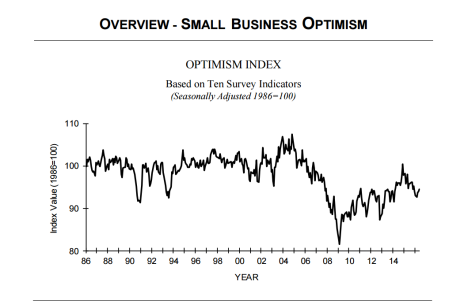
The NFIB Small Business Optimism ticked up .7 points in June. Small business owners appear to be on the same track they have followed for the past few years – maintenance mode, but not much growth. This will keep the economy moving forward, but not at an impressive pace. While sentiment has been improving, it remains well below the average of 98 since the mid-80s.

NFIB

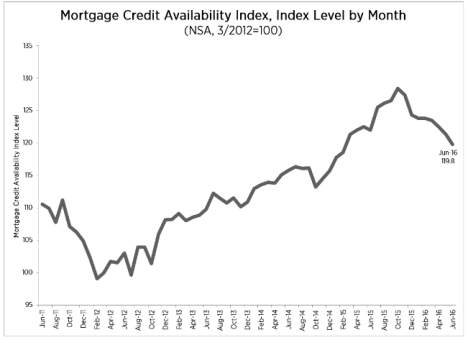
Mortgage credit availability decreased in June, according to the MBA’s Mortgage Credit Availability Index. Conventional loans had the biggest tightening, while government loans only tightened slightly. A number of investors discontinued conventional high balance 7-year ARMs, while keeping their 5 and 10 year ARMs intact. A note about the chart below. It begins in early 2012 at 100, which more or less marks the bottom of the real estate bust. If you use the same methodology to project what the index would have been previously, it would have peaked at about 900 in 2006, compared to 120, where it is today.

MCAI

Completed Foreclosures fell 7% year-over-year to 38,000 according to CoreLogic. The national foreclosures inventory fell 25% to 390k homes, or about 1% of all homes with a mortgage. This takes us back to October 2007 levels, which is still about 2x the historical average. The seriously delinquent rate continued to fall and is now down to 2.8%.

The House approved a bill changing the structure of the CFPB, by subjecting it to Congressional appropriation like every other governmental agency, and replacing the single director with a bipartisan committee. It also requires the CFPB to conduct a cost-benefits analysis for any proposed changes to arbitration regulations.

Lot sizes for new homes are the smallest on record, according to the NAHB, down to 8,600 square feet. 20 years ago, the median lot size was about 10,000 square feet. Interestingly, the average square footage of new homes has increased by 150 since the real estate bust.

Morning Report: Is the post-Brexit rally over? 7/11/16

Vital Statistics:

Last Change
S&P Futures 2128.0 8.0
Eurostoxx Index 324.3 2.1
Oil (WTI) 45.6 0.4
US dollar index 87.1 0.1
10 Year Govt Bond Yield 1.41%
Current Coupon Fannie Mae TBA 104
Current Coupon Ginnie Mae TBA 104.2
BankRate 30 Year Fixed Rate Mortgage 3.57


Stocks are up this morning as overseas markets rally. Bonds and MBS are down.

Friday’s huge payroll print was largely due to seasonal adjustment factors. The unemployment rate rose, hourly earnings barely budged and the labor force participation rate inched up only slightly. The right thing to do is to take May’s 11k number and average it in with June’s 287k number to get a more realistic run rate.

There isn’t much in the way of market-moving data this week – the week after the jobs report is invariably data-light. Earnings season kicks off this week, and the next two weeks will be dominated by bank earnings.

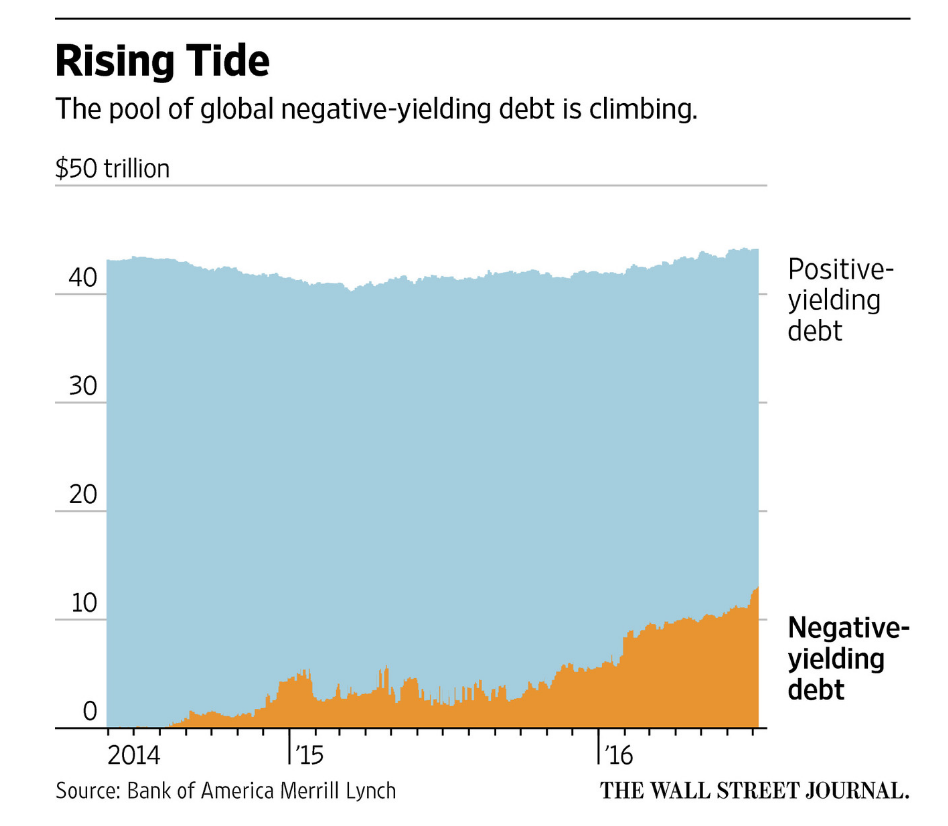
Morgan Stanley is making the call that the post Brexit bond market rally is largely played out. “After having been bullish, we turn neutral on bonds as G4 yields sit at all-time lows,” Morgan Stanley analysts including Matthew Hornbach, the head of global interest-rate strategy in New York, wrote in a report July 8. That said, the increasing amount of negative yielding paper will continue to push up Treasuries in the US, as investors sell bonds yielding nothing to buy bonds yielding something. This will also lower borrowing costs for Corporate America.

Don’t forget the last time bond yields bottomed out (2012) it took mortgage rates another 4 months to bottom out as well. We should probably see a similar effect going this time around.
Mortgage delinquency rates ticked up in May, according to the latest Black Knight Financial Services Mortgage Monitor. Some of this is apparently seasonally driven. Interesting stat: From 2009-2012, over 80% of borrowers that refinanced a GNMA loan refi’d back into another GNMA product. Post 2013, GN back into GN refis have dropped below 50%. Increasing home equity and higher MI premiums are pushing borrowers out of GN products.

Morning Report: June payrolls rebound in a big way 7/8/16

Vital Statistics: Last Change
S&P Futures 2112.0 15.0
Eurostoxx Index 324.3 2.1
Oil (WTI) 45.5 0.4
US dollar index 87.1 0.1
10 Year Govt Bond Yield 1.41%
BankRate 30 Year Fixed Rate Mortgage 3.44

Stocks are higher after the jobs report came in stronger than expected. Bonds and MBS are down small

Jobs report data dump:

  • Nonfarm payrolls + 287k
  • Two month revision -6k
  • Unemployment rate 4.9%
  • Labor force participation rate 62.7%
  • Average weekly hours 34.4
  • Average hourly earnings + 0.1% (+2.6% YOY)

The payrolls number is certain to get everyone’s attention, however some of that might be a catch-up from May, which was revised downward to only 11k jobs. The 3 month average is 147k. Given Brexit, this report probably doesn’t move the needle for the Fed. Until we start seeing more evidence of wage inflation the Fed isn’t going to be aggressive.

Mortgage rates have lagged the move downward in Treasuries. As we saw in 2012, bond yields bottomed out in July, but mortgage rates continued to fall for another 4 months, finally bottoming in November. We are seeing the same thing again, where mortgage rates have fallen with the 10 year, but nowhere near as dramatically. Note the MBA keeps bumping up its forecast for 2016 volume.

Morning Report: FOMC minutes a non-event 7/7/16

Stocks are higher this morning on no real news. Bonds and MBS are down after a stronger-than-expected ADP jobs report

We have a few economic data points this morning. Job Cuts fell 14.1% in June, according to Challenger and Grey. Job cuts fell in the East and Midwest, while rising in the South and the West.

The ADP Employment number shows private companies added 172k jobs in June, above the 160k forecast. May was revised to 168k. Of course last month the ADP number came in at 173k while the official BLS nonfarm payroll number came in at 38k. So ADP has been pretty useless lately

Initial Jobless Claims fell to 254k last week.

The FOMC minutes didn’t really shed much light on the state of thinking at the Fed, other than to say the Fed remains data-dependent. The June FOMC meeting predated Brexit, so in many ways it is a dated view. The participants noted that the labor market weakened while the overall economy was strengthening, and believe that the economy will continue to grow moderately. Given the added uncertainty of Brexit, the FOMC meeting in a few weeks will almost certainly be a non-event, and even tightening in September looks like a tall order.

Morning Report: Bill Gross talks Monopoly 7/6/16

Stocks are lower this morning as markets fret about the Italian banks and the Japanese 20 year bond went negative overnight. Bonds and MBS are up. The US 10-year hit 1.32% overnight and is trading at 1.36% at the moment. The German Bund now yields -18 basis points.

The FOMC minutes from the June meeting will be released around 2:00 pm EST today. Brexit has pretty much made these pretty much irrelevant for July meeting which is in 3 weeks. Still, there is always the possibility that something surprising could come out of it, so just be aware.

Mortgage applications rose 14.2% last week as purchases rose 4.3% and refis increased 20.8%.

The June ISM services index jumped to 56.5 from 52.9 in May.

Hillary Clinton will not face criminal charges over the email investigation. This should stick a fork in Bernie.

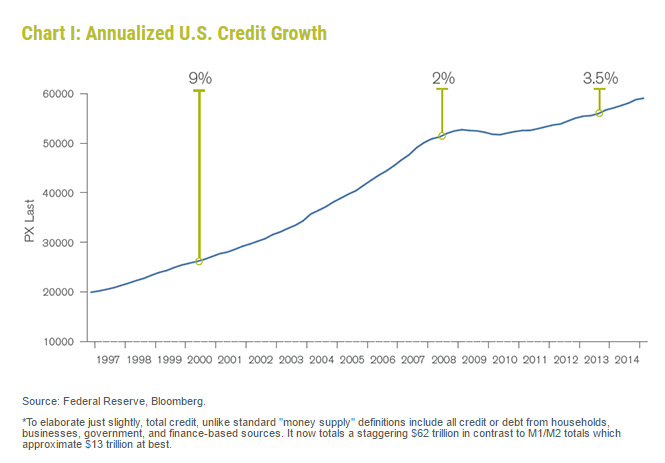
Bill Gross compares the current state of the economy to the game of Monopoly. In the beginning of the game, you get $1,500 and begin buying properties (investing). You also get $200 for passing go. However, the game always ends in a credit crunch where your opponents go bankrupt. He then imagines the game where the amount you get for passing go increases as the game progresses. He likens the income from passing go as credit growth. If you look at credit growth over the past several years, it has been much less than the previous decades. His advice to Janet Yellen is to stop worrying about the Taylor rule and inflation and worry more about slow economic growth. While QE and negative interest rates should have helped create credit, they aren’t really doing that, and the current economy is like the end of a monopoly game, where all the property has been bought, and conservation of cash becomes the name of the game. This is a recipe for stagnant growth.

Bank of America is forecasting a 1.25% 10 year yield by the end of September as pension funds embrace the “lower for longer” thesis and build their holdings of Treasuries. Roughly 6% of pension fund assets are in Treasuries, about half the allocation they were in 1980. Of course Treasuries represented true value in 1980, and now they are simply a momentum trade. The 100 largest pension funds in the U.S. have a shortfall of $400 billion, which has doubled over the past year. Pension funds have been the biggest victims of ZIRP, as the actuarial tables couldn’t care less that interest rates are zero. In fact, it makes their liabilities appear even worse because the rate used to discount them is lowered.

Morning Report: Trust in government is at a record low 7/5/16

Markets are lower this morning as bond yields push lower globally. Bonds and MBS are up, with the 10 year trading below 1.4%. The German Bund now yields negative 16 basis points.

We have a short week, but a lot of data. The biggest events will be the FOMC minutes on Wednesday and the jobs report on Friday. Given the Brexit backdrop, I see the FOMC minutes as a nonevent, and the jobs report shouldn’t be market moving unless wage inflation accelerates.

This morning, the ISM New York Index rose from 37.2 to 45.4. Still, a reading below 50 is indicative of a slowing economy.

Economic Optimism slipped in July to 45.5 from 48.2 a month ago.

Factory Orders fell 1% in May after increasing 1.8% in April. Durable Goods orders fell 2.3% while capital goods orders, which is a proxy for business capital expenditures, fell 0.3%.

Last week stocks rallied as it looks like Brexit didn’t trigger a financial crisis. Bonds continued their march higher and yield curves flattened, which is a recessionary pattern. Generally speaking, when the stock market and the bond market disagree, the bond market is usually right. That said, Italy is injecting more capital into its weak banking system, but that issue predates Brexit.

Speaking of Italy, they may be the next one out of the EU, as they have issues with their banks and cannot come to the aid of banks without giving investors a haircut according to EU rules. Since about half of Italian bank debt is held by ordinary Italians, no politician wants to suggest that investors lose money on a bailout. Plus their debt to GDP ratio is 1.3x, which gives them little maneuvering room.

Brexit and the rise of Donald Trump are symptoms of a bigger problem: a lack of trust in government and institutions like the media. Some say we need to learn to trust the government. Other say we need to push Facebook to use its algorithms in order to show opposing viewpoints more often. Bottom line, we are more polarized than ever before, and no matter who wins in November, gridlock will be the name of the game. Both parties are focused on one thing: a potential 3 or 4 Supreme Court nominees, which would ideologically skew the Court for a generation.

Home prices rose 5.9% in May, according to Corelogic.

Loan performance increased in the first quarter, according to the OCC. Performing loans are up 0.7% YOY, while foreclosures have declined to 0.4% to 0.9%.

Morning Report: Treasury yields hit an intraday record low 7/1/16

Vital Statistics:

Last Change Percent
S&P Futures 2090.5 0.3 0.01%
Eurostoxx Index 2888.6 23.9 0.83%
Oil (WTI) 48.03 -0.3 -0.62%
LIBOR 0.646 0.015 2.38%
US Dollar Index (DXY) 95.66 -0.488 -0.51%
10 Year Govt Bond Yield 1.44% -0.03%
Current Coupon Ginnie Mae TBA 106.2
Current Coupon Fannie Mae TBA 105.6
BankRate 30 Year Fixed Rate Mortgage 3.53

Markets are flattish as we head into a 3 day weekend. Bonds and MBS are up.

Bonds will close early today and most of the Street will be on the LIE by noon.

Manufacturing picked up in June, according to the ISM Manufacturing Survey. New orders were up while prices paid fell.

Construction spending fell 0.8% in May versus an expected increase of 0.6%. April was revised downward from -1.8% to -2%. Homebuilding was flat versus April and is up 5.3% on a year-over-year basis.

Vehicle sales are coming in this morning, and they look light generally.

Overnight, the 10 year yield touched 1.38%, which is a record low on the 10 year. It looks like we are getting ready for another refi boom. Vanguard, Blackrock, and Guggenheim are all making the call that Brexit means slower growth and lower rates for the next couple of years. How pension funds and insurance companies, which need to earn 7% or more to keep up with liability growth will do that is beyond me.

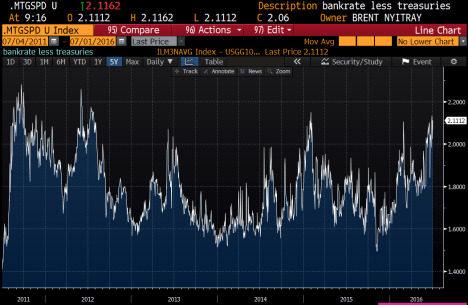
Note that the Bankrate 30 year fixed rate mortgage rate is still about 20 basis points higher than the record low set in late 2012. Mortgage backed securities have lagged the move up in Treasuries. Below is a chart of the Bankrate 30 year fixed rate mortgage rate versus the 10 year yield. The top line is mortgage rates, the lower line is the 10 year yield. If you look at the 2012 period, you can see that the 10 year yield bottomed out in July, and started rising into the end of the year. Mortgage rates kept falling throughout the year, bottoming out in December. So, mortgage rates didn’t bottom out until 5 months after Treasuries did.

mortgage rates vs treasury yields

If you plot the difference between the two rates (basically a proxy for MBS spreads), you can see that the current difference is approaching a high again. If this is a truly mean-reverting series, you should expect that gap to close over time, and that will either happen through higher Treasury yields or lower mortgage rates. Given the momentum in the Treasury markets at the moment, it is probably mortgage rates that will have to give. Which means we could have a good refi season into the end of the year.
mortgage spreads.PNG

The worlds’ central bankers are being forced to take the global economy into account more and more. Brexit gives Janet Yellen the excuse to hold off on hiking rates until we see inflation in the US. The ECB and the Bank of England are looking at easing. Could the next move by the Fed be some sort of stimulative measure, like bringing back QE or cutting the Fed Funds rate back down to .25%? It is definitely a non-zero probability.

The discussion draft of the bill to reform the CFPB is out. The main changes would be to bring the agency under Congressional control (it nominally reports to the Fed, but in reality it reports to no one) and to replace a single director with a bipartisan board of 5. It will also make some changed aimed at curbing the most abusive practices of the agency. While the Elizabeth Warren wing of the Democratic party will fight this tooth and nail, the affordable housing lobby is getting sick and tired of tight credit. Note that the President doesn’t think there is an issue, and even if there was, it isn’t his fault. Quote from the article:

Bloomberg Magazine: “Some of the rules put in place have meant it’s harder to get a loan. Something like 58 percent of approved mortgages are going to the wealthiest applicants, and homeownership among African Americans is down. Where’s the balance there?

Obama: “Well, the interesting thing—and we’ve looked at this very carefully—is that there’s no doubt that there’s been some pullback and increased conservatism on the part of lenders. But oftentimes, it’s not justified by the regulations”