Morning Report: Decent jobs report

Vital Statistics:

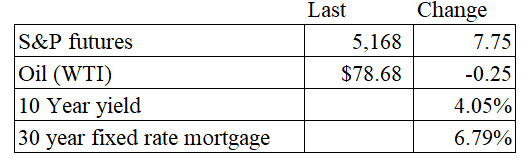
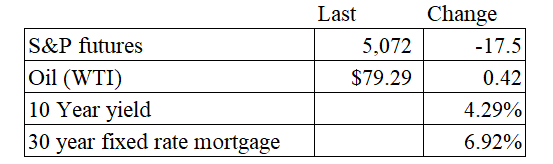
Stocks are higher this morning after the jobs report. Bonds and MBS are up small.

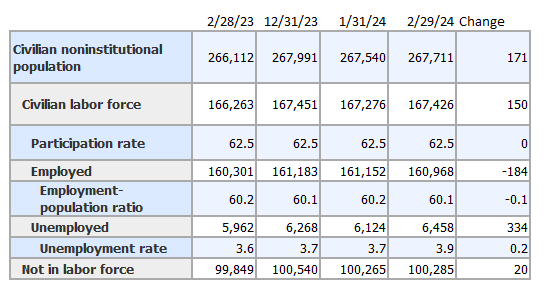
The economy added 275,000 jobs in February, which was way more than expected. The unemployment rate ticked up from 3.7% to 3.9%, while average hourly earnings rose 0.1%. The headline numbers are indicative of a strong labor market.

January’s payroll number was revised downward substantially, from a gain of 353,000 to a gain of 229,000. The February payroll number was another case of statistical adjustments accounting for the increase, as the number of people with jobs actually fell by 184,000. The number of unemployed people rose by 334k.

The Fed will be happy with the decline in wage growth, and the overall message that the labor market is coming more into balance.

Jerome Powell said yesterday that the Fed is close to cutting rates. “I think we are in the right place,” Powell said of the current stance of monetary policy in a hearing before the Senate Banking Committee. “We are waiting to become more confident that inflation is moving sustainably down to 2%. When we do get that confidence, and we’re not far from it, it will be appropriate to begin to dial back the level of restriction so that we don’t drive the economy into recession.”

When asked about concerns over workers losing their jobs, Powell said: “We’re well aware of that risk, of course, and very conscious of avoiding it,” Powell said. “If what we expect and what we’re seeing – continued strong growth, strong labor market and continuing progress in bringing inflation down – if that happens, if the economy evolves over that path, then we do think that the process of carefully removing the restrictive stance of policy can and will begin over the course of this year.”

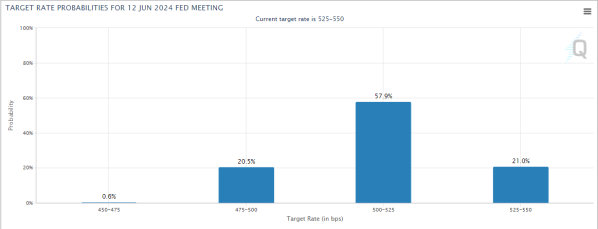
These comments helped push the 10 year bond yield to the lowest level in over a month. The Fed Funds futures for March didn’t change, but the June futures are showing a roughly 80% chance of a rate cut.

Morning Report: Jerome Powell signals no imminent rate cuts

Vital Statistics:

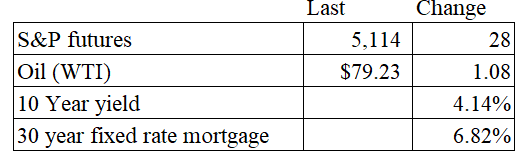
Stocks are higher after Super Tuesday gave unsurprising results. Bonds and MBS are up small.

Jerome Powell heads to the Hill today for his semiannual Humphrey-Hawkins testimony. Here are his prepared remarks. Punch line: Rate cuts are coming, but not imminent:

We believe that our policy rate is likely at its peak for this tightening cycle. If the economy evolves broadly as expected, it will likely be appropriate to begin dialing back policy restraint at some point this year. But the economic outlook is uncertain, and ongoing progress toward our 2 percent inflation objective is not assured. Reducing policy restraint too soon or too much could result in a reversal of progress we have seen in inflation and ultimately require even tighter policy to get inflation back to 2 percent. At the same time, reducing policy restraint too late or too little could unduly weaken economic activity and employment. In considering any adjustments to the target range for the policy rate, we will carefully assess the incoming data, the evolving outlook, and the balance of risks. The Committee does not expect that it will be appropriate to reduce the target range until it has gained greater confidence that inflation is moving sustainably toward 2 percent.

The questions from Congress will be interesting. I am sure that many in Congress are getting itchy for rate cuts, especially since consumers are rather down on the economy overall, which tends to lead to a bad election season for incumbents.

The private sector added 140k jobs in February, according to the ADP Employment Report. Wage gains for job changers accelerated from 7.2% to 7.6%. Overall wage inflation was 5.1%. “Job gains remain solid. Pay gains are trending lower but are still above inflation,” said Nela Richardson, chief economist, ADP. “In short, the labor market is dynamic, but doesn’t tip the scales in terms of a Fed rate decision this year.

Leisure / hospitality added 41,000 jobs in February, followed by construction. The Street was looking for 150,000 jobs, so this was a bit lower than expected. The Street is looking for 190,000 jobs in Friday’s jobs report.

Mortgage applications rose 9.7% last week as purchases rose 12% and refis rose 8%. “The latest data on inflation was not markedly better nor worse than expected, which was enough to bring mortgage rates down a bit, with the 30-year fixed mortgage rate declining slightly last week to 7.02 percent,” said Mike Fratantoni, MBA’s SVP and Chief Economist. “Mortgage applications were up considerably relative to the prior week, which included the President’s Day holiday. Of note, purchase volume – particularly for FHA loans – was up strongly, again showing how sensitive the first-time homebuyer segment is to relatively small changes in the direction of rates. Other sources of housing data are showing increases in new listings, which is a real positive for the spring buying season given the lack of for-sale inventory.”

Home prices rose 5.8% in January, according to CoreLogic. “U.S. annual home price growth strengthened to 5.8% in January 2024,” said Dr. Selma Hepp, chief economist for CoreLogic. “And while the acceleration continues to reflect the residual impact of strong appreciation in early 2023, the annual rate of growth is expected to taper off in coming months.”

“Home prices further increased in late 2023 despite high mortgage rates, which surged to the highest level since the beginning of the millennium,” Hepp continued. “But metro areas that have struggled with the impact of higher rates continue to see downward movement on home prices. Generally, pressures from higher mortgage rates tend to occur in markets where the higher cost of homeownership pushes against the affordability ceiling.”

Morning Report: Consumer Confidence Falls

Vital Statistics:

Stocks are lower this morning on no real news. Bonds and MBS are flat.

Fourth quarter GDP was revised downward to 3.2%. Consumption was revised upward to 3%.

Mortgage applications fell 5.6% last week as purchases fell 1% and refis fell 7%. “Mortgage rates were little changed last week, with the 30-year conforming rate declining slightly to 7.04 percent but remaining about a quarter percentage point higher than the start of the year,” said Mike Fratantoni, MBA’s SVP and Chief Economist.  “Higher rates in recent weeks have stalled activity, and last week it dropped more for those seeking FHA and VA refinances. Purchase activity is running 12 percent behind last year’s pace, but our January Builder Application Survey results showed that applications to buy new homes were up 19 percent compared to last year. This disparity continues to highlight how the lack of existing inventory is the primary constraint to increases in purchase volume. However, mortgage rates above 7 percent sure don’t help.”

Mortgage Capital Trading announced today announced the release of pricing indications for the to-be-announced mortgage-backed securities (TBAs) used by mortgage lenders to hedge their open mortgage pipelines. TBA indications improve transparency in illiquid market segments and act as a key reference point on lenders’ unique executions – critical data for generating accurate front-end borrower pricing. “TBA indications can now be electronically requested ad hoc by mortgage lenders from multiple approved broker-dealers,” said Phil Rasori, COO at MCT. “For the first time, lenders have a custom reference point to their own TBA execution rather than working solely from market-wide pricing that may not be applicable to them.”

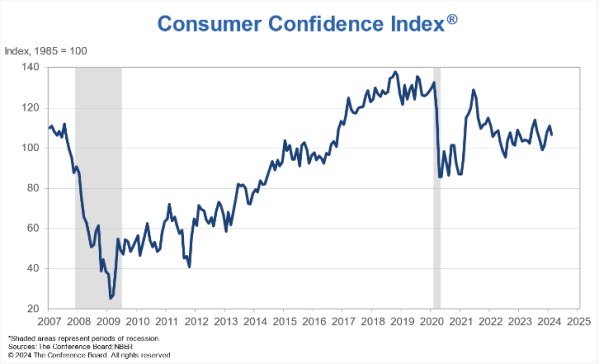
Consumer confidence fell in February, according to the Conference Board. January was revised downward. “The decline in consumer confidence in February interrupted a three-month rise, reflecting persistent uncertainty about the US economy,” said Dana Peterson, Chief Economist at The Conference Board. “The drop in confidence was broad-based, affecting all income groups except households earning less than $15,000 and those earning more than $125,000. Confidence deteriorated for consumers under the age of 35 and those 55 and over, whereas it improved slightly for those aged 35 to 54…February’s write-in responses revealed that while overall inflation remained the main preoccupation of consumers, they are now a bit less concerned about food and gas prices, which have eased in recent months. But they are more concerned about the labor market situation and the US political environment.”

More problems for real estate agents: A lawsuit filed in California targets buyer agent commissions, arguing that they should be zero. “For years buyer broker commission rates have remained stable despite a) the increase in home values, making those commissions much more valuable, and b) the diminishment to near nothing of what buyer brokers actually do to earn their commission,” the complaint says…”A truly competitive rate for buyers’ agents would in fact be 0% or $0 as, in the vast majority of cases, buyers’ agents do minimal if any work to secure a sale, with buyers doing much of their own searching via popular websites like zillow.com, and redfin.com itself,” the suit alleges.

Morning Report: Existing Home Sales rise

Vital Statistics:

Stocks are higher this morning on no real news. Bonds and MBS are flat.

Existing home sales rose 3% in January, according to NAR. They came in at a seasonally-adjusted annual rate of 4.0 million units. This was down about 1.7% on a year-over-year basis. “While home sales remain sizably lower than a couple of years ago, January’s monthly gain is the start of more supply and demand,” said NAR Chief Economist Lawrence Yun. “Listings were modestly higher, and home buyers are taking advantage of lower mortgage rates compared to late last year. The median home price reached an all-time high for the month of January,” Yun added. “Multiple offers are common on mid-priced homes, and many homes were still sold within a month. The elevated share of cash deals – 32% – indicated a market full of multiple offers and propelled by record-high housing wealth.”

Inventory was up marginally to 1.01 million units, while the median home price rose 5.1% YOY to $379,100. The South and the West saw the most activity, while the Northeast and Midwest were flat.

Philly Fed President Patrick Harker warned against betting on early rate cuts. “I would caution anyone from looking for [a rate cut] right now and right away,” Harker said in a speech at the University of Delaware … I will signal my belief that we’re ready for a rate decrease when all the data – both the hard and the soft – give me that signal,” he said.

Separately, Goldman has moved their first cut forecast from May to June.

The economy expanded in February, albeit at a slower pace according to the S&P Flash PMI. While services slowed, manufacturing hit the highest level in 10 months. Manufacturing was weak most of last year. Importantly, cost pressures continued to ease as input prices rose at the slowest pace since October 2020.

Rocket reported fourth quarter earnings. Volume in the fourth quarter fell 9.3% to $17.3 billion, while gain on sale increased from 217 basis points to 268. For the full year 2023, origination volume fell 41% to $78.7 billion.

It has been brutal out there.

Morning Report: Big deal in the credit card space

Vital Statistics:

Stocks are lower this morning after we return from a long weekend. Bonds and MBS are up small.

Capital One is buying Discover Financial Services in a $35 billion deal. With the interest rate environment less hospitable than before, we might see more merger activity in the financial sector. This deal seems to be mainly about attracting deposits: “Discover has done a better job of bringing in a lot of deposits and [has] access to a lot of institutions to run the debit card network and provide service. So it gives them a lot of deposit gathering ability, which particularly in the current market is enormously important,” said David Schiff, West Monroe’s head of consumer retail and banking.

The upcoming week won’t have much in the way of market-moving data, however we will get the FOMC minutes on Wednesday. This should give us more insight into when the Fed is going to start cutting rates. The CPI report last week caused traders to pare back their bets on rate cuts this year, although shelter inflation was the big driver.

Shelter accounted for about 2/3 of the increase in the CPI last month, and in my latest Substack, I take a deeper dive into the shelter component and look at how the worst might be over here.

Consumer sentiment in February is mostly unchanged from January, according to the University of Michigan Consumer Sentiment Survey. Consumers are generally getting more constructive about the economy, although there remains a partisan gap.

Year-ahead inflationary expectations ticked up from 2.9% to 3.0% which is still within the pre-pandemic 2.3% – 3.0% range. Longer-term inflationary expectations remained at 2.9%, which is still above the pre-pandemic range of 2.2% – 2.6%.

Some encouraging data for the Spring Selling Season, which is more or less underway. New listings were up 9.5% compared to a year ago, while median prices were more or less flat. Active inventory was up 13.9%.

I am wondering if people are accepting the fact that we aren’t going back to 3% mortgage rates and just dealing with it.

Morning Report: Another bad inflation report

Vital Statistics:

Stocks are lower after the producer price index came in hotter than expected. Bonds and MBS are down.

The producer price index (a measure of inflation at the wholesale level) rose 0.3% in January, which was above expectations. Services drove the increase. On a year-over-year basis, the PPI rose 0.9%, which is below the Fed’s 2% target. Healthcare was a big driver of the increase in services cost, and services inflation is driven primarily by wages.

Housing starts rose 1.33 million in January, which was way below expectations. This is 14% below December and down around 1% on a year-over-year basis. Building permits fell 1.5% MOM to 1.47 million, which is up 9% on a YOY basis.

The mix of permits is changing pretty dramatically, with single-family houses up 36% YOY while multi-fam is down 27%. Remember, we have a record number of multi-fam units under construction, and rental inflation is leveling out.

Homebuilder sentiment improved in January, according to the NAHB.

“Buyer traffic is improving as even small declines in interest rates will produce a disproportionate positive response among likely home purchasers,” said NAHB Chairman Alicia Huey, a custom home builder and developer from Birmingham, Ala. “And while mortgage rates still remain too high for many prospective buyers, we anticipate that due to pent-up demand, many more buyers will enter the marketplace if mortgage rates continue to decline this year.”

“With future expectations of Fed rate cuts in the latter half of 2024, NAHB is forecasting that single-family starts will rise about 5% this year,” said NAHB Chief Economist Robert Dietz. “But as builders break ground on more homes, lot availability is expected to be a growing concern, along with persistent labor shortages. And as a further reminder that the recovery will be bumpy as buyers remain sensitive to interest rate and construction cost changes, the 10-year Treasury rate is up more than 40 basis points since the beginning of the year.”

Morning Report: Allergic reaction to the CPI

Vital Statistics:

Stocks are rebounding after yesterday’s allergic reaction to the hotter-than-expected CPI report. Bonds and MBS are flat.

The Consumer Price Index rose 0.3 MOM in January and 3.1% on a year-over-year basis. Shelter accounted for two thirds of the increase. The core rate of inflation rose 0.4% MOM and 3.9% on a YOY basis. The core rate has been steadily rising on a month-over-month basis since the summer:

The stock and bond markets tanked on the news, with the S&P 500 falling 1.37% and the yield on the 10 year rising to 4.32%. The Fed Funds futures didn’t change that dramatically for March, however the December futures are now pricing in 4 cuts this year, with 3 cuts as the next likeliest scenario.

Guild Mortgage is acquiring Academy to become the 8th largest non-bank mortgage lender in the US. “Guild and Academy share a commitment to the purchase mortgage market and believe in local sales and fulfillment that builds on our customers for life strategy. Our aligned core values attract employees dedicated to serving their communities and delivering on the promise of homeownership,” said Guild Chief Executive Terry Schmidt. “This transaction represents two like-minded organizations joining forces to continue to grow stronger together. Each acquisition we’ve completed has brought new talent to Guild, making us a better company. We’re excited to extend a warm welcome to our new Academy teammates and build on their talent with the support of Guild behind them.”

Mortgage applications fell 2.3% last week as purchases fell 3% and refis fell 2%. “Application activity was weaker last week, as mortgage rates moved higher across the board. The 30-year fixed mortgage rate was up to 6.87 percent – the highest rate since early December 2023,” said Joel Kan, MBA’s Vice President and Deputy Chief Economist. “Purchase applications remained subdued as elevated rates continue to add to affordability challenges along with still-low existing housing inventory. Refinance applications declined and remained depressed, with rates still higher than a year ago.” 

This graph gives a vivid illustration of how much the US has under-built housing since the real estate bubble. The average age of the median home is 40 years, up from 31 during the bubble years. Over a third of the US housing stock was built before 1969, and 60% were built before 1980.

Given the paltry inventory of for-sale homes, renovation loans should be a potential opportunity.

Morning Report: Richmond Fed President Tom Barkin is in no hurry to cut rates

Vital Statistics:

Stocks are higher this morning as earnings continue to come in. Bonds and MBS are flat.

The Consumer Price Index was revised downward slightly in December and the fourth quarter was unchanged.

Mr. Cooper reported fourth quarter earnings this morning. Funded volume fell 16% YOY and gain on sale margin fell slightly to 197 basis points. The servicing book is being valued at 155 basis points.

Richmond Fed President Tom Barkin is in no hurry to cut rates. The Fed is committed to returning inflation all the way to 2 percent. “As I think about that commitment, I can’t help but look to lessons from the past. History tells many stories of inflation head-fakes. For example, at the end of the Volcker era, inflation seemed to settle in mid-1986. The Fed reduced rates. But inflation then escalated again the following year, causing the Fed to reverse course. I would love to avoid that roller coaster if we can.”

Mortgage delinquencies increased to a seasonally adjusted rate of 3.88% in the fourth quarter, according to the MBA. This was up 26 basis points compared to the third quarter, but down 8 basis points year-over-year. “Mortgage delinquencies increased across all product types for the second consecutive quarter,” said Marina Walsh, CMB, MBA’s Vice President of Industry Analysis. “While the overall delinquency rate is still very low compared to the historical average, the pace of new loans entering delinquency picked up and some loans moved into later stages of delinquency. The resumption of student loan payments, robust personal spending, and rising balances on credit cards and other forms of consumer debt, paired with declining savings rates, are likely behind some borrowers falling behind at the end of 2023.”

Mortgage rates moved little last week, according to the Freddie Mac Primary Mortgage Market Survey

“Mortgage rates remain stagnant, hovering in the mid-six percent range over the past several weeks,” said Sam Khater, Freddie Mac’s Chief Economist. “The economy and labor market remain strong with wage growth outpacing inflation, which is keeping consumer spending robust. Meanwhile, affordability in the housing market is an ongoing issue due to continued high home prices, elevated mortgage rates and low supply of homes on the market, particularly for first-time and low-income homebuyers.”

Morning Report: Neel Kashkari endorses “higher for longer”

Vital Statistics:

Stocks are higher this morning as global equities rally. Bonds and MBS are up small.

Minneapolis Fed President Neel Kashkari wrote an essay on monetary policy. In it, he discusses how tight monetary policy currently is and how to measure that tightness. He addresses the argument that monetary policy is getting tighter because the Fed Funds rate is stable in the context of falling inflation. If inflation has fallen by 3% over the past year, that implies the real Fed Funds rate has increased by about 3.6%.

He believes that is one way to look at the issue, however he prefers to look at the yield on the 10 year TIPS – or inflation-protected securities. Under this model, real rates have risen about only 60 basis points. Since the economy has remained so resilient, he considers whether monetary policy is as tight as the first model suggests. “The implication of this is that, I believe, it gives the FOMC time to assess upcoming economic data before starting to lower the federal funds rate, with less risk that too-tight policy is going to derail the economic recovery.”

This is one vote for the higher-for-longer outlook.

The ICE Mortgage Monitor sees improvement in the housing market from late 2023: “Prospective homebuyers may feel an all-too-familiar sense of dread upon hearing that prices – already at record highs – rose another 5.6% in 2023 according to our ICE Home Price Index,” Walden said. “As always, the truth of the situation is more nuanced than one simple, backward-looking metric might suggest, and the data holds some encouraging signals for these folks. In recent months, we’ve seen improvement in rates, affordability, and for sale inventory, with monthly home price growth moderating on a seasonally adjusted basis. While we are still out of sync with historical norms on multiple fronts, each of those metrics have at least been moving in the right direction.”

New York Community Bank continues to get pummeled in the wake of its fourth quarter miss and dividend cut. The Financial Times reported that the bank’s head of risk left the company earlier this year and it wasn’t disclosed to the market. Apparently the acquisition of Flagstar gave the OCC veto power over dividend payouts and after tense discussions, NYCB cut the dividend.

NYCB is taking some losses on an office property and is also exposed to a lot of multi-family risk that is a feature of rent-controlled New York City landscape. Apparently a lot of developers bought fixer-upper rent controlled apartments with the intention of raising the rent after the renovations. The city changed the rules during COVID and the aftermath, which means a lot of these multi-family properties are struggling with the developer (and the bank) left holding the bag. NYCB was highly active in Brooklyn multi-fam and it looks like losses are coming down the pike on some of these loans.

Morning Report: The Fed declines to telegraph imminent rate cuts

Vital Statistics:

Stocks are higher this morning after the Fed maintained interest rates at current levels. Bonds and MBS are up.

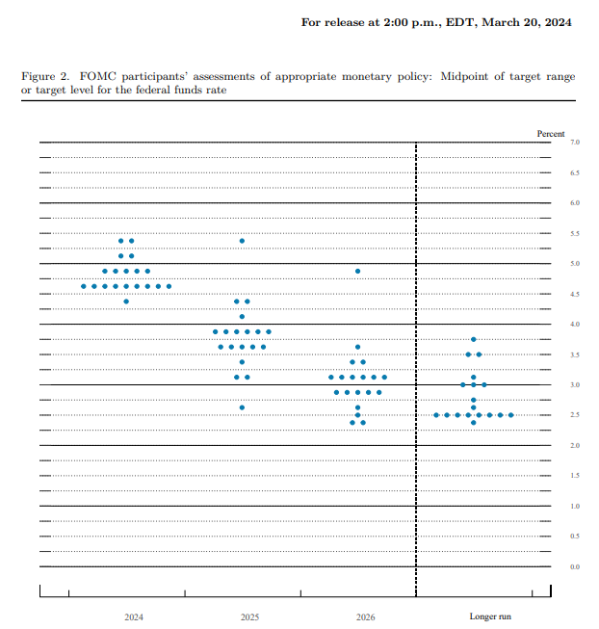
As expected, the Fed maintained the Fed Funds rate at its current level of 5.25% – 5.5%. They didn’t really indicate that rate cuts are imminent at the March meeting:  “In considering any adjustments to the target range for the federal funds rate, the Committee will carefully assess incoming data, the evolving outlook, and the balance of risks. The Committee does not expect it will be appropriate to reduce the target range until it has gained greater confidence that inflation is moving sustainably toward 2 percent.”

The big driver of inflation remains shelter:

If the Fed cuts rates, it risks a re-ignition of inflation as mortgage rates fall and home prices rise. We do have a record number of apartments under construction, and that should put downward pressure on the rental component of shelter inflation.

New York Community Bank (the parent of Flagstar) fell 38% yesterday on a loss and dividend cut. The company also acquired Signature Bank last year during the regional banking crisis. It boosted its provision for loan losses, and the Street is taking this quarter as sort of a “kitchen sink” earnings release – which is when a company that is reporting bad news decides to release everything negative all at once. This often supports better earnings going forward. That said, the dividend cut was bad news.

In other economic news, nonfarm productivity rose 3.2% in the fourth quarter and unit labor costs rose 0.5%. This is good news for inflation. Initial Jobless claims rose to 224k, indicating that the labor market is cooling.

Announced job cuts surged in January, according to outplacement firm Challenger, Gray and Christmas. “Waves of layoff announcements hit US-based companies in January after a quiet fourth quarter. As we step into 2024, the landscape is shaped by stabilizing prices and the anticipation of falling interest rates. It is also an election year, and companies begin to plan for potential policy changes that may impact their industries. However, these layoffs are also driven by broader economic trends and a strategic shift towards increased automation and AI adoption in various sectors, though in most cases, companies point to cost-cutting as the main driver for layoffs,” said Andrew Challenger, Senior Vice President of Challenger, Gray & Christmas, Inc.

The financial sector was a big contributor to the increase:

The manufacturing economy improved in January, although we are still in contractionary territory. “Demand remains soft but shows signs of improvement, and production execution is stable compared to December, as panelists’ companies continue to manage outputs, material inputs and labor costs.”