Morning Report 9/13/12

Vital Statistics:

  Last Change Percent
S&P Futures  1437.0 -2.5 -0.17%
Eurostoxx Index 2546.8 -18.0 -0.70%
Oil (WTI) 97.32 0.3 0.32%
LIBOR 0.389 -0.006 -1.40%
US Dollar Index (DXY) 79.67 -0.071 -0.09%
10 Year Govt Bond Yield 1.73% -0.02%  
RPX Composite Real Estate Index 193.4 0.3  

Markets are lower this morning after initial jobless claims ticked up to 382k and the Producer Price Index showed inflation in check. All eyes turn to the FOMC decision scheduled for 12:30 est. Here is the summary of what to look for. Bonds and MBS are both stronger.

Fannie Mae’s latest issue of Housing Insights does a deep dive into the latest employment statistics. While average weekly earnings have rebounded from the recession, aggregate weekly earnings have not. What did Keynes say about “sticky wages?”  What this means is that wages have recovered for the people that have jobs, but is you add up everyone’s salaries, that number has not. Which pretty much tells us what we already know – wages are flattish and unemployment is high. They blame the construction sector for the weakness.  As I have said before, we have under-built housing for the past 10 years. Tight credit and temporarily depressed housing formation has masked the effect on housing demand. That won’t last forever.

Census points out that median income fell 1.5% in the last two years. Interestingly 2010 was the peak of average or median wages and they have been falling ever since. The two reports do disagree somewhat – Fannie has average wages up about 2% since the recession began, while census shows them 8.1% lower. Both adjust for inflation, and I cannot imagine the difference between median and average would be that great, so I am not sure what is going on there.  Census also notes the income gap is widening, so expect the study to be political fodder.

Rob Chrisman dissects the recent G-fee increase and its effect on the mortgage market. RTWT.

Is the rental boom reaching the end of the line? Maybe in Manhattan.

Morning Report 9/12/12

Vital Statistics:

  Last Change Percent
S&P Futures  1435.8 5.2 0.36%
Eurostoxx Index 2568.4 10.7 0.42%
Oil (WTI) 97.4 0.2 0.24%
LIBOR 0.394 -0.005 -1.13%
US Dollar Index (DXY) 79.74 -0.113 -0.14%
10 Year Govt Bond Yield 1.74% 0.03%  
RPX Composite Real Estate Index 193.2 0.1  

Markets are buoyant this morning after a German Court ruled against efforts to block a european rescue fund. Apple is unveiling the iPhone 5 today as well. Mortgage applications rose, while import prices fell. Bonds are down about 3/4 of a point and MBS are down 1/4 or so.

The FOMC starts their two day meeting today, and will release their decision tomorrow around noon. The market expectations are for an extension of ZIRP into 2015 and a new round of bond buying. Given the run we have had in the stock market, we are possibly setting ourselves up for disappointment or a “buy the rumor, sell the fact” reaction.  

If you live in a state with judicial foreclosures (e.g. New York, New Jersey, Florida), you may find that it will cost you more to get a mortgage. Acting FHFA Chairman Ed DeMarco has suggested that Fan and Fred increase their guarantee fees in these states to compensate the fund for the elongated timelines. (It can take 5 years to complete the entire process in NY, while in non-judicial states like AZ the process can be done in 2).  JP Morgan estimates that the proper compensation would be 10 – 20 basis points up front. FHFA intends to put the policy out for comment in the near future, where it will undoubtedly get panned by housing advocates.

WaPo has a long background piece on the CFPB and what it is up to (spraying lenders with subpoenas).

Foreclosure auctions are attracting big institutional money.  Colony, Blackstone, Och-Ziff and Oaktree have raised $8 billion for the activity. The plan is to rent them out of drip them out slowly into a rising housing market. In an era of ZIRP, high single digit rental yields are appealing to yield starved investors.

Morning Report 9/11/12

Vital Statistics:

  Last Change Percent
S&P Futures  1431.7 5.3 0.37%
Eurostoxx Index 2521.7 -6.8 -0.27%
Oil (WTI) 96.72 0.2 0.19%
LIBOR 0.399 -0.006 -1.36%
US Dollar Index (DXY) 80.23 -0.172 -0.21%
10 Year Govt Bond Yield 1.68% 0.02%  
RPX Composite Real Estate Index 193.1 0.2  

Markets are stronger this morning after the government sold a stake in AIG and the National Federation of Independent Businesses noted an increase in optimism.  Deutsche Bank is looking to cut $6 billion in expenses by 2015. The trade deficit shrunk from 44B to 42B.  Bonds are up 7 ticks, while MBS are down a couple.

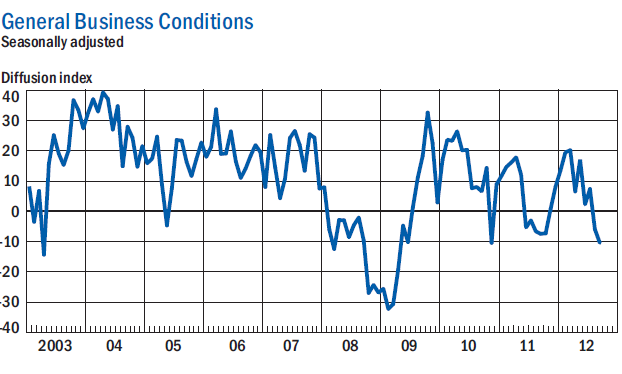
The National Federation of Independent Business released their Small Business Optimism Report for September, which showed improvement, but is still solidly in recession territory. On the positive side, hiring plans are the best they have been in years; but on the negative side, they aren’t hiring now. It also weighs in on QE, asking the obvious question:  “Is anyone not hiring because interest rates are too high?” They also note that “political uncertainty” is at a new high – 22% of respondents cited that as a reason they are sitting on their hands. That said some pizza parlor owners must be doing okay.

Chart:  NFIB Small Business Optimism Index: 


Fannie’s first sale of REO-to-Rentals traded at 96% of BPO.  That is an eye-popping number, given that distressed pools have been trading in the mid / high 60s, but this is an oddball transaction – the buyer (Pacifica) will participate in a JV with Fannie, will put up under 16% of the purchase price, manage the properties, split the cash flows with Fannie and will receive a management fee. It seems odd that Fannie is basically buying properties from itself – Pacifica puts up 12.3MM, while Fannie puts up the rest.  Let me guess, there is a mark-to-market angle here…

FHFA and F&F have launched a new Reps and Warranties framework for conventional loans sold after Jan 1.  Put-Back risk – the risk that the government could come after you and force you to re-purchase a loan if the borrower starts missing payments – has been weighing on mortgage bankers and explains why banks have put such stringent overlays on F&F loans. The government will release banks from this requirement if the loan pays consistently for 36 months. For HAMP loans, it will be 12 months.  Co-incidentally, Congress has a re-introduced a bill to expand HARP refis which may contain language regarding the Qualified Mortgage safe harbor provision. The QM has been a big source of uncertainty for lenders. Finally specifying what constitutes are qualified mortgage could go a long way towards getting mortgage credit flowing again.

Redwood is doing another deal – $312 million of jumbos – the 9th deal since the market froze in 2008. Only 9 jumbo securitizations in 4 years. Probably $2 billion in total. To put that number in perspective, non-agency deals topped 1.2 trillion in 2004 and 2005. 

Morning Report 9/10/12

Vital Statistics:

  Last Change Percent
S&P Futures  1435.6 -2.6 -0.18%
Eurostoxx Index 2528.4 -10.2 -0.40%
Oil (WTI) 96.16 -0.3 -0.27%
LIBOR 0.404 -0.004 -0.86%
US Dollar Index (DXY) 80.35 0.100 0.12%
10 Year Govt Bond Yield 1.68% 0.01%  
RPX Composite Real Estate Index 192.9 0.0  

Markets are down slightly on no some disappointing economic data out of China. Treasury plans to sell $18 billion worth of shares in AIG. Bonds are down 1/2 a point, while MBS are flat.

In spite of the disappointing Chinese data, the Street is heavily long commodities. Chart:  GSCI Index:


Italian Prime Minister Mario Monti told CNBC over the weekend that he does not expect Italy to participate in the ECB’s bond buying program, at least initially.  Remember, the individual states have to request the ECB to purchase their debt. 

JP Morgan is out this morning with a note saying they expect the FOMC to extend the low rate guidance through 2015, and initiate a small asset purchase program (maybe $300b) primarily focused on MBS. The FOMC decision is scheduled to be released Thursday at 12:30 est.

The NAR is reporting that housing affordability continues to increase in spite of the fact that prices are up 9.4% YOY.  Decreasing mortgage rates are able to offset the price increases. 

SIFMA and others have provided a formal response to FHFA regarding the Eminent Domain issue in San Bernardino.  They provide a helpful table lining out the trade and who makes / loses money. Basically the winners are the hedge fund behind this and the borrower.  The table doesn’t break out what the state gets, but presumably they will get something out of this as well.  The lender gets slammed.


Morning Report 9/7/12

Vital Statistics:

Last Change Percent
S&P Futures 1435.1 4.1 0.29%
Eurostoxx Index 2556.1 31.1 1.23%
Oil (WTI) 95.63 0.1 0.10%
LIBOR 0.408 -0.001 -0.15%
US Dollar Index (DXY) 80.77 -0.272 -0.34%
10 Year Govt Bond Yield 1.66% -0.02%
RPX Composite Real Estate Index 192.8 0.2

Markets are giving back earlier gains after a disappointing jobs report. Bonds and MBS are rallying on the number. The markets should be selling off on the lousy jobs report, but perhaps they are reacting to the possibility of more QE. Don’t fight the Fed, as they say.

Nonfarm payrolls increased by only 96k, a surprisingly weak number given yesterday’s ADP number which showed an increase of 200k. The Street was expecting 130k. June and July payrolls were revised down by 20k each. The unemployment rate fell to 8.1% from 8.3% due to a drop in the labor force participation rate, which now stands at 63.5%, the lowest level since the 81-82 recession.

Lawrence Yun has an interesting post showing how low mortgage rates are over the past 40 years. Unfortunately, it is mainly the professionals who are able to take advantage of these rates – the first time homebuyer is largely shut out.

Chart:  30 year fixed rate mortgage:

Morning Report 9/6/12

Vital Statistics:

  Last Change Percent
S&P Futures  1411.0 7.5 0.53%
Eurostoxx Index 2475.4 33.6 1.38%
Oil (WTI) 96.28 0.9 0.96%
LIBOR 0.408 -0.002 -0.37%
US Dollar Index (DXY) 81.08 -0.156 -0.19%
10 Year Govt Bond Yield 1.64% 0.05%  
RPX Composite Real Estate Index 192.7 -0.2  

Markets are higher this morning after the ECB maintained rates and the ADP Employment Change came in better than expected.  The ADP number came in at 201k, which suggests the street estimates for nonfarm payrolls is too low. Initial Jobless claims were 365k, better than expected.  Bonds are down a point, and MBS are down about 10 ticks.

Mario Draghi is discussing the ECB bond purchase program right now. It seems consistent with what had been leaked earlier – unlimited, fully sterilized purchases. It appears the plan requires that the governments need need to formally ask the ECB to conduct purchases of their debt. So, if there are strings attached that Spain or Italy do not like, nothing may happen at all.

Bob Woodward’s new book, The Price of Politics, gives insight into how the Obama Administration’s White House worked (or didn’t). It does not paint a rosy picture of the Obama White House.

Morning Report 9/5/12

Vital Statistics: 

  Last Change Percent
S&P Futures  1403.6 -2.4 -0.17%
Eurostoxx Index 2439.2 2.6 0.11%
Oil (WTI) 95.58 0.3 0.29%
LIBOR 0.41 -0.002 -0.49%
US Dollar Index (DXY) 81.21 -0.105 -0.13%
10 Year Govt Bond Yield 1.58% 0.01%  
RPX Composite Real Estate Index 192.1 -1.0  


Stock index futures are lower after the ECB released its blueprint for unlimited bond purchases and FedEx warned. A positive surprise in productivity was offset by higher unit labor costs. Bonds and MBS are flat.

The ECB has declined to put a cap on yields and will sterilize bond purchases to prevent inflation. The plan will also focus on short term government debt with maturities up to 3 years. Bill Gross must have gotten the advance word, as he tweeted yesterday “Draghi appears willing to write 2-3 year “checks” to peripherals. Very relationary.  Buy gold, TIPS, real assets.”  The Bundesbank is anticipated to be the only objection. 

The CoreLogic Home Price Index grew at 3.8% and the early indication for August is + 4.6%.  Excluding distressed sales, August is expected to come in + 6%. While they anticipate a seasonal slowdown in the growth rate, they are forecasting a gain for the full year 2012. 

Toll Brothers just priced a convertible bond issue.  $250MM, 20 year senior debt, 50 basis point coupon, 50% premium. Japanese coupon, American premium.  Old school convertible arbs are shaking their heads at that one. Credit Crunch?  What Credit Crunch? Arbs better hope the company never institutes a dividend because that bond will get smoked.

Ally is auctioning off 4 billion of subprime loans.  There has been a lot of money raised for distressed mortgage purchases in the last year, and Nationstar, Fortress, and Berkshire Hathaway are some of the high profile bidders. GMAC expects to emerge from Chapter 11 sometime in Q113.

Morning Report 9/4/12

Vital Statistics:

  Last Change Percent
S&P Futures  1405.6 0.5 0.04%
Eurostoxx Index 2458.5 -4.7 -0.19%
Oil (WTI) 97.09 0.6 0.64%
LIBOR 0.412 -0.003 -0.60%
US Dollar Index (DXY) 81.2 -0.011 -0.01%
10 Year Govt Bond Yield 1.56% 0.02%  
RPX Composite Real Estate Index 192.1 -1.0  

Markets are flat after the long weekend with no major news pre-open.  We will get ISM and Construction spending at 10:00 am. Moody’s cut the outlook of the EU to negative. Bonds and MBS are down a few ticks. 

As we head into fall, remember that most of Europe takes August off and therefore no real decisions get made. Part of the complacency in the US markets has been driven by a lack of bad news out of Europe.  Nothing has changed since mid-summer, so I would expect Europe to take the forefront again (along with the election).  WaPo has a depressing piece on the state of the young in Spain, Italy, and Greece. And there is a small matter of a slow motion bank run in Spain, in spite of another rescue. Welcome back.

paper presented at Jackson Hole last week is generating some discussion, in that it gives ammo to advocates of further quantitative easing.  It also recommends the Fed issue guidance for rates based on nominal GDP, not a timeframe (late 2014). FWIW, PIMCO CEO Mohammed El-Arian believes the Fed is signalling more activism. The sidestory is that a President Romney will replace Ben Bernake with someone more hawkish. A Romney win could be bond bearish.  How that would affect equities is anyone’s guess.

In spite of the gloom, Roger Altman makes the case that the economy will surprise on the upside. Housing and energy will lead the rebound. From 1980 to 2005, housing accounted for 4.5% of GDP.  This year, it is projected to be 2.4%.  As I have been pointing out, we have underbuilt by about 200k units for the past 10 years (even ignoring population growth).  There is pent-up demand and eventually it will be released in spite of the current economic gloom – even in hard times, people still get married, have kids, and move out of their parent’s homes. This will affect demand at the starter home level, which has been the part of the market that has been lagging. This  will enable the move-up trade that will start impacting mid-price homes. The high end (especially in the NYC metro area) probably has further to fall.

A new book details the bipartisan trainwreck that was Fannie Mae and looks at the options going forward.

Morning Report 8/31/12

Vital Statistics:

  Last Change Percent
S&P Futures  1406.8 9.7 0.69%
Eurostoxx Index 2438.5 34.7 1.44%
Oil (WTI) 95.29 0.7 0.71%
LIBOR 0.418 -0.003 -0.59%
US Dollar Index (DXY) 81.21 -0.486 -0.59%
10 Year Govt Bond Yield 1.65% 0.02%  
RPX Composite Real Estate Index 192.1 -1.0  

Markets are shrugging off a lousy NAPM Milwaukee report ahead of The Bernank’s speech, which is scheduled for 10:00am EST.  Given this is the last day of the month before a long weekend, there will probably be a flurry of activity during the speech and then the Street will be on the LIE by noon. Bonds and MBS are down slightly

While the general feeling is that Bernake will not say anything earth-shattering (he prefers to announce policy during FOMC statements) people are looking for clues regarding further QE.  Numerous sources have indicated that trading desks are long bonds going into the speech, so there is room for disappointment, or a “buy the rumor, sell the fact” reaction. The next FOMC meeting is in 3 weeks, and that should be the end of anything major out of the Fed until after the election.

Jim Grant has an op-ed in today’s Washington Post discussing the gold standard. FWIW I think the latest political re-consideration of the gold standard is more of a political attempt to keep Libertarians in the tent. He does make a good point that the dual mandate is probably asking the Fed to do too much.  As he puts it: “Positively out of bounds for the chariman of the Federal Reserve is the admission that he is in the wrong line of work.  The institution he leads was created to conduct a central banking business. But Congress and he have steered it into the central planning business. In so doing, the Fed has exchanged a job it could do for one it can’t.” And let’s be honest – the Fed sets prices (interest rates) the same way the Communist Bureaus of the USSR used to set the price of gasoline.

As I was driving into work this morning, Meredith Whitney and James Bullard (St Louis Fed Head) were debating ZIRP. Bullard made a comment (and I am paraphrasing) “Some people think the Fed kept interest rates too low for too long in the early 00s – that’s been sort of an ongoing debate.  The people who disagree would point to the fact that inflation didn’t shoot up. The problem with the policy came in other ways with the financial crisis which no one could see coming. I do worry about people reaching for yield and taking too much risk”  No mention of the housing bubble.  No mention of the stock market bubble.  And Bullard is a supposed inflation hawk.  The Fed thinks it has nothing to do with creating asset bubbles. 

Stephen Roach (ex-Morgan Stanley, now at Yale) makes this exact point when he says that Bernake should not be re-appointed. Meredith Whitney (same link as above) made the point that ZIRP has made it extremely difficult for banks to make money in their traditional business (lending) so they are taking more proprietary bets (either directly or indirectly through over / underweighting different asset classes).  Not to mention that it is annihilating pension funds (the next crisis on the horizon) and retirees are cutting back consumption because of meager earnings on their assets. Contrary to the belief in Washington, there are unintended consequences that are working against what they want to achieve (more lending, more spending, less risk). ZIRP is not “free.” 

If Romney wins, it is possible we could get a break from the Greenspan / Bernake Fed, which may well be the final nail in the 30 year Treasury Bull Market’s coffin. If that happens, in a couple of years, the financial press will learn another buzzword they don’t understand – convexity risk. Which some mortgage REITs aren’t hedging.

Morning Report 8/30/12

Vital Statistics:

  Last Change Percent
S&P Futures  1402.6 -4.6 -0.33%
Eurostoxx Index 2422.6 -11.7 -0.48%
Oil (WTI) 95.45 0.0 -0.04%
LIBOR 0.421 -0.001 -0.24%
US Dollar Index (DXY) 81.45 -0.104 -0.13%
10 Year Govt Bond Yield 1.63% -0.02%  
RPX Composite Real Estate Index 192.1 -0.8  

Markets are lower after ho-hum economic data in the US and disappointing data overseas. Bonds and MBS are up slightly. Tonight we will get Mitt Romney’s speech at the Republican Convention and then all eyes turn to Bernake’s speech in Jackson Hole.

Personal Income and Spending both rose in July, with income coming in at .3% and spending coming in at .4%. The spending number was the strongest number since last winter, but was little below street expectations. The retailers will report BTS comps a week from today, and that will give us a more granular look at spending patterns. Initial Jobless Claims were 374k last week, more or less in line with the latest readings. 

Tomorrow, Ben Bernake will give a speech in Jackson Hole. The Street will be looking for clues to further stimulus, and they will probably be disappointed as politics are now center stage and the Fed wants to appear independent. Mitt Romney has been skeptical of the Fed’s reflation efforts and has already said he would replace Ben Bernake if he wins. Which means you should watch the polling numbers as a Romney win should be bond bearish at the margin. Especially if the Europeans find a way to muddle through.

The national settlement over foreclosure abuses is 6 months old, and the settlement monitor has released his first report. Total consumer relief has been $10.6 billion, of which the lion’s share has been short sales. At first glance, it appears the banks are over halfway there on delivering the $20 billion in relief, but that $10.6 billion will be haircut as there are different weights for different outcomes.