Morning Report – Its raining money 02/27/13

Vital Statistics:

  Last Change Percent
S&P Futures  1493.5 1.1 0.07%
Eurostoxx Index 2581.6 11.1 0.43%
Oil (WTI) 92.45 -0.2 -0.19%
LIBOR 0.287 0.001 0.17%
US Dollar Index (DXY) 81.73 -0.137 -0.17%
10 Year Govt Bond Yield 1.85% -0.03%  
RPX Composite Real Estate Index 194 0.0  

Markets are flattish this morning on no real news. Italian Sovereign Yields are slightly lower after the sell-off of the last two days.  Mortgage Applications fell 3.8% last week. Durable Orders dropped 5%, which was a disappointment, but most of that looks to be due to Boeing and their battery problem.  Strip out Boeing, and orders were up 6.3%, which is a signal that businesses are starting to spend on CAPEX.  Fed Chairman Bernake will address the House Financial Services Committee today.  Bonds and MBS are rallying. For those that follow technicals, it looks like the 10 year has broken out of its bear trend of the last 4 months. 

The Bernank spoke in front of the Senate Banking Committee yesterday and seemed to tamp down speculation that the Fed intended to end QE any time soon. Remember the December minutes seemed to indicate that there was a consensus forming that purchases of MBS and Treasuries would end sometime this year.  This accounts for the 15 basis point rally we have seen in the 10 year over the past few days. He also urged the government to find a way to kick the sequester can down the road and replace it with more gradual cuts, while at the same time playing down the “fiscal armageddon” predictions.  

Bernake assured the Committee that the Fed was monitoring the unintended consequences of low interest rates and said that the risks of new bubbles were offset by companies using low interest rates to lock in low borrowing costs for a long period. Almost on cue, Bloomberg has a story regarding this exact issue, where the yield pigs are feasting on junk bonds, which “trade like dot coms.” As an aside, Radian (remember them?  the mortgage insurer left for dead in the depths of the crisis?) They just priced a convert deal, 2 1/4s up 25. Its raining money out there..

Jamie Dimon said yesterday that banks are accumulating more capital than regulators require and will not know what to do with it in two years.  “Lend it” is the obvious answer, but if you can lock up long term capital in the bond market for less than your dividend yield, what are you going to do as a CFO?  

The jumbo market is coming back. While still nowhere near pre-crisis levels, jumbo origination is up 60% from last year. While still hard to get, the loans are priced aggressively, at about a 23 basis point spread to conventionals.  A pick up in jumbo activity may well foreshadow the return of the private label market.

Morning Report – Case-Schiller 02/26/13

Vital Statistics:

  Last Change Percent
S&P Futures  1490.8 3.6 0.24%
Eurostoxx Index 2586.8 -65.1 -2.45%
Oil (WTI) 92.23 -0.9 -0.95%
LIBOR 0.287 0.000 0.00%
US Dollar Index (DXY) 81.85 0.180 0.22%
10 Year Govt Bond Yield 1.87% 0.01%  
RPX Composite Real Estate Index 194.1 -0.5  

Markets are higher after yesterday’s bloodbath.  Yesterday’s sell-off was blamed on Italian election results which caused a 32 bp sell-off in Italian sovereigns.  They have traded another 50 basis points wider this morning. The Bernank will testify before the Senate Banking Committee today.  Bonds are higher, continuing yesterday’s furious rally. The 10-year has tightened by 13 basis points and is trading at 1.87%.  MBS are flat.

The S&P Case-Schiller index of home prices rose 6.8% YOY and .88% MOM in December. The only MSA with negative growth was New York.  Separately, FHFA reported that prices increased .6% MOM in December. They note that while the foreclosure pipeline is still high, the actual number of homes available for sale is very low and falling. 

Altos has a piece on why inventory is so low. First, they cite low housing starts. From 1957 – 2002, we averaged 1.5 million units a year.  Since the bubble burst, we have been hitting around 700k. Quickly ramping up housing construction is difficult. Second, there is psychological effect of sellers who now see the light at the end of the tunnel.  Prices are rising again, and they are hoping to get out flat. Finally, the government has emphatically sided with home owners over home buyers. They are pulling out all the stops to keep inventory off the market through foreclosure mitigation and refinance opportunities for underwater homeowners.  This has the net effect of restricting supply, which is good for existing homeowners, but not so much for first time homebuyers who want in. The net result:  2013 home price appreciation should be very strong. 

In confirmation of the above, the Despot reported a 13.9% increase in 4Q sales, with comps up 7%. While they attribute some of the growth to Sandy repairs, they mainly cite the improving residential real estate market. 

In a sign that the refi boom may be over, JP Morgan plans on cutting headcount in mortgage banking by 13k – 15k in an effort to cut $3B in expenses by the end of 2014. They see cutting 3,000 – 4,000 jobs in consumer banking this year, almost entirely by attrition.  The hits keep coming….

Bob Corker is saying the ball is in the White House’s court in order to confirm CFPB acting Chairman Richard Cordray.  A January court decision that Obama’s recess appointments to the NLRB were unconstitutional is giving Republicans a chance to press for changes to CFPB in order to bring more of it under Congressional control.  They are arguing for a 5 member bipartisan board, and for the budget to be subject to the normal appropriations process. 

Morning Report – Life after Fan and Fred 02/25/13

Vital Statistics:

  Last Change Percent
S&P Futures  1521.4 6.8 0.45%
Eurostoxx Index 2688.7 58.6 2.23%
Oil (WTI) 94.04 0.9 0.98%
LIBOR 0.287 -0.002 -0.52%
US Dollar Index (DXY) 81.11 -0.368 -0.45%
10 Year Govt Bond Yield 1.98% 0.02%  
RPX Composite Real Estate Index 194.5 0.2  

Markets have a risk on feel this morning on no real news.  Elections are being held in Italy, with Bersani on track to win. Italian sovereign yields have tightened 20 basis points in response. Bonds and MBS are down.

Sequester week. Bob Woodward had a column over the weekend that said, WH protestations aside, that the sequester was Obama and Lew’s idea in the first place. The WH is releasing all sorts of gloom and doom scenarios about what will happen if sequestration happens. Republicans seem to be content to allow the cuts to happen. FWIW, I do not believe the markets care one way or the other about the impending sequester. 

The Chicago Fed National Activity Index showed growth moderated in January, falling to -.32 from a revised +.25 the previous month. Production related indicators explain most of the weakness, although employment and consumption also were negative contributors. The 3 month moving average is still in positive territory, indicating that economic growth continues to be moderately above trend.

The Bernank will be testifying in front of Congress this week. These things tend to be partisan dog-and-pony shows where the questioners are more interested in getting the Fed Chairman to validate their worldview than they are in seeking actual answers.  Democrats will undoubtedly be pushing for Bernake to say that sequestration will be an economic nightmare, while Republicans will be pushing for him to say that spending and the debt pose a problem. Democrats will also be looking for support for raising the minimum wage. Republicans will probably want to drill down a bit on the end of QE. 

The Bipartisan Policy Center has released a report on the future of housing and the GSEs. With the government guaranteeing 90% of all mortgages these days, there is a push in Washington to get the private sector more involved. They envision phasing out Fan and Fred and replacing them with a “public guarantor,” who has a re-insurance role, stepping in only when private insurers are unable to make good on the loan. They also propose that the government get involved with providing affordable rental housing. 

Morning Report – Housing Market Outlook 02/15/13

Vital Statistics:

  Last Change Percent
S&P Futures  1518.0 -0.5 -0.03%
Eurostoxx Index 2632.2 -3.2 -0.12%
Oil (WTI) 96.64 -0.7 -0.69%
LIBOR 0.29 0.000 0.00%
US Dollar Index (DXY) 80.52 0.066 0.08%
10 Year Govt Bond Yield 2.01% 0.01%  
RPX Composite Real Estate Index 192.7 -0.4  

Markets are flattish on no real news. The Empire State Manufacturing Survey showed improvement in NY State for the first time in months. Bonds and MBS are flat.

Elizabeth Warren is fighting to keep the CFPB from being accountable to Congress. Senate Republicans are pushing to have the Bureau subject to annual appropriations and installing a 5 member board to increase transparency and accountability. Liberals are pushing for a straight up and down vote on Richard Cordray, who was installed through a recess appointment. 

Dr. Cowbell was on Bloomberg TV this morning pushing for the Fed continue ZIRP as long as possible, in order to sustain the US housing recovery.  He blames Japan’s lost decade on premature tightening by the Bank of Japan. He made is usual push for infrastructure spending and said we don’t have a debt problem. Of course the Fed is keeping the bond vigilantes at bay. Can they do so forever? 

Freddie Mac has released their 2013 Economic and Housing Market Outlook. Like Krugman, they note the nascent strength in housing and estimate that it could add .5% to GDP this year.  They see the 30 year fixed rate mortgage at 4% by Q413, with unemployment at 7.5% and housing starts at 1 million. They forecast that originations will fall by 15% this year as refis drop from a 75% share to a 40% share.  

Senate Democrats unveiled a plan to delay the sequester by replacing the non-defense discretionary spending cuts with tax increases and maintaining defense cuts. Of course it has zero chance of going anywhere –  it is more of a demagoguing opportunity for the President and an attempt to give the Heisman to an idea that was his to begin with.  It is increasingly looking like there will not be a deal on the sequester, so it will either (a) happen, (b) get delayed for a year, or (c) happen and then get fixed in the continuing resolution. 

Note:  The MR will be spotty next week as I will be on the Left Coast.

Morning Report: QRM vs QM 02/14/13

Vital Statistics:

  Last Change Percent
S&P Futures  1515.2 -2.0 -0.13%
Eurostoxx Index 2637.2 -19.7 -0.74%
Oil (WTI) 97.3 0.3 0.30%
LIBOR 0.29 0.000 0.00%
US Dollar Index (DXY) 80.52 0.426 0.53%
10 Year Govt Bond Yield 2.05% 0.02%  
RPX Composite Real Estate Index 193.1 -0.4  

Markets are weaker this morning in spite of better than expected initial jobless claims and couple of new mergers (Berkshire Hathaway buying Heinz, and US Airways / American Airlines). The Eurozone economy weakened. Bonds and MBS are flat.

In the State of the Union, President Obama referred to “overlapping regulations” and called for streamlining the mortgage process.  The housing industry is hoping that means that the Qualified Residential Mortgage rule (promulgated by the banking regulators) and the Qualified Mortgage Rule (promulgated by CFPB) will become consistent with each other.  The sticking point is that the QRM rule is much more strict than the QM rule (QRM: 20% down, 36% DTI), vs QM (43% DTI). Bankers and consumer groups hope to have the down payment rule removed, and would ultimately like to see the QRM rule to match the QM rule.  It seems that there is some bipartisan consensus on this.

Speaking of the SOTU, Obama’s agenda drew little support from Republicans, who “called it dead in the water.”  John Boehner objected that his plan raises the price of employment and noted that when you increase the cost of something, you get less of it.  Mitch McConnell referred to it as “liberal boilerplate that any Democratic lawmaker could have given at any time in recent memory.”  John Thune noted that Obama would have a hard time getting Democrats to go along with portions of it.  Six Senate Democrats seeking re-election next year in states that supported Mitt Romney are going to be hard pressed to vote fore new tax revenues beyond what has already been approved.  At the end of the day, it will depend on whether Obama chooses to demagogue or deal. On the minimum wage, one Republican said it would have a chance if it was accompanied by a business package of tax credits and expensing rules to help small business.  Paul Ryan noted that Obama chose not to politicize immigration reform, which means that something can be done there.

Sen Tom Coburn, R-OK says the sequestration cuts are going to happen. I still think it is much ado about nothing.  Some facts:

Spending Side:

  • Total Sequestration cuts:  $85 billion
  • Requested increase in the budget from FY12 – FY13: $75 billion
  • Net change in spending: ~ $10B (or about 6 basis points of GDP)
Revenue Side:
  • Payroll tax Holiday expiration:  $160 billion
  • Tax hike on the rich:  $40 billion
  • Obamacare tax hikes $42 billion
So we have added $242 billion in new revenue this year (which apparently won’t hurt the economy) yet we are wringing our hands over the fact that the government is being asked to make do with what it got last year, which, at 24% of GDP, is pretty much a post-WWII high. Call me an optimist, but I don’t think anyone outside of the Beltway is even going to notice if the sequestration cuts happen. 

St Louis Fed Head James Bullard gave an upbeat presentation at Arkansas State University, noting that the Euro sovereign debt crisis seems to have calmed down and that some of the uncertainty in the US economy has been dissipating. The most important news came with the Q&A with reporters – he is not ready to call for an end to QE, and would defer any decision-making until this summer to see if the economy continues to improve. 

Morning Report – CoreLogic Market Pulse -2/13/13

Vital Statistics:

  Last Change Percent
S&P Futures  1518.8 2.6 0.17%
Eurostoxx Index 2656.9 8.1 0.30%
Oil (WTI) 97.85 0.3 0.35%
LIBOR 0.29 -0.002 -0.68%
US Dollar Index (DXY) 79.98 -0.125 -0.16%
10 Year Govt Bond Yield 2.00% 0.02%  
RPX Composite Real Estate Index 193.5 0.3  

Markets are up slightly after retail sales came in as expected. Ex auto and gas, they disappointed. However, there was some fear that the Jan 1 tax hikes would curtail consumer spending.  At least this data point shows it hasn’t.  Although to be fair, a +.1% increase is nothing to write home about. Mortgage applications fell. 

CoreLogic’s latest Market Pulse previews 2013. They predict that the refi boom is over, but it will be some time before the purchase market comes back. They note that 2012 census data indicates that household formations increased by 1 million, which is getting back to normalcy.  As I have said before, there is a lot of pent-up demand here, as the low household formation numbers of the last 5 years have been driven by economic weakness, not demographics. They do forecast that margins may get compressed as lenders fight over a declining amount of activity. That said, you can’t turn a refi shop into a purchase shop overnight. They also do an interesting analysis of the expected effect of QM loans. Near term, it will probably increase the profile of the GSEs.  Longer term, it will greatly increase performance characteristics.  Anyway, lots of good stuff in here.  RTWT.

27% of borrowers who refi are shortening their terms, according to Freddie Mac.  Cash-out refis account for just 16% of refinances, while cash in refis have jumped to 39%.  Ironic that consumers are getting more conservative when the Fed is using every tool in its toolbox to get consumers to do the exact opposite. 

Looks like the sequestration cuts are going to happen.

Morning Report – S&P swings back 02/12/13

Vital Statistics:

  Last Change Percent
S&P Futures  1513.0 -0.1 -0.01%
Eurostoxx Index 2631.2 8.6 0.33%
Oil (WTI) 97.59 0.6 0.58%
LIBOR 0.292 -0.001 -0.34%
US Dollar Index (DXY) 80.28 -0.031 -0.04%
10 Year Govt Bond Yield 1.97% 0.00%  
RPX Composite Real Estate Index 193.2 -0.1  

Markets are flattish as the G-7 countries promise not to target currency rates with economic policies. Barclay’s is cutting 3,700 jobs. The President gives his state of the union address tonight, and it will focus on the economy and job creation.  Bonds and MBS are flat.

The National Association of Realtors reported that the median price of an existing home rose 10% in Q411 to 178,900 from 162,600 in Q411. That puts the median house price to median income ratio roughly at 3.53x, which is towards the top of its historic 3.15 – 3.55x range. This begs the question:  Is housing overvalued?  Perhaps, but wages have gone nowhere for 6 years.  Perhaps this time, wages catch up.

Chart:  Median House Price to Median Income Ratio:


The National Federation of Independent Businesses released its Small Business Optimism survey, and while it increased, it was still a dismal reading. On the plus side, more small business owners are hiring than firing. Capital Expenditures are increasing, although they are still in maintenance mode. Overall, the report suggests that sentiment is improving, albeit from very low levels.

McGraw Hill (owner of Standard and Poors) comes out swinging against the DOJ in their latest earnings release. They point out that the US cherry-picked a few emails, and that alone is only evidence of an atmosphere of “vigorous debate” but not wrongdoing.  They note that they were downgrading CDOs with 2006 vintage RMBS a year and a half before Lehman failed (which actually co-incides with the beginning of the financial crisis, IMO).  I remember the credit markets beginning to freeze in the summer of 2007, which was being called a “buyers strike.”  Finally, they note that virtually everyone missed the housing bubble, and the fact that their actions proved to be insufficient in hindsight does not prove intentional misconduct at S&P.

The state of Nevada is taking steps to reduce shadow inventory by buying distressed pools of mortgages and working them out to reduce principal.  They will purchase homes at 70% of appraised value and re-work the loan or foreclose and re-sell the property.  It will be administered by a non-profit entity. It will be funded with receipts from the National Mortgage Settlement. Once the loan has been seasoned as a re-performer, it will be sold back into the market and the money recycled. 

Morning Report – Disparate Impact 02/08/13

Vital Statistics:

  Last Change Percent
S&P Futures  1511.8 -0.6 -0.04%
Eurostoxx Index 2626.5 -3.8 -0.14%
Oil (WTI) 95.4 -0.3 -0.33%
LIBOR 0.293 0.001 0.38%
US Dollar Index (DXY) 80.4 0.151 0.19%
10 Year Govt Bond Yield 1.95% 0.00%  
RPX Composite Real Estate Index 193.2 -0.1  

Markets are flattish on no real news. Most of Asia was closed overnight for the lunar new year.  The G7 is expected to make a statement against competitive devaluation.  There is no economic data this morning, but many will be looking at tomorrow’s retail sales report to get a gauge on how much consumers have been affected by the increase in taxes.  Bonds and MBS are flat.

The internal debate at the Fed concerns how to start extricating itself from the market. As QE winds down, the Fed wants to prevent the market from getting ahead of it and prematurely slowing down the economy. The fear is that the market will interpret the end of QE as a signal that the end of ZIRP is imminent. Since the Fed has given numerical targets for the end of ZIRP, this fear is probably overblown, but targets can be changed. That said, if you look at the float numbers, the Fed has effectively cornered the market in 10 to 20 year bonds. And they have the buying power to maintain it.  The exit may involve simply holding the paper and letting it mature.

HUD just made it easier to prove discrimination cases.  Under the disparate impact rule, statistical proof that your lending mix is different that the population as a whole means you are guilty of discrimination, no matter what your policy or intention is.  Period. Obviously this is a huge victory for affordable housing advocates. The Mortgage Bankers Association is unhappy. IMO, this whole debate of FICO explaining everything misses the point that collateral valuation volatility in some neighborhoods is higher than in others.  Since the borrower is effectively long a put (if the house drops below the loan amount, they can toss the keys to the bank), and the value of a put is a function of volatility, then that has to be priced in the loan. And if house prices are more volatile in Detroit, or Harrisburg, or Newark then loans there should cost more to reflect that.  Which means FICO is not the whole story, contrary to what housing advocates insist.

45 Democrats sent a letter calling on President Obama to permanently replace Acting FHFA Director Ed DeMarco with someone more “willing to implement all of Congress’ directives to meet the critical challenges still facing our nation’s housing finance markets.”  This statement means willing to forgive principal on Freddie and Fannie loans. The mandate to put taxpayers first is at loggerheads with the desire to ease the financial burden on consumers. 

Separately, the White House is considering more mortgage relief for homeowners through executive order. The plan would allow underwater homeowners who are current on their mortgage to refinance at today’s rates, even if their loans are private label.   

Morning Report – Jimmy Rogers is short the 10-year 02/07/13

Vital Statistics:

  Last Change Percent
S&P Futures  1507.0 0.2 0.01%
Eurostoxx Index 2624.7 7.4 0.28%
Oil (WTI) 96.62 0.0 0.00%
LIBOR 0.292 -0.001 -0.34%
US Dollar Index (DXY) 79.65 -0.074 -0.09%
10 Year Govt Bond Yield 1.97% 0.01%  
RPX Composite Real Estate Index 193.4 0.3  


Another slow news day.  Markets are flat after the ECB maintained interest rates.  Initial Jobless Claims rose to 366k last week, while productivity fell.  Bonds and MBS are down small.

Jimmy Rogers is getting short Treasuries. He has been saying bonds have been in a bubble since 2009, though he has only started shorting them recently.  He plans to increase his position. Guys like Jimmy Rogers can’t affect bond prices (they are too small), but the Fed can, and will once it ends QE and begins to unwind its balance sheet.  The bond vigilante has been dormant for 20 years, but is about to make a re-appearance.

The National Association of Homebuilders Improving Markets Index expanded to 259 in February, with all 50 states represented. Roughly 70% of the metros covered were listed as improving. 

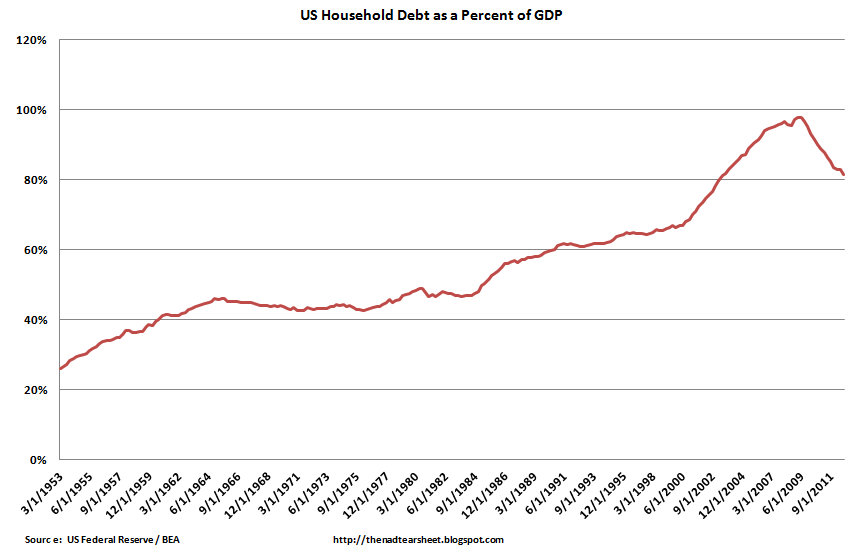
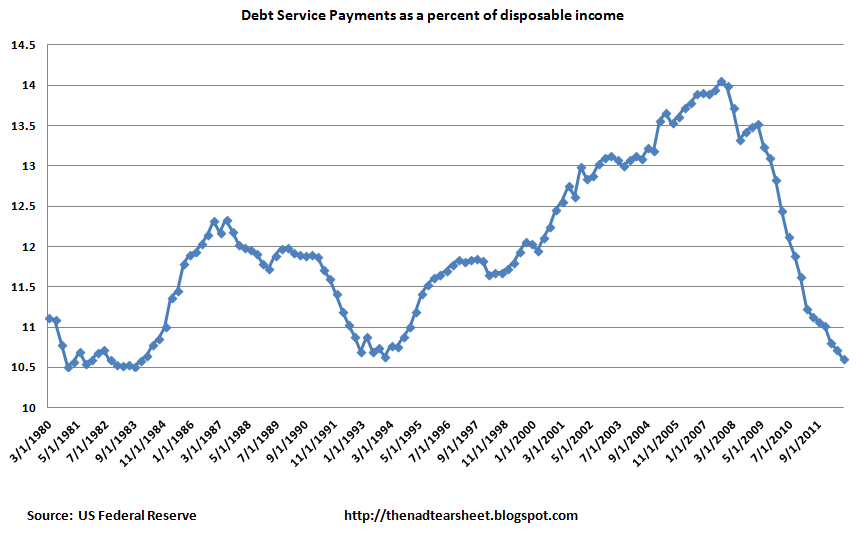
Even though the financial crisis ended long ago, the scars still linger.

Morning Report – S&P lawsuit 02/06/13

Vital Statistics: 

  Last Change Percent
S&P Futures  1501.6 -4.3 -0.29%
Eurostoxx Index 2615.6 -35.6 -1.34%
Oil (WTI) 95.23 -1.4 -1.46%
LIBOR 0.293 -0.003 -0.85%
US Dollar Index (DXY) 79.83 0.341 0.43%
10 Year Govt Bond Yield 1.97% -0.03%  
RPX Composite Real Estate Index 193 -0.1  

Slow news day. Stock index futures are lower after yesterday’s strong rally.  MBA mortgage applications rose 3.4% in the week ended Feb 1. The ECB meets later today.  Bonds and MBS are up.

Earnings season is starting to wind down.  Roughly 3/4 of all the companies in the S&P 500 have released earnings so far.  2/3 have beaten forecasts.

Pension funds and endowments are getting out of the commodities markets after returns have disappointed. When commodities started rallying about 6-7 years ago, big pension funds began buying commodities as a way to increase exposure to assets uncorrelated with stocks and bonds.  The problem is that these markets are relatively tiny compared to stocks and bonds (the dollar value of the entire open interest in the March WTI crude oil contract is about the same dollar value of Exxon Mobil stock traded daily). This meant that pension funds were driving up prices of commodities as they bought them.  And it wasn’t just oil – it was copper, lumber, wheat as well.  Unlike traditional speculators who buy and sell, the big institutions were making a long-term investment, which is more or less unheard-of in the commodities market, at least on a large scale.  Large OTC derivatives contracts allowed them to get around position limits, and those will be restricted in Dodd Frank. The punch line is that their exit will put pressure on commodity prices and keep inflation in check. It will also be a good thing for cash-strapped consumers. Where is the money going?  TIPS.

The Justice Department is suing S&P over ratings for subprime mortgages.  The complaint is here. The government is going to focus on conflict-of-interest issues (the issuer pays the ratings agency, not the investor) and supposedly not go after them for failing to predict the bursting of the housing bubble. Some of the damning emails are here. Sure, maybe ratings agencies may have suspected the housing bubble was bursting.  Does that mean that professional investors who relied solely on S&P’s rating get a pass?  A professional investor’s claim that “I bought this security because S&P said it was okay” ranks up there with “The dog ate my homework.” They do have a fiduciary duty, after all…

GOP Senators Bob Corker and David Vitter have introduced a bill to remove the dual mandate and direct the Fed to focus on inflation only.  Needless to say the bill is going nowhere in the Democratically-controlled Senate, but is should hopefully spark some debate.  Does the dual mandate compel the Fed to keep interest rates too low and does that fuel speculative bubbles?  

Separately, Senate Republicans have sent the President a letter suggesting that there be a bipartisan board of directors to oversee the CFPB and that its budget be subject to the annual appropriation process.  Actually, the 5 member board was part of the original proposal.  Again, this will probably end up going nowhere.