Morning Report: Construction spending falls 10/3/16

Vital Statistics:

Last Change
S&P Futures 2155.5 -5.0
Eurostoxx Index 343.2 0.2
Oil (WTI) 48.6 0.4
US dollar index 86.6 0.4
10 Year Govt Bond Yield 1.60%
Current Coupon Fannie Mae TBA 103.3
Current Coupon Ginnie Mae TBA 104.2
30 Year Fixed Rate Mortgage 3.46


Markets are down this morning on no real news. Bonds and MBS are down as well.
The big event this week will be the jobs report on Friday. We will also have a lot of Fed-speak as well.
The PMI Manufacturing Index slipped in September, while the ISM manufacturing index rose.
Construction spending fell 0.7% in August.  It is also down 0.3% on a year-over-year basis. Residential construction spending fell 0.2% and is up 1.3% for the year. Public construction was down 2.2% and is down 8.8% on a year-over-year basis. Note both Hillary Clinton and Donald Trump support a big infrastructure spending program.
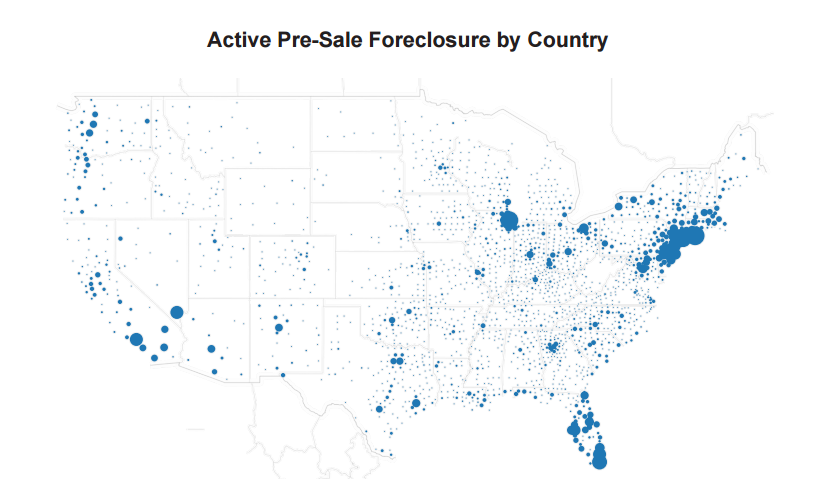
Delinquencies are down in August according to the Black Knight Mortgage Monitor. The pre-sale foreclosure inventory is now down around 1%, although the inventory is still concentrated in the Northeast, Florida, and Chicago areas. Cash-out refinances increased to 42% of all refis.

After Friday’s weak consumer spending data, the Atlanta Fed took down their estimate of Q3 GDP to 2.4% from 2.8%.
Portfolio Managers are forecasting the bond bull market will continue into the 4th quarter as global growth is simply too weak to push up inflation. Of course they are talking their books, but they are probably correct. Separately, Henderson of the UK bought Janus Capital this morning.
Over the weekend, the New York Times got ahold of Donald Trump’s taxes from 1995, where he showed a $916 million loss, which he has used to write off taxes owed going forward. Of course, using business losses to offset business income is as legal as eating a hot dog at the ballpark, so there probably isn’t a lot of political “there” there. Separately, Julian Assange claims he has emails which will finish Hillary Clinton, though WikiLeaks is delaying the release.
China continues to grapple with its housing bubble in hopes of engineering a soft landing. Watch the video at the end of the story, where investors storm an entrance in order to buy property.

Morning Report: Incomes up, spending flat 9/30/16

Vital Statistics:

Last Change
S&P Futures 2150.0 1.0
Eurostoxx Index 340.9 -2.0
Oil (WTI) 47.9 0.0
US dollar index 86.6 0.4
10 Year Govt Bond Yield 1.55%
Current Coupon Fannie Mae TBA 103.3
Current Coupon Ginnie Mae TBA 104.2
30 Year Fixed Rate Mortgage 3.47

Stocks are lower this morning as the markets fret about Deutsche Bank. Bonds and MBS are up on the risk-off trade.

Deutsche Bank, which is being fined by the US government for $14 billion is starting to see some hedge fund clients back away from it. While it probably doesn’t really pose any systemic risk (the US government isn’t about to bankrupt German’s biggest bank) it will cause a flight to safety, which will push down Treasury yields. If this snowballs, look for more easing out of the ECB, and potentially another excuse for the Fed to stand pat.

Personal Incomes rose 0.2% last month while personal spending was flat. The core personal consumption expenditure index (the Fed’s preferred inflation measure) rose 1.7% YOY, which is below the Fed’s 2% inflation target. Larry Summers says income inequality is depressing spending by about 3%.

The Chicago Purchasing Manager Index rose in September.

Consumer confidence improved in September.

Janet Yellen mused about the Fed buying corporate bonds and stocks in order to respond to a downturn after they have hoovered up all the government debt out there.

Seriously delinquent loans fell to 1.24% in August, the lowest level since April 2008. Pre-crisis it was below 1%.

Morning Report: Pending home sales fall on tight inventory 9/29/16

Vital Statistics:

Last Change
S&P Futures 2159.0 -4.0
Eurostoxx Index 344.3 2.0
Oil (WTI) 47.1 0.0
US dollar index 86.5 0.4
10 Year Govt Bond Yield 1.59%
Current Coupon Fannie Mae TBA 103.3
Current Coupon Ginnie Mae TBA 104.2
30 Year Fixed Rate Mortgage 3.47

Stocks are lower this morning as oil rallies. Bonds and MBS are down small.

Initial Jobless Claims came in at 254k, which is at a 43 year low. When you take into account population growth, that number is astounding. The last time jobless claims were around these levels, we had just ended the draft for the Vietnam War.

The third revision for Q2 GDP came in at 1.4%, which was an increase from the second estimate of 1.1%. Non-residential fixed investment and consumption drove the upward revision. The Personal Consumption Expenditure Index (the Fed’s preferred measure of inflation) came in at 2%, spot on with their target. Gross Domestic Income fell 0.2%, which is a disappointment.

Consumer Comfort ticked up last week, according to the Bloomberg Consumer Comfort Index.

Pending Home Sales dropped 2.4% in August, according to the NAR. Lawrence Yun, NAR chief economist, says suffering supply levels have taken the wind out of the momentum the housing market experienced earlier this year. “Contract activity slackened throughout the country in August except for in the Northeast, where higher inventory totals are giving home shoppers greater options and better success signing a contract,” he said. “In most other areas, an increased number of prospective buyers appear to be either wavering at the steeper home prices pushed up by inventory shortages or disheartened by the competition for the miniscule number of affordable listings.”

Immigrants are much more educated today than they were a couple of decades ago. That is creating issues in the housing market. Traditionally, low-skilled immigrants were builders of housing. Today many are arriving with college degrees, and therefore they are much more likely to be buyers of housing. This partially explains why inventory is tight and why it is hard to find skilled labor.

Corporate profits fell 1.7% YOY in the second quarter. This is the third consecutive drop, which is a worrisome stat for the stock market, especially as the Fed begins to take away the punch bowl.

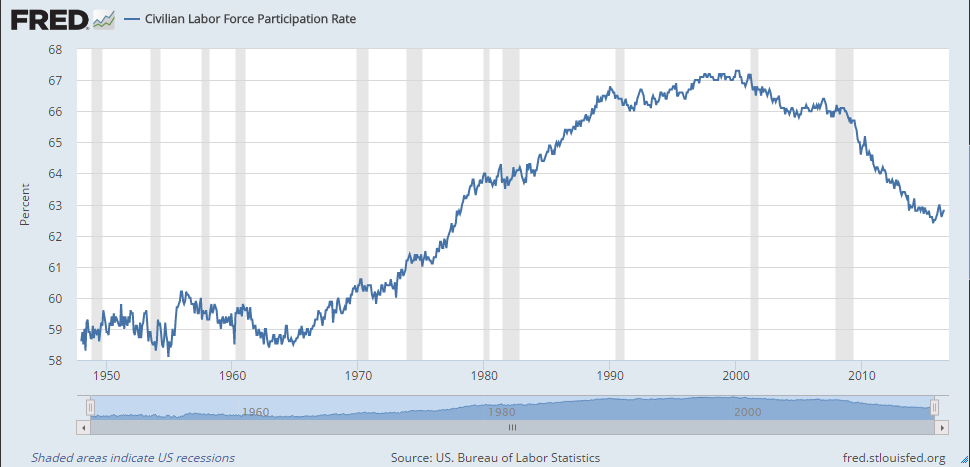
Separately, are rising incomes helping to alleviate the problem of affordability? The drop in GDI didn’t help. The ultimate issue will revolve around the long-term unemployed. Do they come back into the workforce or stay out? If they come back, wage inflation will be modest until that reservoir is used up. Ultimately that is better for the economy long-term. If they stay out, it will depress consumption and will probably start pushing up wages for those that do have jobs. Watch the quits rate on the JOLTS job openings. That will be the tell.

Morning Report: The hottest real estate markets are cooling off 9/28/16

Vital Statistics:

Last Change
S&P Futures 2153.5 1.0
Eurostoxx Index 343.1 3.0
Oil (WTI) 45.2 0.5
US dollar index 86.3 -0.2
10 Year Govt Bond Yield 1.56%
Current Coupon Fannie Mae TBA 103.3
Current Coupon Ginnie Mae TBA 104.2
30 Year Fixed Rate Mortgage 3.47

Stocks are flat this morning on no real news. Bonds and MBS are flat as well.

We have a lot of Fed-Speak today, with Neel Kashkari, Janet Yellen, and James Bullard speaking this morning. Charles Evans, Loretta Mester, and Esther George speak this afternoon. There is the possibility that some of them could say something market-moving so be careful with your locks.

Mortgage Applications fell 0.7% last week as purchases rose 1% and refis fell 2%.

Durable Goods orders were flat month-over-month and down 1.3% YOY. Ex-transportation, they fell on a MOM and YOY basis. Capital Goods orders (a proxy for business capital investment) is also down for the year, although it was up on a MOM basis. July’s numbers were revised downward, so this report is nothing to write home about.

Despite the gloom in the corporate sector, consumer confidence rose and is at post-crisis highs. This is probably being driven by the stronger labor market. We aren’t seeing these numbers flow through to actual sales at the retailers though. The Back-To-School shopping season was a disappointment.

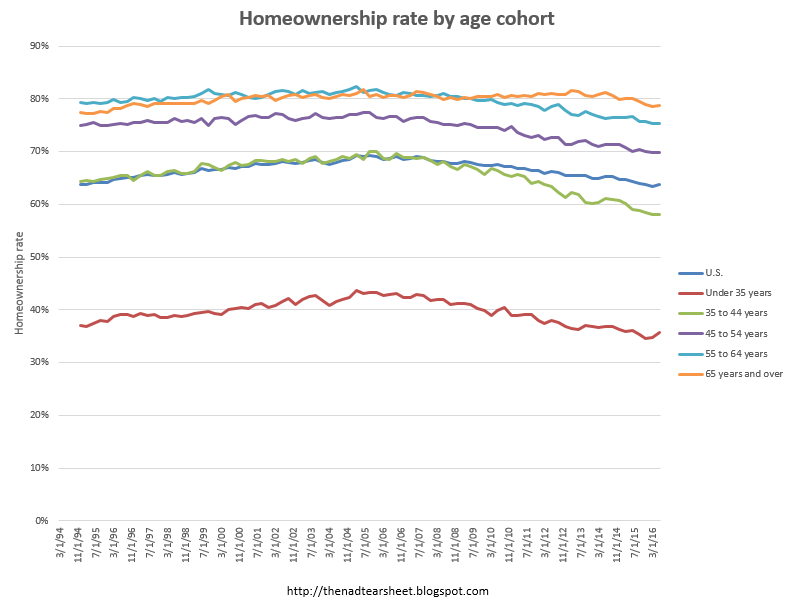
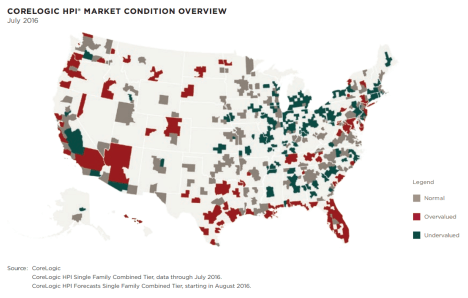
The hottest real estate markets are beginning to cool off, as high prices and low inventory are putting off buyers. Many of these markets have long surpassed their bubble peaks and are hitting new highs. Given that incomes have not recovered, these price levels may be unsupportable, especially as the Fed hikes interest rates and mortgages become more expensive.

The latest CoreLogic Market Pulse looks at some of the overvalued markets based on price to income ratios and price to rent ratios. Unsurprisingly, there are pockets of overvaluation in CA, NY, FL, and TX, while the Midwest remains undervalued. The chart is below:

corelogic-overvalued

The article also goes on to say that we aren’t in a housing bubble. This is true, as bubbles are largely psychological phenomenons where investors and lenders consider an asset “special” and believe it can only go up in price. The last residential real estate bubble (aside from the mid 00s) was in the 1920s. Residential real estate bubbles are rare and I doubt any of us will see another on in the US in our lives. That said, we have residential real estate bubbles in lots of countries overseas (especially China, Norway, and Canada), which will be a damper on global growth when they burst.

During the debates, Donald Trump went after the Fed, calling them “political” for not raising interest rates. Politicians have always jawboned the Fed, but this has to be the first time I have heard a politician complain that the Fed is keeping rates too low. Usually, politicians are calling for the Fed to not raise rates because they are worried about a recession. At least one economist thinks Janet Yellen would resign if Trump wins.

Morning Report: Home prices rise 5% 9/27/16

Vital Statistics:

Last Change
S&P Futures 2142.2 2.0
Eurostoxx Index 338.6 -1.0
Oil (WTI) 44.8 0.5
US dollar index 86.4 -0.2
10 Year Govt Bond Yield 1.56%
Current Coupon Fannie Mae TBA 103.3
Current Coupon Ginnie Mae TBA 104.2
30 Year Fixed Rate Mortgage 3.47

Markets are lower this morning on no real news. Bonds and MBS are up small.

Donald Trump and Hillary Clinton had their first debate last night. Early polls are showing Hillary won, however the debates went up against Monday Night Football, so the sample is going to skew female. Major media outlets are declaring the winner based on their ideological leanings: Bloomberg says Hillary won, and the WSJ says that Trump won. Did the debate change anyone’s vote? We’ll see, but my suspicion is that people’s minds are more or less made up at this point.

Global bonds have been rallying, but the US 10 year hasn’t been following suit. The German Bund is now back at -15 basis points. Meanwhile, Blackrock is advising caution in Treasuries as the Fed starts hiking rates. Global central banks are selling Treasuries, which is putting pressure on yields.

Tim Duy says December is a good bet for another tightening, but next year’s voting members will skew more dovish than the current FOMC.

Home prices were flat month-over-month and are up 5% for the year, according to the Case-Shiller home price index. The real estate indices are beginning to show a slowdown in home price appreciation. Until we start seeing wage inflation, real estate prices will be stretched versus incomes. The labor market continues to send mixed signals.

Morning Report: New Home Sales fall 9/26/16

Vital Statistics:

Last Change
S&P Futures 2149.0 -9.0
Eurostoxx Index 340.6 -5.0
Oil (WTI) 45.0 0.5
US dollar index 86.4 -0.2
10 Year Govt Bond Yield 1.60%
Current Coupon Fannie Mae TBA 103.3
Current Coupon Ginnie Mae TBA 104.2
30 Year Fixed Rate Mortgage 3.49

Markets are lower this morning on no real news. Bonds and MBS are down

Home prices rose 0.5% MOM and are up 5.8% YOY, according to the FHFA House Price Index. Home price appreciation is the highest in the West and Mountain states, while the Northeast and Middle Atlantic are bringing up the rear.

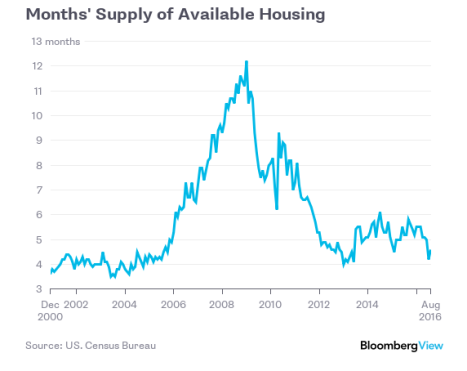
Existing Home Sales fell 0.9% in August as tight inventory depressed transactions. The median home price was just over $240,000 which was a 5.1% YOY increase. Housing inventory was down to just over 2 million homes, which is a 4.6 month supply. First time homebuyers accounted for 31% of sales. Strong job growth and low mortgage rates are pumping up demand, but builders remain reticent.

The Index of Leading Economic Indicators fell 0.2% last month, lower than expectations.

New Home Sales came in at an annualized rate of 609k, a little better than expected, but below last month’s 659k pace. The median sales price of new houses sold in August 2016 was $284,000; the average sales price was $353,600. The seasonally adjusted estimate of new houses for sale at the end of August was 235,000. This represents a supply of 4.6 months at the current sales rate.

Central Banks are dumping Treasuries, which is putting pressure on bonds, even thought the latest economic data is on the weak side. US investors (especially bond funds) are on the other side of the trade. This is also a warning to investors to take a look at their bond funds and determine how much interest rate risk they are bearing.

Minneapolis Fed Head Neel Kashkari did a Twitter Q&A about monetary policy. He is worried more about deflation than inflation and doesn’t see a bubble in housing.

Tonight, candidates Hillary Clinton and Donald Trump will have their first debate. The latest poll numbers show a dead heat, and a Trump lead when third party candidates are included. Note that the debate will be up against Monday night football, so all the post-debate polls will skew female which will be more favorable for Hillary than Trump.

Morning Report: Markets rally on the Fed 9/22/16

Vital Statistics:

Last Change
S&P Futures 2163.0 7.0
Eurostoxx Index 347.6 5.0
Oil (WTI) 46.0 0.7
US dollar index 86.1 -0.2
10 Year Govt Bond Yield 1.65%
Current Coupon Fannie Mae TBA 103.3
Current Coupon Ginnie Mae TBA 104.2
30 Year Fixed Rate Mortgage 3.56

Markets are higher after the Fed maintained interest rates yesterday. Bonds and MBS are up.

The Fed kept interest rates unchanged yesterday, and released new economic projections. Most members expect the Fed to hike another 25 basis points this year according to the dot plot. They tweaked their economic projections slightly, taking down their GDP forecast for 2016 and inching up their unemployment forecast. Longer term projections were unchanged. Three members dissented, wanting to hike rates in September.

In her press conference, Janet Yellen was careful to say the Fed was confident in the economy: “Our decision does not reflect a lack of confidence in the economy, Conditions in the labor market have strengthened and we expect that to continue, and while inflation remains low we expect it to rise to our 2 percent objective over time.” She also guided that the default path was for one more rate hike this year, assuming no major changes in the economy: “I would expect to see (a rate increase this year) if we continue on the current course of labor market improvement, and there are no major risks that develop and we stay on the current course.”

Bonds rallied on the Fed’s announcement, and that is carrying over this morning as markets rally worldwide.

FWIW, Bill Gross isn’t buying that the Fed is “data dependent.” He thinks they are “market dependent.”

In other economic news this morning, initial Jobless Claims fell to 252k last week.

The Chicago Fed National Activity Index fell to -.55 last month, which confirms the slowdown we have seen in other indicators. The 3 month moving average is slightly negative, which means the economy is growing, albeit below trend.

Delinquencies and foreclosures continued to fall in August, according to Black Knight Financial Services. The rally in bonds from Brexit caused prepayments to spike, with prepayment speeds hitting a 3 year high. 4.24% of all homes are delinquent and just over 1% are in foreclosure.

Morning Report: Fed Day 9/21/16

Vital Statistics:

Last Change
S&P Futures 2137.0 7.0
Eurostoxx Index 342.9 2.0
Oil (WTI) 44.8 0.8
US dollar index 86.7 -0.2
10 Year Govt Bond Yield 1.69%
Current Coupon Fannie Mae TBA 103.3
Current Coupon Ginnie Mae TBA 104.2
30 Year Fixed Rate Mortgage 3.56

Stocks are up this morning after stocks rallied overnight on moves from the Bank of Japan. Bonds and MBS are flat.

The Japanese Central Bank is embarking on a new version of QE: attempting to hold the yield of the 10 year bond precisely at 0%. The BOJ holds something like 40% of all Japanese Government bonds, and between the other players that must hold Japanese government bonds (banks for capital and insurance companies) the central bank has essentially cornered the market in bonds, and can therefore set just about any price it wants.

The FOMC decision will be out around 2:00 pm today. Bonds could get volatile around then so be careful if you have locks to deal with. The Fed Funds futures have a low 20% chance of a rate hike at today’s meeting. Note that this meeting will introduce new economic forecasts and rate forecasts, so there will be a lot that can move markets. Janet Yellen will have a press conference at 2:30 PM EST following the decision.

Mortgage applications fell 7.3% last week as purchases fell 7% and refis fell 8%.

Housing starts and building permits fell last week due to lousy weather in the South. Housing starts came in at a 1.14 million annual rate. Single family starts rose while multi-fam (which is much more volatile than SFR) fell.

KB Home and Lennar both reported earnings that beat estimates, although the orders numbers disappointed. Gross margins fell as land prices increased. Lennar reported weakness in some Texas markets due to the slowdown in the energy patch.

Housing inventory fell for the fifth straight quarter, according to Trulia. Affordability continues to fall as the percentage of income to buy a home continues to rise. Starter homes now require 38.5% of the typical borrower’s income, up from 36.8% in the third quarter last year. Historically, 36% has been a level where the GSEs begin to get concerned. Starter homes represent 23% of the available inventory, which is out of whack with the historical average of about 40%. The high end represents the majority of the inventory out there (which is where we are starting to see softness in pricing). We are starting to see increases in inventory in some of the West Coast markets where supply is the tightest, especially places like San Francisco and San Diego.

trulia-inventory

Wells Fargo CEO Joe Stumpf went to Washington yesterday and got scolded by the usual suspects. Although the area affected was retail lending and not mortgages, I am sure the effects will be felt in mortgage banking as well.

As banks get hammered and tied up in red tape, house flippers who need money fast are turning to crowdfunders. One flipper raised $1 million in 12 hours on crowdfunding sites RealtyShares, LendingHome, PeerStreet and Patch of Land. He is paying 14% for 2.5 year money. You are even seeing builders use this market as banks back away.

Morning Report: Inflation comes in hotter than expected 9/16/16

Vital Statistics:

Last Change
S&P Futures 2117.0 3.0
Eurostoxx Index 338.7 0.3
Oil (WTI) 43.8 0.2
US dollar index 86.7 0.0
10 Year Govt Bond Yield 1.71%
Current Coupon Fannie Mae TBA 103.3
Current Coupon Ginnie Mae TBA 104.2
30 Year Fixed Rate Mortgage 3.54

Markets are up as the Bank of England maintained policy. Bonds and MBS are down.

Mortgage applications rose 4.2% last week as purchases rose 9% and refis rose 2%. The increase was driven due to a favorable comparison to the Labor Day shortened week before.

Initial Jobless Claims came in at 260k last week. Consumer comfort slipped.

Inflation remains tough to find at the wholesale level, according to the Producer Price Index. The PPI was flat month over month and year over year. Ex-food and energy it rose 0.1% last month and is up 1% YOY. The Fed prefers to use the Personal Consumption Expenditure index versus the CPI and PPI, but the Fed’s measures are in the ballpark with CPI / PPI. Neither indicator is suggesting the Fed has to hike in order to stop inflation.

Retail Sales fell 0.3% in August. Less autos and gas they fell 0.1%. While the latest GDP numbers show an increase in consumption, you aren’t seeing that in these numbers. Online shopping explains it to some extent, however August and September are the back to school shopping season, which is usually a good predictor for the holidays.

Manufacturing continues to disappoint, as industrial and manufacturing production fell 0.4% in August. Capacity Utilization slipped from 75.9% to 75.5%. Meanwhile, the Philly Fed Business Outlook rose to 12.8 while the Empire State improved to -2. July’s improvement in manufacturing looks more like a blip than a trend reversal.

Morning Report: Median incomes rise 9/15/16

Vital Statistics:

Last Change
S&P Futures 2117.0 3.0
Eurostoxx Index 338.7 0.3
Oil (WTI) 43.8 0.2
US dollar index 86.7 0.0
10 Year Govt Bond Yield 1.71%
Current Coupon Fannie Mae TBA 103.3
Current Coupon Ginnie Mae TBA 104.2
30 Year Fixed Rate Mortgage 3.54

Markets are up as the Bank of England maintained policy. Bonds and MBS are down.

Mortgage applications rose 4.2% last week as purchases rose 9% and refis rose 2%. The increase was driven due to a favorable comparison to the Labor Day shortened week before.

Initial Jobless Claims came in at 260k last week. Consumer comfort slipped.

Inflation remains tough to find at the wholesale level, according to the Producer Price Index. The PPI was flat month over month and year over year. Ex-food and energy it rose 0.1% last month and is up 1% YOY. The Fed prefers to use the Personal Consumption Expenditure index versus the CPI and PPI, but the Fed’s measures are in the ballpark with CPI / PPI. Neither indicator is suggesting the Fed has to hike in order to stop inflation.

Retail Sales fell 0.3% in August. Less autos and gas they fell 0.1%. While the latest GDP numbers show an increase in consumption, you aren’t seeing that in these numbers. Online shopping explains it to some extent, however August and September are the back to school shopping season, which is usually a good predictor for the holidays.

Manufacturing continues to disappoint, as industrial and manufacturing production fell 0.4% in August. Capacity Utilization slipped from 75.9% to 75.5%. Meanwhile, the Philly Fed Business Outlook rose to 12.8 while the Empire State improved to -2. July’s improvement in manufacturing looks more like a blip than a trend reversal.

Technical analysis shows the latest rout in the bond markets resembles the taper tantrum of 2013. The long bond trade simply got too easy and too crowded. Note that mortgage rates lagged the move up in 2013. The 10 year bond yield bottomed in the spring and the Bankrate mortgage rate didn’t bottom until fall. This time, mortgage rates are increasing with the bond yields, but at a much slower pace.

Median incomes rose 5.2% in 2015, according to the Census Bureau. This is a surprising number that doesn’t really comport with what we have been seeing out of the Bureau of Labor Statistics. This number puts the median house price to median income ratio at 3.9x which is higher than the historical range of 3.2-3.6x. Low interest rates complicate the comparison, however.