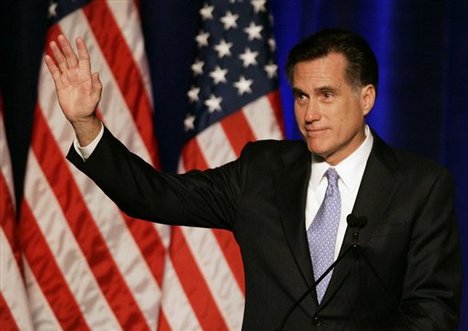
Bain Capital: The Principal Concern

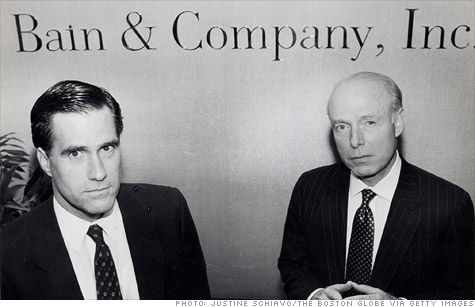
The Romney campaign understandably touts the activities of Bain Capital during Romney’s tenure there, and perhaps its activities in general, as beneficial. The argument, as I understand it, is that the country, presumably the economy in particular, is better off
than it would have been otherwise. We are, generally speaking, better off because of Bain Capital and, in particular, because of the activities of Bain Capital when Romney was in charge.

That a case for regarding Bain Capital as, ultimately, beneficial can be made. That such a case has been made is evidence for that and a presentation of that argument here would be redundant. Moreover, such a presentation is probably best left to others more knowledgeable
than I.

An argument for Bain Capital being, on the whole, a benefit is in danger of missing a crucial point, however.

Consider that there were costs, or pain, as a result of the activities of Bain Capital. I assume that is not controversial. Companies were eliminated, employees were laid off, lives were disrupted, individuals suffered financially and saw there opportunities diminished, and so forth, as a result, in part, of the activities of Bain Capital. Now grant, for the sake of argument, that the activities of Bain Capital resulted in more good than bad. Grant that the country, the economy, what one will, was ultimately improved by the activities of Bain Capital during Romney’s tenure. Furthermore, grant that the individuals harmed, the individuals who bore the costs, are now better off than they would have been without Bain Capital. Grant, that is, that those negatively affected by the activities are, at present, in a better financial situation, than they would have been if Bain Capital had not acted.

Even granting all that, the problem for Romney is that he, and a few others, evidently benefited immensely without sharing the pain and that he, and a few others, presumably benefited far, far more than those who suffered. Even if one looks at the activities of Bain Capital as activities that were, ultimately, beneficial for all concerned, even if one assumes that those who suffered as a result of said activities ultimately benefited, it seems clear that Romeny was willing to engage in business practices which, in the end, resulted in the concentration of tremendous wealth in the hands of himself and a few others and the concentration of the costs, and some benefits, in individuals other than himself and a few others.

Romney, and others, can argue, with some justification, that firms like Bain Capital, private
equity firms, are ultimately beneficial and necessary. That said, it is, arguably, not clear what answer should be given to the concerned individual who points out that Romney appears to have been comfortable with a process that distributed costs and benefits in a way that dramatically favored him and a few others.

If Romney’s argument is, in part, that he should be president because of what he accomplished at Bain Capital, then it seems reasonable to ask why the country favor a candidate who was, in his career in private industry, decidedly enthusiastic about concentrating benefits in the hands of a few and costs in the hands of others.

Note also that arguing that Romney behaved precisely as he should have, that he sought to maximize profits and that he had a fiduciary responsibility to do so, does not address the concern. One could take the position that Romeny’s activities were entirely acceptable, even
laudable, and look askance at a candidate who has, in the past, endeavored to ensure that
a few benefit tremendously and that others bear the costs.

Whither the Tea Party

One of the genuine curiosities of the current race for the Republican nomination is
the absence of The Tea Party as a real player. Given that the energy and enthusiasm
in the Republican party appears to reside within The Tea Party it’s worth wondering why
that element of the party appears content, or resigned, to see Romney or Santorum take the
nomination. Neither candidate could fairly be seen to be suited to carry the banner
of limited government.

One possibility seems to be that the Tea Party simply does not have, for now at least,
the kind of organization needed to bring a candidate to the fore. A successful run for the Republican nomination requires organization and funding. That Romney has been able to acquire that organization and funding without significant Tea Party backing, and given that the Tea Party has not brought a viable competitor forward, it may simply be
the case that the Tea Party does not now possess the resources needed to do so.

Another possibility is that the Tea Party has the resources, or could have acquired them in a timely manner, but has elected not to do so. If that is the case, then it seems reasonable to
assume that the Tea Party isn’t well suited to uniting to support a certain candidate, at least in the nomination process. It may be that the Tea Party is more a loose collection of individuals that a group suited to hammering out differences in order to settle on a particular candidate.

Another possibility is that the Tea Party is not, generally speaking, as opposed to government
as its rhetoric would suggest. With the congress, particularly the House, effectively refusing everything, one would expect House Republicans in particular, to be more popular with the Tea Party base of the Republican Party. Polling does not appear to indicate that that is the case. That is to say that, given the rhetoric, one would expect to see intransigent
Republican House members and the House leadership, buoyed by the praises of the base of
the party. That does not seem to have happened. And given all the talk of
smaller government and reducing taxes, one would expect the Tea Party to find, and back
to the hilt, a Republican nominee fiercely determined to do so. That is not the case either.
Furthermore, the Tea Party, taken as a whole, seems reluctant about, if not openly hostile, toward, cuts in medicare and social security, and, perhaps, to a lesser degree defense. With that being the case, it is difficult not to suspect that the Tea Party is principally comprised of older Americans interested in cutting government programs for others and safeguarding the ones that benefit them.

There are other possibilities and more than one, or none, may be correct. Of the three mentioned above, however, the third possibility seems to be bolstered, in part, by the fact that it would place the Tea Party in line with general attitudes. Americans, particularly elderly Americans, have demonstrated little real zeal for reducing the size of government and perhaps the Tea Party, for all its rhetoric, has not broken free of that.

Weakness within Iran

Economics has been blessed with the title “the dismal science”. That title, like most, can
be interpreted in a number of ways and it is, I suspect, often interpreted as a wry
comment on just how dry and dull the decidedly text-laden, and not terribly visual, science
of economics actually is. Economics activity, or the lack thereof, has, however, a
tendency to reveal difficult truths.
Iran appears, at the moment, to be a case in point.
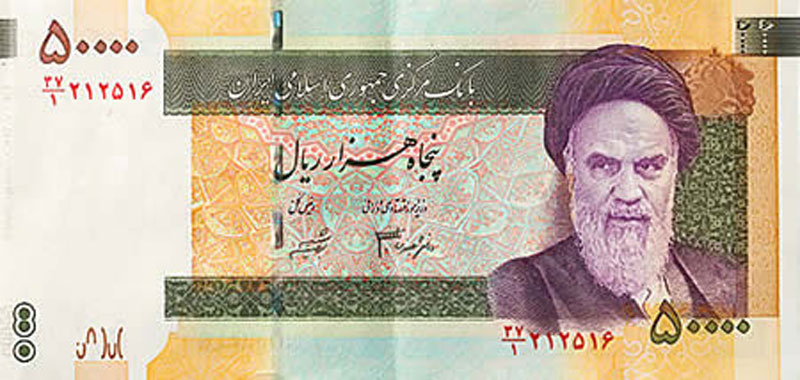
As Iranian threats to close the Strait of Hormuz and a warning to a U.S. aircraft carrier not to return have understandably drawn attention, the Iranian currency, the rial, has lost a third of its value causing a sharp rise in the cost of imported goods and Iranians are reported to be stocking up on goods.
Current economic difficulties appear to be, in part, the result of Iranian domestic economic policy and sanctions.
Furthermore, the future does not augur well. The EU recently imposed curbs on Iranian oil imports to Europe in an attempt to force Iran to abandon efforts to produce nuclear weapons and the Obama Administration has prepared new punitive measures aimed at Iran’s oil revenues.
Amidst all the bellicose statements coming from Iran, the bellicose statements directed against it, as well as all the talk of Iran coming to play a more prominent role in the region, it is worth pausing to note what appear to be real weakness and difficulties with Iran itself.

Kindness and Understanding and Cruel Smirks, Mockery, and Open Scorn

In light of Iowa, and the general tenor and direction of the GOP race for the nomination, and
for that matter the general tenor and direction of the party as a whole, the Tea Party deserves kindness and understanding and a dismissive and cruel sneer.

The Tea Party should be forgiven. Our endeavors often come to nothing
and it becomes apparent that our our efforts were ludicrous from the start. Life is like that. For that reason, the Tea Party deserves kindness and understanding. As do we all.

And after all the bluster, all the talk, after all the risible history lessons (that is to say after all the strange, crackpot accounts of historical events), after all the comical claims to have, God knows how, privileged access to the consciousnesses of “the founders” and to know all their wishes for us, their progeny, after all the nonsense about “socialism”, after all the excuses
for, confusingly, not manning the barricades when a Republican president was spending, after prattling on and on about smaller government while guarding medicare like a rabid, starving, snarling cur protecting a bone with a scrap of meat clinging to it, after all
that, the Tea Party deserves cruel smirks, mockery, and open scorn.

Virginia Graveyard

Apparently Gingrich and Perry also failed to qualify for the Virginia ballot. I’ll leave it to others better informed sources to explain why that happened, and merely note that, from my
vantage point, Virginia’s appears to have positioned itself, for now, as the state in which presidential ambitions are buried and, quite probably, one of the major factors in Romney taking the nomination.

Virginia

Gingrich will be on Virginia’s primary ballot. Bachmann, Santorum, and Huntsman will not. Although is very difficult to secure a place on the Virginia ballot, it is, arguably, very difficult to consider someone who does not a serious candidate. Unless Bachmann, Santorum, or Huntsman enjoys an incredible run in the early states, it seems likely that they are effectively
out of the running.

As more information becomes available, a clearer picture of the relative strengths and weaknesses of the Gingrich campaign should emerge. If volunteers were principally responsible for securing his place on the ballot, then that would seem to speak to some real, dedicated support and resources he could draw on in both the primary and the general election. If paid operatives deserve the bulk of the credit, then doubts that Gingrich will have the money and organization required to garner the Republican nomination will presumably, and understandably, grow.

After the Debacle, The Questions

One hesitates, or one should hesitate, to allow the race for the Republican nomination for president to become an opportunity to ask serious questions. Most of the candidates aren’t serious and one of the serious candidates isn’t being considered seriously; there’s a great deal of silliness; and, most importantly, no one has yet cast a vote.

I suspect, however, that even the most jaded of us, even those inclined to shrug slightly, smile pleasantly, note that this is the silly season, and calmly reassure others that rational (never mind calmer) voices will prevail, even those among us most inclined to take all of this with a grain of salt, must be given cause by the phenomenon of Herman Cain.

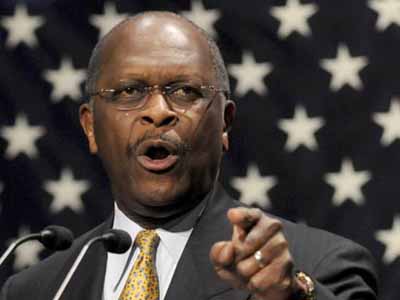
Even that most jaded observer must wonder what one should make of the Republican party, the conservative movement in general, the Tea Party in particular, and conservative media, given that they played a part in giving us Cain, a candidate who was not aware that China possesses nuclear weapons, has offered a tax plan that has no chance of passing, and who seems to believe that one can refuse actually to address questions and remain a viable candidate for the Republican nomination.

Cain will not win the nomination and he will not, in all likelihood, create serious problems for the winning candidate. Cain is not a serious candidate and his campaign, such as it is, has the appearance of a book tour that has gotten well and truly out of hand. That said, the individuals and organizations that assisted in giving rise to the debacle that is Cain should be asked some hard questions, and, importantly, they should be asking those questions of themselves.


“All you can do is give that woodchuck a tuna melt, a romantic shoe, or a metal skull crusher.”

Not to mention that extra-fatal lady shimmer.

Herman Cain makes his own case. — KW

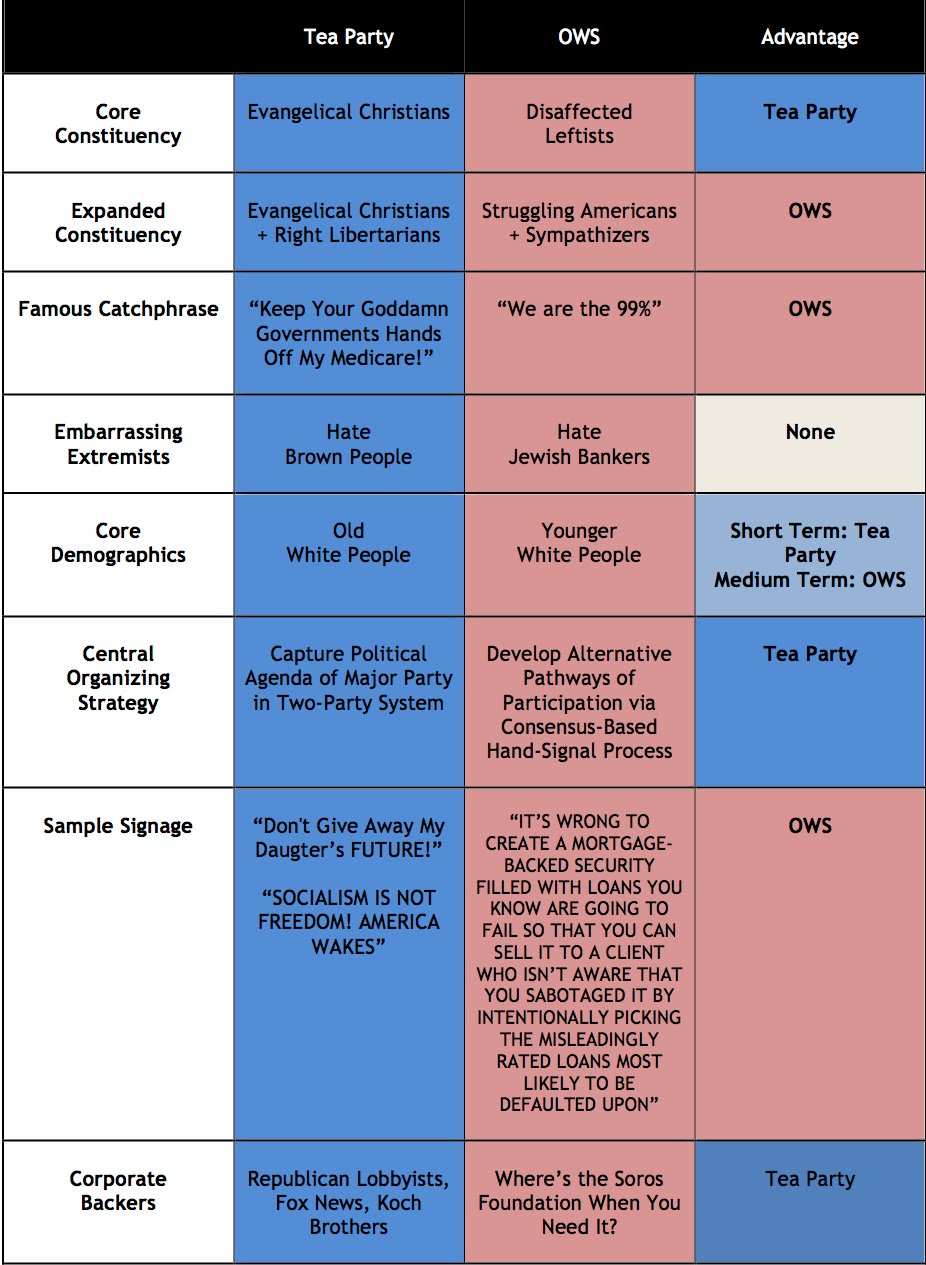
The Tea Party vs Occupy Wall Street by The Duck of Minerva

All credit and thanks to The Duck of Minerva for this.

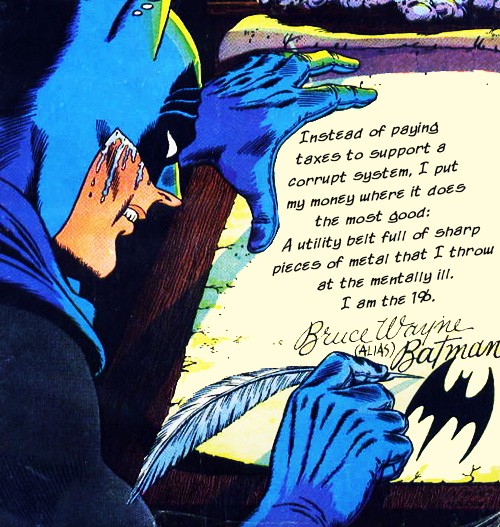
The Cowled One Percent

Weak Tea

The success Mitt Romney has thus far enjoyed seems, as far as I can see, to raise serious questions about the effectiveness of The Tea Party. Amidst all the attention paid to The Tea Party (understandable given the last national election) it’s difficult not to notice that The Tea Party does not, at the moment at least, seem poised to deliver the Republican nomination to a Tea Party Candidate.
Worse still, The Tea Party hasn’t even given us a credible candidate for the nomination.
One could, I think, be forgiven for not being willing to take The Tea Party all that seriously.