On the Glories of Work Ethic Literature


A slew of literary works could be fairly be classified work ethic literature. A celebration of work and, necessarily, an intention to inspire the reader to labor, appear to be cardinal features of such literature.

Working, laboring, receives, surprisingly and not surprisingly, receives more than its fair share of attention in literature. Surprisingly because literature is often taken up with the extraordinary. Few of us have any real desire to read about the ordinary. We’re already conversant, likely too conversant, with the ordinary world and we hardly need to read about it. And for most of us, the ordinary almost certainly involves work. We, the human race, work a lot.

Not surprisingly because we appear to have an imminently understandable desire to be feted and inspired and work ethic literature does both those jobs. A celebration of work in literature extends, or is often extended by the reader, to work in general. Inasmuch as readers are often workers, a celebration of work celebrates what they do. Thus,work ethic literature tends to be a celebration of the readers themselves.

That said, work ethic literature can cut. Distinctions between work that is valuable, worthwhile, ennobling, and work that is degrading, dehumanizing, work that effectively neuters the worker, are hardly unknown to work ethic literature. Work, in many case, isn’t enough. It’s got to be the right kind of work. Novels that preach that real men till the soil or make things that you can drop on your foot are, for example, not hard to find.

That message, however, almost never gets through in part, I suspect, because we seem to be rather good at deriving the messages we want from artistic works.

In his memoir Jarhead, Anthony Swafford reveals that as far as soldiers are concerned every war film is a pro-war film. Make the most brutal anti-war film you can, swath war in as much brutality as you can, and, as far as soldiers are concerned, it’s pro-war because they tend to identify with the characters who come through it all whole and strong and pity, but not identify with, the dead and wounded.

That also seems to happen with work ethic literature. I don’t doubt that any one of the lawyers I know would regard the most vicious literary assault on those who don suit and tie and apotheosis of the real worker, the guy or gal who works with his hands, wears a baseball cap, and would die before he would betray his union brothers, as a celebration of what they, the lawyers, do everyday.

That just happens. Antigone tends to become, from what I’ve seen, a kind of free speech heroine, in the eyes of students, as opposed to someone who worships death and constitutes a real threat to the civil order. Spartacus seems to become some kind of early advocate of democracy, like a founding father born far, far too early, not a brutal, trained killer. Jack London celebrates rugged individuals slugging it out, laboring mightily, in the wilderness. Again, give it to one of the lawyers I know and it will, in his or her eyes, probably become a celebration of everything he or she does at the office.

In short, most will probably regard a celebration of work as a celebration of their work and glide merrily over and altogether miss even the most obvious assaults on the work kind of work they do.

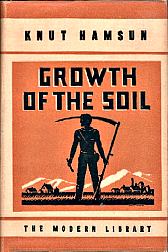
Inasmuch as celebrations tend to be inspiring, work ethic literature tends to be inspiring. The next time you just don’t feel like buckling down and getting the job done, read a chapter of two of Growth of the Soil by Knut Hamsum or Legionary: The Roman Soldier’s Unofficial Manual and all should become clear.

Ayn Rand, precisely because her works are appallingly bad, makes a rather good case for work ethic literature. Rand’s works are awful. The characters are ridiculous. The dialogue is laughably clunky. The ideas, such as they are, are adolescent. The philosophy, such as it is, is a deplorable materialism as dull and uninspiring as anything the communists Rand so justifiably loathed produced. For all that,her works will make you feel like working. It’s difficult to set down one of Rand’s books without the feeling that the best, most heroic thing that one could do at this precise moment is seize hold of some part of the world and proceed to labor like mad. And that is a feeling many of us seem to enjoy.

Fortunately, there are any number of work ethic authors possessed of numerous virtues and lacking Rand’s shortcomings. Melville, London, Hamsun, Faulkner, Steinbeck, Tolstoy, and on and on.

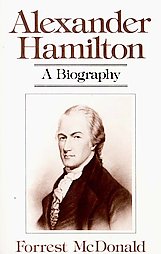
Biographical literature is of course a rather rich vein of work ethic literature. Biographies of those who accomplished a great deal are often biographies of persons who accomplished a great deal by keeping nose to grindstone. Forrest McDonald’s biography of Alexander Hamilton is a case in point.

I imagine I should end by admonishing you to crack open some representative of work ethic literature so you’ll be willing to buckle down and focus. Very well. Consider yourself duly admonished.

In Praise of Conflict History

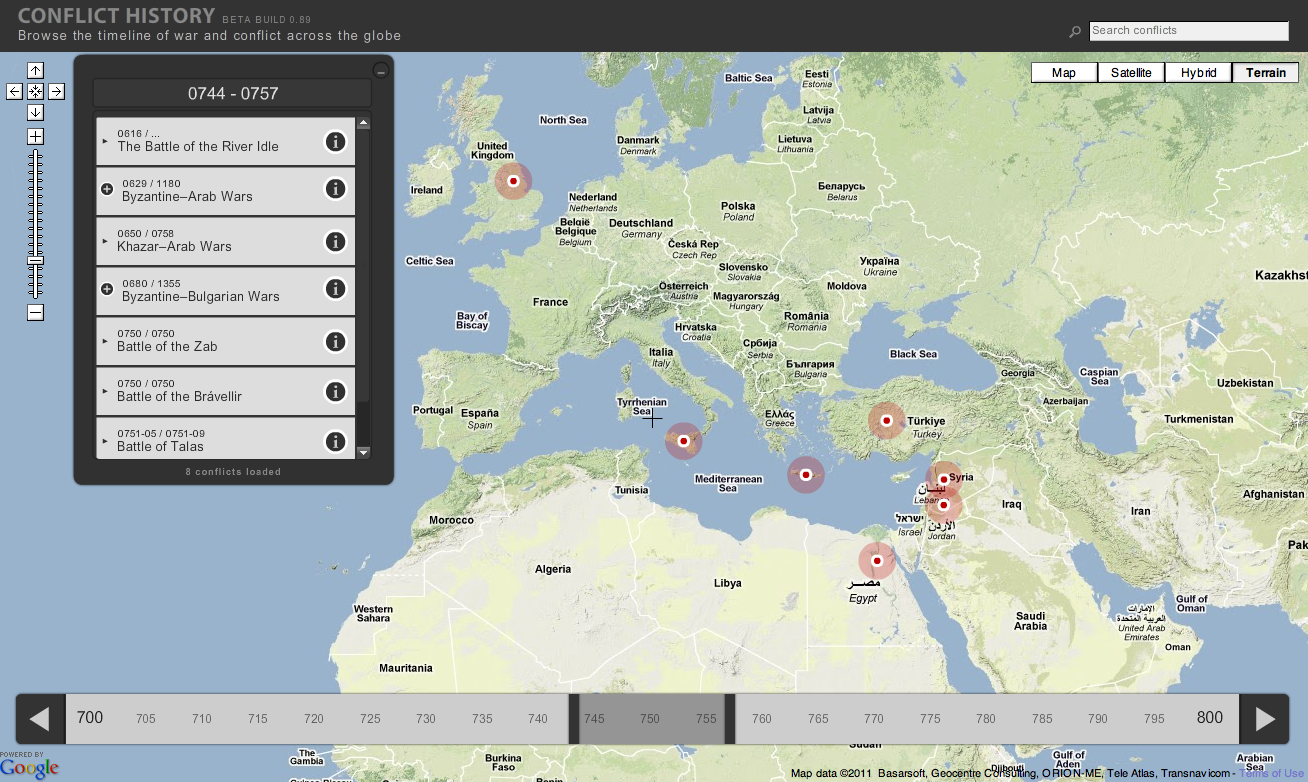
The sins of the internet are of course legion. Many if not all of those sins should be forgiven on account of Conflict History, an interactive website endeavoring to record all conflicts in human history.
As I understand it, the site is still in the beta stage. I have some vague notion of what that means and a clear understanding that the site is just stunning. Choose a period of time ,966-0971 for example, and the site will list the conflicts that occurred and locate them on a world map.
Well worth a butcher’s.
Conflict History

Making it About Oneself: Reacting to The Tea Party and Occupy Wall Street

Whatever else The Tea Party and Occupy Wall Street are or are not, they are, for me at least, amusing opportunity for introspection. The Tea Party and Occupy Wall Street, reveal, for me at least, more about myself than anything else.

I blame these groups because, honestly, there just isn’t much there. The Tea Party has the virtue of being specific about wanting to cut spending and slash taxes, but as far as I can see anything that a reasonable person could call a program for governing is something The Tea Party hasn’t offered and has no interest whatsoever in offering. Occupy Wall Street has the virtue of being vague. “It’s not fair”, is , as far as I can tell, the basic cry of Occupy Wall Street and that isn’t a demand for concrete action and policies.

Which is to say that I find it hard to take either of these groups seriously (as far as policy is concerned at least) because neither is offering very much at all.

With nothing really to latch on to, I’m left with a kind of mild fondness for Occupy Wall Street and a kind of mild distaste for The Tea Party.

I equate The Tea Party with deep grouchiness. That’s unfair. That’s kind of the point. And perhaps I’m mistaking grouchiness for serious, passionate concern about unrestrained government spending.

Still, grouchiness. That’s what I think of when I think of The Tea Party.

I equate Occupy Wall Street with youth, energy, and a general earnest desire to improve conditions. Just as unfair. And perhaps I’m mistaking youth, energy, and desire for naivete.

Again, I blame The Tea Party and Occupy Wall Street for this. Apart from any feeling or impressions I have about Plato’s Republic, I have an understanding of it. I understand the arguments, the positions, and have some understanding of the merits and shortcomings of the arguments and positions. I don’t have that with either The Tea Party or Occupy Wall Street, a good indication, to me at least, that neither group has yet put anything serious on the table.

Questions about Torture

A great deal of the debate about torture focuses, understandably, on whether torture, or enhanced interrogation, or what one will, is legal. Apart questions about legality, the practice of torture raises a number of interesting questions.

Do We Know Very Much About Torture?
As far as I know, we don’t know a great deal about torture. I don’t doubt that there are studies, but I find it hard to believe that there is, at present, good reliable research on torture. Given ethical concerns, I don’t see how experiments could be conducted to try to determine the effectiveness, or lack of effectiveness, of torture.
And that seems to leave us with a host of questions for which we don’t appear to have answers.
Is it reasonable to expect that torture will yield actionable intelligence? Do people often lie under torture? Do people try to mislead interrogators who are torturing them?
Without more information on torture, information which I suspect, we do not have, it’s very difficult to see how a strong case for or against it could be made on the basis of the quality of the information interrogators are likely to extract.

Who Will Torture?
If torture is employed, someone will have to do it. Who? Ethical concerns would, I assume, rule out doctors. Should soldiers do it, CIA employees? Why these persons and not others? How should these people be trained? What kind of programs, if any, need to be set up to produce persons best able to extract information by using torture?

Should Law Enforcement Torture?
Assuming that torture is beneficial, should law enforcement be permitted to use it? If torture is beneficial, then why not allow law enforcement to employ that tool? If law enforcement ought not to be given that tool, then why should others be allowed to employ that tool?

How Should Innocent People Who are Tortured Be Compensated?
If torture is employed, innocent and non-innocent people will be tortured just as innocent and non-innocent people will be put to death if the death penalty is employed. How should the innocent, people who were mistaken for enemy combatants, for example, be compensated?

Does Torture Give the Enemy an Incentive to Fight to the Death?
Traditionally, fear of torture at the hands of the enemy is often a reason to avoid capture at all costs, even at the costs of one’s own life. Fear of torture may give an individual an incentive to fight to the death or to take his or her own life. That is not, arguably, a particularly attractive proposition. Enemy combatants who have a reasonable expectation that they will be treated well if they are taken prisoner may not fight as viciously and may be more willing to surrender. Assuming that an enemy less inclined to fight as viciously as possible and more willing to surrender is desirable would torture be detrimental to that goal?

Would Torture Discourage Enemies?
Would torturing prisoners discourage individuals from taking up arms or cause them to act in a less vicious manner? Would individuals interested in doing harm refrain from doing so, or do less harm, if they knew that upon being captured they could expect to be treated harshly?