Bits and Pieces (Lulu’s Garden)

We’ve had one of those years at our house.  You know, one of the memorable ones for crappiness.  Things are looking up however, for the most part.  We even received rent money and the security deposit this week on our rental property, and the new family begins moving in today.  They don’t appear to be hoarders, and yes we did have the house fumigated.  Last weekend my husband and I painted all four bedrooms and this week I cleaned all the floors (again), the bathrooms (again), windows and the broiler.  He cleaned the windows on the enclosed patio, put in a new toilet and cleaned the fireplaces etc.  That’s over finally.  We’ve had a few health issues, some accidental, some related to being over 60 I guess, but so far we’re carrying on pretty well.

One thing that has always kept me from panicking when the worry sets in is working in my garden.  That’s right, the garden comes in ahead of ATiM.  I will try to participate a little more going forward however, as I have missed our discussions.

Anyway, I’ve been growing veggies since I rented my first house at age 20.  When the kids were little we had a fruit orchard and really large garden in the back part of our property (we have a half acre).  That’s all been replaced with a rather large warehouse for the business.  We did manage to find a nice growing spot on the side of the house, outside the bedroom window, for a small garden.  Since it’s just the two of us now it’s perfect and I can look out the window and see our handiwork.

This year I planted a couple of things I’ve never had in my garden before, bok choi and Japanese cucumbers.  In the photo below the bok choi is in the center bottom of the picture between the beets, on the left, and the Japanese cucumber.  At the back of the photo is swiss chard, which we have in our garden nearly year round.   I saute the chard in safflower oil and then add tamari and a little sesame oil and add it to brown rice after the rice is cooked……………………..yummy.

In the photos below are three kinds of summer squash, a few remaining green beans (the dogs dug up most of them), three kinds of lettuce, more swiss chard, and I just planted pumpkins and acorn squash last weekend.  These new veggies took the place of the snow peas, which we already ate, also yummy.

We’re taking a couple of days off this weekend and heading to the beach tomorrow, my favorite destination, so have a great weekend everyone.

Bites and Pieces: Build a Better Burger

Gourmet burgers have become all the rage in the DC area. The Five Guys burger chain has its origins at the intersection of Glebe Road and Columbia Pike in Arlington, not too far from where I live. Rays Hell Burger was locally famous before it became a favorite place for President Obama to take visiting dignitaries. Their burgers really are THAT good. BGR is another favorite of mine. The worst burger I ever ate was at a greasy spoon off campus of the University of Missouri. I was interviewing for a faculty position in the Physics Department. I ordered a burger for lunch, took one bite, and realized that the center was raw. My guess is that it hadn’t completely defrosted when they put it on the grill. My choices were to send it back, potentially causing an awkward moment, or to choke it down. I choked it down and probably was fortunate to not get sick. I didn’t get the job; they gave it to a former grad student of the chair of the search committee. On the plus side, we went to a wine dinner that night at a local shop that was worth the trip.

A good burger is a thing of beauty and a great base for whatever you want to do. In Santa Fe, New Mexico, it’s going to be topped by green chili. Treat it like a steak and top with bernaise sauce. When you come down to it, basic is best. Few things are finer than a simple cheese burger on a good bun. Perhaps some fried onions or ketchup. Keep the mustard and relish away from my burger, please. Waiter, if me and the boys wanted to eat a hot dog, we would have ordered a hot dog. [Credit to Humphrey Bogart]

So, why on earth am I going to waste a valued slot of Bits and Bites on burgers. We all know how to make a burger. Take some ground beef, make some patties and grill them. Simple, no? Well, it’s time for me to go all Alton Brown on you. I want to focus on the critical ingredient: ground beef. If you’re buying it from a supermarket, you are either paying too much or don’t know what you’re using. I’m not talk about pink slime, simply that the stuff sold as “ground beef” in supermarkets might as well be mystery meat. It’s all the trimmings ground together, adjusted for fat content, and thrown out there for $4/pound. Good for the bottom line, but not the making of a great burger.

I ground my own beef for the first time a few years ago. We were one of a half-dozen families who were getting together for a picnic and I was assigned burgers. One of our copies of Cooks Illustrated had an easy way of making ground beef using a food processor, so I decided to give it a go. The burgers were great, even if the picnic wasn’t. One of my sons had an extended crying jag and I had to leave around the time that enough people finally arrived for the grilling to commence.

Thereafter, there has been a repeated refrain when it comes to E Coli contamination: ground beef. Does anyone remember when E Coli hit Jack in the Box. I remember a suggested slogan for them after the scare. “Jack in the Box: We cook the shit out of our burgers.” The best way to have a burger is medium rare and the only way you can be sure of it is to know where the beef comes from or trust the source. As long as you’re going to make your own burger, why not take a bit of extra time on the most important ingredient?

What meat to use? I have two ways to make ground beef. Chuck roast is perfect for making ground beef, which is why you often see it listed as ground chuck. One gets about 20% fat, perfect for burgers. We have a Costco membership, so I pick up some chuck roast every so often. I can get it for about the same price as ground meat in the grocery store. Oh, but the quality is so much better. I sometimes use flank steak, which is flavorful, but quite lean. I pair the flank steak with boneless short ribs to get the right fat level. Other folks like sirloin. Hey, do what you want to do! I’ve read about using a cheap cut of relatively lean beef and adding in lard to kick up the fat level. You could go full gourmet and add duck fat.

How to make the ground beef? We bought a stand mixer a few years ago via Craigslist and the owner threw in a pasta making attachment (useless) and a grinding attachment (wonderful). So, I use that for making ground beef. A food processor works just fine. Cut the meat into 1” – 2” chunks, put it in the freezer for about 15 minutes to firm it up, and pulse it until you get the right consistency. It’s easy! Process it in batches and freeze the excess. I wrap the ground beef in plastic wrap, followed by a barrier layer of aluminum foil. It’ll keep and there’s no freezer burn.

How do you make a better burger? A great burger needs three things: ground beef, salt, and pepper. If you’re adding bread or onions or whatever else, you’re making meat loaf, not a burger. Don’t get me wrong, I love a good meat loaf. This, however, is about burgers. I do think that the salt and pepper should be mixed it. The entire burger should be seasoned. Otherwise, there’s a hit of seasoning on the crust, and nothing inside. So, mix in the salt and pepper. I like ½ teaspoon of salt and ¼ teaspoon of black pepper for a pound of ground beef. Once it’s mixed, divide the beef into about 5 oz. for each patty. Cook how you like. It’s hard, ok, impossible, to beat the grill. On the stove, I use a cast iron skillet. Avoid non-stick at all cost.

Now, sauce time. I can hardly fault the combination of grilled onions and cheese. I mentioned the New Mexico penchant for green chile sauce on burgers, so I thought I’d share my favorite salsa verde. It comes from Rick Bayless, the chef with a number of Mexican restaurants in the Chicago area, including Topolobampo and Frontera Grill.

1 pound of tomatillos
1 head of garlic, separated into cloves with skin on
8 Serrano peppers
1 lg. white onion
1 bunch cilantro
2 – 4 limes (depending upon how juice they are)
salt and pepper to taste

Remove outer wrap from tomatillos and wash. Rub with vegetable oil and put into oven (a toaster oven is great for this) on broil until skins blacken. Set aside to cool and remove skins. Don’t worry about getting it all. When skins are removed, toss into the bowl of a food processor.
Meanwhile, thoroughly coat Serrano peppers and garlic cloves with vegetable oil and put in medium sized pan. Cook over med-high heat, shaking occasionally, until skins of peppers blister and the garlic slightly blackens. Remove from heat, cover and let cool. Remove the skins from the garlic cloves and Serrano peppers. The steaming action while cooling makes removing the skins easy. Depending upon how spicy you like your salsa, you can remove some, all, or none of the seeds from the peppers. Toss the peppers into the bowl of the food processor.

Chop white onion and briefly blanch in hot water (I boil a bit, but very hot tap water works too). Drain and put in food processor. Rinse cilantro and coarsely chop. Keep the stems in as they’ve plenty of flavor. Blend everything and pour into a bowl. Add salt, pepper, and lime juice to taste.

I’m also moving Okie Girl’s tomato salsa as it’s a great ketchup alternative. [Hope you don’t mind me moving it up into the main post, Okie!]

ORIGINAL TOMATO SALSA

This recipe came via one of the old regulars at a neighborhood dive bar I used to frequent to play shuffleboard. His nickname is “Lumpy” as a result of a serious car accident in which his neck was broken. He published the recipe in a cookbook the bar patrons all contributed to many years ago. Another regular patron who owned a local restaurant then began serving it in his restaurant and reported it was a huge success. I made some modifications that I’ll describe after the original recipe and began giving it as holiday gifts. It has been so popular I am now up to giving away 4-6 pint cases every Christmas.

Ingredients

6 lbs plus 3 oz canned chopped tomatoes
¾ C dried onion
½ C sugar
1 ¼ C white vinegar
3-4 jalapeno peppers (to taste)
1/8 C pickling salt
¾ Tbs chili powder
1 tsp pepper
1 tsp cumin
½ tsp alum
1 small can green chilies

Preparation

Mix all ingredients together in large pan. Bring to a boil, then remove from heat. After it cools, pour into jars and keep refrigerated. Makes about 8 pints.

Modifications

I use fresh chopped onion instead of dried, reduce the sugar a bit, and use a mix of canned and fresh tomatoes. This tends to make a rather thin salsa, so I use half fresh tomatoes and half canned crushed tomatoes to add some body. I also add a couple of cloves of minced garlic, a large chopped bell pepper, and about a half bunch of chopped cilantro. If I’m going to be using the salsa immediately, I reduce the vinegar a bit (to about 1C) but leave vinegar as is if I’m canning it.

Since this makes a more liquid salsa than I typically prefer, I frequently strain off some of the liquid and use it as seasoning in other dishes (such as using it for part of the cooking liquid for rice).

So, what’s your better burger?

BB (for beef burger of course)

Bites & Pieces OR Do Alpha Males Eat Quiche?

I have a basic quiche recipe that can be adapted for all sorts of dietary restrictions and preferences.  I’m trying to gradually add a few pounds back on that I misplaced this year and I can make this once a week and add a few calories to my diet.  On the other hand, it can be made with lower fat/calorie ingredients and still be delicious.

Basic Ingredients:

3 whole eggs, you can substitute egg whites for part of them or all, two egg whites equals one whole egg

1 can evaporated milk, you can use low fat or non fat and honestly you won’t be able to tell the difference

2 1/2 TBS of flour

Salt, pepper and other spices depending on the rest of your ingredients.  I use thyme, parsley, basil and herbs de provence  pretty frequently, but please experiment.

Additional Ingredients:

1 1/2 cups cheese, again low fat versions are fine and I frequently use a combination of mozzarella, parmesan and feta.  Of course you can use cheddar, swiss or really any kind of cheese.

5 to 6 diced green onions

2 tomatoes, seeded and chopped

1 to 2  cups of veggies.  I generally use a combination of broccoli/cauliflower or a variety of summer squash.  Experiment.

1 cup of  meat (cooked).  If you use meat, cut back on the veggies.  For a breakfast quiche the obvious meats are ham, bacon or sausage.  For dinner, chicken would probably work fine.

Directions:

Beat the eggs, milk, flour and spices until well blended.  Sir in the other ingredients, adding the cheeses last and pour into greased 9″X9″ baking dish and bake for about 45 minutes at 350 or until center is set.

By the way, my husband loves this recipe.

****************************************************************

And from okiegirl, who is still finding gorgeous asparagus at an even more gorgeous price, a couple of faves.

Asparagus with Curry Butter

Ingredients

2 teaspoons butter, melted

1 teaspoon curry powder

1/2 teaspoon lemon juice

1/4 teaspoon salt, or to taste

2 teaspoons extra-virgin olive oil

1 shallot, finely diced

1 bunch asparagus, (about 1 pound), trimmed and cut into 1-inch pieces

Preparation

Combine butter, curry powder, lemon juice and salt in a small bowl.  Omit salt if your curry powder has salt in it already.

Heat oil in a large nonstick skillet over medium heat. Add shallot and cook, stirring, until softened, about 2 minutes. Add asparagus and cook, stirring, until just tender, 3 to 5 minutes. Stir the curry butter into the asparagus; toss to coat.

Yummy with grilled salmon!

Spring Pizza

Ingredients

3 tablespoons extra-virgin olive oil, divided

3 cloves garlic, minced (or to taste — this is a lot of garlic)

2 medium tomatoes, sliced

1 bunch asparagus (about 1 pound)

1/2 cup snipped fresh chives, divided

1/4 teaspoon salt

1/4 teaspoon freshly ground pepper

1 pound whole-wheat pizza dough

1 cup shredded fontina or mozzarella cheese

Preparation

Position rack in lower third of oven, place a pizza stone or large pizza pan on the rack and preheat oven to 450°F for at least 15 minutes.

Meanwhile, combine 2 tablespoons oil and garlic in a small bowl; set aside. Trim asparagus spears to about 6 inches long; slice any thicker stalks in half lengthwise. Toss in a bowl with the remaining 1 tablespoon oil, 1/4 cup chives, salt and pepper.

Roll out dough on a lightly floured surface to about a 14-inch circle.  (I cheat and buy ready made pizza crust.)

Carefully remove the pizza stone or pan from the oven and set on a heatproof surface, such as your stovetop. Place the dough on the stone or pan and brush with the reserved garlic-oil mixture. Cover with a layer of tomato slices.  Arrange the asparagus in a circular pattern on the dough with the tips facing out (like spokes). Top with cheese and the remaining chives.

Carefully return the stone or pan to the oven and bake the pizza on the lower rack until crispy and golden and the cheese is melted, about 15 minutes.

This makes a lovely spring supper, but also is a nice (if unusual) side dish.

Bites & Pieces (Appetizers)

We’re having a small party next Saturday and so I’ve been thinking about the menu and what kind of appetizers to serve.  I’ve asked a few family members for suggestions and all of them requested this one.  It’s not the healthiest dish on the planet but since it’s one of those things I only make on rare occasions it falls into the eat in “Moderation” category.  Below I’ll jot down another recipe for an eggplant dip that’s quite a bit more nutritious although Michi may have already given us a similar one.

When I was growing up the popular appetizer at cocktail parties was Rumaki (chicken liver, water chestnut, bacon) so I guess mine isn’t any worse than that.  My father was the Rumaki King and so my sister and I helped make and serve a lot of it…………………………….yuck.

Fried Artichoke Hearts (serves 4 to 6)

Ingredients:

1 can artichoke hearts, not the marinated variety, you can buy them whole or quartered.  Quartered are more work but go further with a crowd.

3/4 cup flour

salt and garlic powder added to flour (dash of salt, 1 tsp garlic powder)

2 eggs lightly beaten

3/4 to 1 cup panko bread crumbs

oil for frying

2 to 3 tablespoons butter

juice of 1/4 lemon

Parmesan, freshly grated or Kraft

Directions:

Drain artichoke hearts.  Measure the seasoned flour and bread crumbs into individual bowls and likewise the eggs.  First coat the hearts with flour, then dip into the eggs coating thoroughly and last, roll in bread crumbs.  I generally do three or four at a time and use a separate fork for each bowl to keep my fingers from building up with all the sticky ingredients.  Place in a single layer on a plate and cover.  Refrigerate for several hours as they are best fried when really cold.

I generally fry them in a hot pan with just a 1/4″ layer of oil on the bottom and flip them several times until they turn a golden brown, but you can deep fry them it you want.  Drain on paper towels for a few minutes and while they’re draining melt the butter and add lemon juice.  Place the hearts into a serving dish and drizzle with lemon butter and sprinkle the top with Parmesan cheese………………Voila!!!!!

Eggplant Dip (Serves 4 to 6)

Ingredients:

5 large eggplants

5 cloves garlic

Juice of 1 large lemon

1 to 2 tablespoons tahini

5 green onions, chopped

salt and black pepper

Directions:

Heat the oven or grill to 400.  Roast whole eggplants on a baking sheet in the oven or directly on the grill for 40 to 50 minutes until soft and let cool.  Scoop out the insides of the eggplants and put them into a bowl, discard the peels.  Mash the eggplant and then let stand for about 30 minutes.  Discard any accumulated juices.

Add the garlic, lemon juice, tahini and green onions to the eggplant and mix together.  Add salt and pepper.  Keep refrigerated until serving.  Serve with crackers, cut vegetable or bread cubes.

And lastly, this piece from the Nation might clarify a few things for the girls here, or at least the ones who used to be here.  I’m not trying to start another fight please, just thought the girls might find something useful from this perspective.

Bites & Pieces (Passover/Good Friday/Easter Edition)


Mark shared with us his Italian Jewish version of Passover soup last night (and I’m looking forward to trying it, Mark!); I didn’t know about the split over rice.  The things you learn on this blog!

At any rate, here is my take on Matzoh Ball Passover soup (which you won’t have time to make for tonight, but there’s always next year!) and a few Easter recipes for your viewing pleasure.


Chicken Soup with Matzoh Balls

For the soup (which I usually make a day or two ahead; basically I make chicken stock since I remove all of the solids):

  • 1 3- 4 lb chicken (or I often use a bunch of chicken thighs instead)
  • Kosher salt
  • 4 celery stalks, roughly chopped
  • 2 large carrots, roughly chopped
  • 1 onion cut in eighths
  • 2 leeks, thoroughly rinsed and roughly chopped
  • 3 garlic cloves, peeled
  • 4 sprigs flat-leaf parsley
  • 3 sprigs dill
  • 1/2 tsp peppercorns
  • 2 bay leaves

Rub chicken (if using whole chicken) inside and out with salt and let sit for about 15 minutes.  Rinse thoroughly, place in a large stockpot and add water to cover by three inches.  Bring to a boil over high heat and skim off foam until it stops appearing.  At that point, add the rest of the ingredients, reduce heat to medium low and simmer until chicken is falling off the bones.

Remove the chicken from the pot and remove the bones, placing them back into the soup–save the meat for another use.  Simmer for another hour, then strain all solids out through a couple layers of cheesecloth, cover the soup and refrigerate until the fat on top solidifies and can be removed.  Wise and experienced cooks will keep this schmaltz wrapped in the refrigerator for wonderful uses later.

For the matzoh balls (this part of the recipe is from a genuine Jewish grandmother who lives in NYC):

  • 4 eggs
  • 1/2 cup seltzer
  • 1 tsp salt
  • Dash black pepper
  • 1 cup matzoh meal
  • 1/2 cup melted shortening (or schmaltz)

Beat the eggs, then add the seltzer, salt and pepper.  Add the matzoh meal and shortening, mixing well.  Cover and refrigerate overnight.

Put a large pot of salted water on to boil, then wet your hands in cold water and form walnut-sized balls with the matzoh dough.  When the water comes to a boil add the balls and simmer, covered for 45 minutes.  Do not remove the cover until done.

The last line of the e-mail when she sent me the recipe:  “If they are good I get all the credit, if not it’s yours.  Enjoy!”


Lamb with Yogurt Sauce

What is more traditional than lamb at Easter?  This is one of my favorite ways to fix it.

  • 1 5 – 6 lb leg of lamb
  • 4 garlic cloves, thinly sliced

For the marinade:

  • 1 tbs garlic, minced
  • 3 tbs dried oregano
  • 1/2 cup lemon juice (~2 lemon’s worth)
  • 1/2 cup EVOO
  • 1 cup dry red wine

For the yogurt sauce:

  • 2 cups plain nonfat yogurt
  • 1 small cucumber peeled, seeded and coarsely grated
  • 2 garlic cloves, minced
  • 2 tbs really good EVOO
  • 2 tbs lemon juice
  • 3 tbs fresh mint, chopped

Make incisions in the lamb and insert the garlic slices into the holes.

Whisk the marinade together and add the lamb.  Marinate overnight in the refrigerator.

Line a sieve with cheesecloth and place it over a bowl.  Place the yogurt in the sieve and let drain overnight in the refrigerator. . . or use Greek yogurt for this and skip this step.

Preheat oven to 375 degrees, remove the lamb from the marinade, salt and pepper and place in a roasting pan.  Roast, basting occasionally with the reserved marinade until the lamb is 135 degrees.

Finish making the sauce by placing the cucumber in a sieve and salting heavily; let drain for 30 minutes, then rinse thoroughly and squeeze the cucumber dry.  Add the cucumber and remaining ingredients to the drained yogurt and mix thoroughly.

After the lamb rests for 5 – 10 minutes, slice and serve with the yogurt sauce.


Hot Cross Buns

A Betty Crocker Classic

  • 1/2 cup warm water
  • 2 pkg active dry yeast
  • 1/2 cup lukewarm milk
  • 3/4 cup unseasoned mashed potatoes
  • 1/2 cup sugar
  •  1 1/4 tsp salt
  • 1/2 cup butter
  • 2 eggs
  • 1 cup raisins
  • 1 tsp cinnamon
  • 1/4 tsp nutmeg
  • Half of 4 1/2 cups sifted AP flour

Add the yeast to the water and stir to dissolve

Stir the remaining ingredients into the yeast until smooth, then continue adding flour, mixing by hand, until the dough handles easily.  Turn onto a lightly floured board and knead until smooth.

Let dough rise until doubled (about 1 1/2 hours), then punch down and divide in two.  Shape each part into 16 buns.  Place in 2 greased 9″ baking pans (or 2″ apart on a greased baking sheet).  Let rise until double (~30 minutes).  Brush with an egg yolk glaze (1 egg yolk beaten with 2 tbs water) and bake for 20 – 25 minutes. Cool slightly, then make a cross on top with white icing.


Deviled Eggs


Why?  I have no idea why this is considered a traditional Easter food, but two different people told me that, and one of them is my Mom, so who am I to argue?
 

  • 6 hard-cooked eggs
  • 1/2 tsp salt
  • 1/4 tsp pepper
  • 1/2 tsp dry mustard
  • ~3 tbs vinegar or salad dressing to moisten filling

Cut eggs in half and remove yolks.  Mash yolks with remaining ingredients, then refill the whites, heaping the filling up lightly. Dust with paprika and serve.


A  joyous holiday weekend to all, no matter what your persuasion!  And feel free to edit this post to drop in your own recipes. . .

Bits and Bites: Here Fishy Fishy

I’m a fan of a recipe a friend of mine for sake steamed sea bass. It’s pretty simple. Reduce a cup of clam juice and white wine, toss in some ginger, put some white fish (halibut is wonderful) on a rack on top of it, top with sesame oil, soy sauce, sesame seeds and scallions. Steam for five minutes and serve. It’s particularly good served over sushi rice as the chew of the rice and the flavor of the sauce come together.

I had some mahi mahi in the freezer the other day and took it down with the idea of steaming it in a similar manner. I wanted to make it a complete meal, including the veggies, rather than making a side dish. I recently had the Hong Kong Style Sea Bass at the Carlyle, a favorite restaurant of ours in Shirlington. The fish that night was overcooked (don’t order a dish needing careful timing at 9 p.m. on a Friday), but the idea is great.

I hunted around a little on the web for ideas, using these two dishes as my guideposts. We had some all purposes veggies around that would work well: red onion, red bell pepper, carrots, ginger, scallions. The recipe is quite flexible in this regard as you can vary the veg to whatever you like. My one significant modification was that I wanted to make a proper pan sauce. Hey, it’s an excuse to use some butter. So, here’s what I fashioned.

Asian Steamed Mahi Mahi

 Ingredients:

½ cup white wine

½ cup chicken stock or clam juice

2 cups of thinly sliced root vegetables. I think you could also simply use a bag of whatever you like from the freezer section. Here’s my mixture:

½ lg. red onion, thinly sliced (use white or red if you prefer)

2 medium or 3 small carrots, peeled and thinly sliced (long slices, not quarters)

1 red bell pepper, thinly sliced

1 tablespoon of ginger, you guessed it, thinly sliced

Several cloves of garlic, finely chopped (just to mix it up a little)

One bunch of scallions, sliced lengthwise

Greens – I’ve made this recipe with baby bock choi and it worked well. The white portions went in with the root vegetables and the green portions on top. Spinach and  cilantro work well in this dish as well.

1 pound mahi mahi or other firm white fish

Sea salt (or whatever is your favorite)

1 – 2 tablespoons soy sauce

1 – 2 tablespoons sesame oil

Toasted sesame seeds to garnish

Butter!

Method:

1. Pat fish dry with paper towel, salt lightly and put on plate in refrigerator. I like doing this before starting to chop the vegetables. It gives the fish half an hour to season. Right before you starting cooking, heat the oven to 170 degrees. Put a large plate in the warm oven and turn off the oven. This is for keeping the fish warm while the sauce reduces. Alternately, you could probably put the fish on a warm plate and tent with foil.

2. Heat 1 tablespoon of vegetable oil over medium heat in a heavy bottomed skillet. Once shimmering, add in the red onion and carrots. Once softened (1 – 2 minutes), add in the garlic and ginger and sauté for 30 sec. Add the bell pepper (and whatever other veg you want), stir, and add wine and stock. Simmer broth and vegetables for 5 min. over medium heat.

3. While the vegetables are cooking, take the fish out and cover with sesame oil, then soy sauce. Turn a few times on the plate so that it is thoroughly coated. Arrange fish on steamer rack and top with sesame seeds.

4. Place scallions, cilantro, and any other greens (if using) on top of simmering vegetables. Place steamer rack with fish on top and drizzle with remaining soy sauce and sesame oil.  Cover skillet and steam fish until opaque in center, about 5 min. for fresh fish.

5. Remove steamer rack from pan and place on warm plate. Empty skillet through a mesh strainer into a small sauce pan and set the vegetables aside. Reduce the sauce until slightly thickened. Stir in one to two tablespoons of butter. Monte beurre, as the French would say. It’s gooooooood.

6. Time to plate! Coat a plate with rice. Sticky rice or sushi rice is particularly good. I like doing a thin round on the plate as a base. Then place a portion of vegetables on the rice, followed by one service of fish. Coat the fish with sauce and serve.

Enjoy!

BB


Asian Style Mahi Mahi over Sushi Rice

Bits and Bites: Saag Paneer

I started making Saag Paneer when I started dating my wife. It’s cooked greens, principally spinach, along with paneer cheese (think cottage cheese with no liquid). I wasn’t that much into dishes based on cooked spinach, but I was in love. My Indian cookbook didn’t have saag paneer, but it did have a similar dish called Methi Chaman based on spinach and methi leaves. I doubled the greens, adjusted the spicing, and have been refining it ever since. I pretty much hit my standard batch by using half a pound of spinach, a bunch of chopped cilantro, and frozen methi leaves to fill out the pound of greens.

Then I went to a place in the West End of Glasgow, Scotland, called Mother’s India Café. I ordered Saag Paneer as a matter of course (I enjoy the dish and it’s useful research). Mother’s saag paneer blew mine away. First, it was chunkier. The recipe I follow calls for adding two cups of water to the cooked and pureed greens, bringing it to a boil, adding the paneer and then simmering down over an hour or two.

I much prefer Mother’s version as it tastes fresher. It also had a flavor to it that I can’t quite pin down. Not just ghee (clarified butter). I use asafoetida (hing) in my version, which adds a little hwang to the mix. I went to Mother’s three times in four nights, the last of which was a Saturday night. I decided to go with takeaway as the place is popular. I put in my order, went to a nearby place for a pint, and then came back. The line had grown amazingly by the time I returned. I happily took my curry back and even got my obligatory ride on the upper level of a double decker bus.

Once back in my hotel room, I decided that the rice and chana daal (lentils) would be adequate, so I treble wrapped the saag paneer and put it in the mini fridge. It survived the trip back to the U.S. and I shared it with my two favorite curry tasters. I also made a batch of my own, improved with some ideas I got. First of which is that I decided the long cook down was not necessary. The water I used to rinse the greens was sufficient for the sauce. Rather than pureeing the batch, I used an immersion blender to leave the batch a bit chunky. Finally, I adjusted the greens. In the past, I’ve used a half pound of spinach, leaves from a bunch of cilantro, and a half pound of methi leaves. I decided to add in some mustard leaves for a bit of a kick and kale for heartiness. It wasn’t really a blind taste test as I brown my saag whereas Mother’s doesn’t and it was my fresh made batch vs. four day old leftovers. Still, Mother’s forced me to up my game. Here’s my new and improved recipe.

Paul’s Improved Saag Paneer

Serves 4 – 6

Ingredients

1 pound of greens, coarsely chopped, rinsed, and drained

1 bunch cilantro, stems removed and chopped

1 pound of paneer cheese, cut into 1/2” cubes

¼ cup each clarified butter and vegetable oil

Spice Mix #1

1 tsp. Asafoetida (hing)

2 tsp. cumin seeds

10 cloves (or ½ tsp clove powder)

Spice Mix #2

2 tsp. turmeric powder

1 tsp. red chilli powder

2 tsp. chopped ginger

1 tsp. ginger powder

1 Tablespoon sugar

1 tsp. salt (or to taste)

Notes

Spinach is the base for the greens, but it helps to use a combination. I like ½ pound of spinach, a few mustard greens and some kale, and then methi leaves to fill out. If you don’t have methi leaves available, I’d suggest a combination of spinach, kale, and mustard leaves with at least half the weight from spinach.

Method

Cut one pound of paneer cheese into half inch cubes. Brown in a bit of vegetable oil and set aside.

Put ½ cup of F A T in a med. sized pot or dutch oven over med-high heat. I like using a combination of half clarified butter (it really is needed) and canola oil (because we don’t need it that much). Add in spice mix #1. No biggie if you don’t have any hing, but it really does add something to the flavor. Cook until the seeds begin to “pop”.

Add the chopped greens and cilantro, lower heat and cover until cooked. Add spice blend #2 and cook for a minute or two. There should be a bit of excess water. If not, add up to ½ cup. Partially puree with an immersion blender. If you don’t have one, pour mixture into blender and pulse a few times until partially pureed and return to pan.

Add paneer cheese and bring the mixture to boil. Serve over rice.

BB

Bites & Pieces (Sunday Edition)

I’ve missed Bites & Pieces, so here goes.

We’re already getting some lovely asparagus at the markets where I shop and at relatively inexpensive price, so I thought this recipe might be timely. It’s easy and quick to make, and I love it with poached salmon.  Adapted from eatingwell.com.

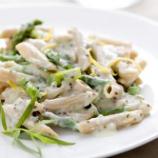
Asparagus Pasta

Asparagus Pasta
Ingredients

  • 8 ounces whole-wheat penne pasta
  • 1 bunch asparagus, trimmed and cut into 3/4-inch pieces
  • 1 1/2 cups low-fat  buttermilk
  • 4 teaspoons whole-grain mustard
  • 4 teaspoons flour
  • 1/2 teaspoon salt
  • 1/2 teaspoon freshly ground pepper
  • 2 teaspoons extra-virgin olive oil
  • 3 tablespoons minced garlic
  • 2 teaspoons minced fresh tarragon, or 1/2 teaspoon dried
  • 1 teaspoon freshly grated lemon zest
  • 2 teaspoons lemon juice
  • 1/2 cup grated Parmesan cheese, divided

Preparation

  1. Bring a large pot of water to a boil. Meanwhile, whisk milk, mustard, flour, salt and pepper in a medium bowl. Heat oil in a medium saucepan over medium-high heat. Add garlic and cook, stirring, until fragrant and lightly browned, 30 seconds to 1 minute. Whisk in the milk mixture. Bring to a simmer, stirring constantly, and cook until thickened. Stir in tarragon, lemon zest and juice.  Remove from heat.
  2. When water boils, add pasta and cook for 3 minutes less than the package directions. Add asparagus, reserving tips, and continue cooking until the pasta and asparagus are just tender, 3 minutes more. Drain and return to the pot.
  3. Stir the sauce and reserved asparagus tips into the pasta-asparagus mixture. Cook over medium-high heat, stirring, until the sauce is thick, creamy and coats the pasta, 1 to 2 minutes. Stir in 1/4 cup Parmesan. Divide the pasta among 4 bowls and top with the remaining 1/4 cup Parmesan.

Nutrition

4 servings, 1 1/2 cups each

Per Serving: 292 Cal; 8 g Fat (4 g Sat; 2 g Mono; 1 g Poly; 0 g Trans); 16 mg Cholesterol; 42 g Carb (8 g Sugar; 7 g Fiber); 16 g Protein; 430 mg Sodium

Salad Dressings

The asparagus pasta is great with a cucumber-tomato salad, but it also works well with a simple green salad.  Here are a couple of homemade salad dressings that take minutes to make but are healthier than store-bought dressings.  Both go well with the asparagus pasta.

Parmesan Pepper Dressing

Ingredients

  • 1/3 cup nonfat buttermilk
  • 1/3 cup nonfat cottage cheese
  • 1/3 cup freshly grated Parmesan cheese
  • 4 teaspoons white-wine vinegar
  • 1 small clove garlic, minced
  • 1/2 teaspoon cracked black pepper, or to taste

Preparation:  Combine buttermilk, cottage cheese, Parmesan, vinegar and garlic in a food processor or blender; blend until smooth. Stir in pepper.  Makes about 1 cup.

Nutrition: Per tablespoon: 16 Cal; 1g  Fat; 2 mg Cholesterol; 1 g Carb (1 Sugar; 0 Fiber); 2 g Protein; 57 mg Sodium

Goat Cheese & Tomato Dressing

Ingredients

  • 1/4 cup crumbled goat cheese
  • 2 tablespoons white-wine vinegar
  • 2 teaspoons maple syrup or honey
  • 1/4 cup extra-virgin olive oil
  • 2 plum tomatoes, seeded and chopped
  • 1/2 teaspoon salt
  • Freshly ground pepper, to taste
  • 1 tablespoon chopped fresh tarragon

Preparation:  Combine goat cheese, vinegar and syrup or honey in a blender or food processor and blend until combined. Add oil and tomatoes and blend until smooth. Season with salt and pepper. Stir in tarragon.  Makes about 1 cup.

Nutrition:  Per tablespoon: 44 Cal; 4 g Fat (1 g Sat; 3 g Mono); 2 mg Cholesterol; 1 g Carb; 1 g Protein; 85 mg Sodium; 24 mg Potassium


Bites & Pieces (Saturday Vegetarian Edition)

About 15 years ago I started trying to incorporate vegetarian meals into my week on a somewhat regular basis, partly for health reasons, partly for ecological reasons, and partly just to learn a new way to eat–when you’re a Midwestern farm girl any meal which isn’t built around a proteinaceous entree just isn’t a meal!  One of the best things I did at that time was to buy a cookbook titled “The Occasional Vegetarian” by Karen Lee (it has since gone out of print, but copies are still available); in this particular cookbook not only does she have great recipes, but she lays out entire menus so that those of us without a clue can figure out how to put together a balanced meal without meat.  Another thing that I like about this cookbook is that many of her recipes can be multi-purposed, in these instances, hors d’oeuvres turn into entrees a couple of days later.

So, for lms and her vegetarian dinner party I offer up these ideas from Karen Lee, with modifications by Michigoose:


Basic Toast Rounds

1 French baguette, cut into 1/4-inch slices

Olive oil

  1. Preheat the oven to 250 degrees
  2. Brush the bread slices lightly with the oil and lay them on a cookie sheet; bake until light brown and crisp through, 20 – 30 minutes.

These can be used immediately or stored for up to about five days. . . although mine never last that long.


Chino Caponata

Chinese eggplant ratatouille with Italian overtones. . . use as an appetizer on the toast rounds, or make even more (double the recipe), save it for a couple of days for the flavors to meld, and use it to top pasta.  Yummy!

2 lb eggplant (2 or 3 medium eggplants)

1 cup tomato sauce

4 tablespoons soy sauce

2 tablespoons sherry vinegar + 5 tablespoons dry sherry

4 teaspoons sugar

2 teaspoons Chinese hot chili oil

3 tablespoons peanut oil

2 cups chopped Spanish (or other mild) onion

4 tablespoons minced garlic

2 red bell peppers, roasted and chopped

3 tablespoons chopped fresh oregano (or 1 1/2 dried)

3 tablespoons small capers, drained

  1. Cut the eggplant into 1/2-inch cubes, toss with some salt and place in a colander.  Set aside for an hour, then rinse and allow to drain for about 10 minutes.  Dry thoroughly between paper towels.
  2. Combine the tomato sauce, soy sauce, vinegar, sugar, sherry, and chili oil; set aside.
  3. Heat a wok or iron skillet over high heat until it is (literally) smoking hot.  Pour in some of the peanut oil and toss in some eggplant cubes (don’t over-crowd the pan).  Press down on the eggplant to aid in scorching, and cook, stirring and pressing down occasionally, for about 5 minutes until the eggplant is soft and well-charred.  Remove the eggplant from the pan and repeat until all of the eggplant is cooked.
  4. Add more oil to the pan and add the onion and fry, stirring frequently, until it begins to brown (about 2 minutes).  Add the garlic and stir-fry for 1 minute more.  Add the eggplant back into the pan along with the tomato sauce mixture and stir until the sauce is absorbed, about 1 minute.  Add the pepper, oregano and capers and stir for a few seconds.  Season to taste, and serve warm or at room temperature.

Curried Roasted Garlic Spread

Not only is this spread fantastic on those toast rounds, but it can be used as a dip, or a great low-fat topping on potatoes.

1 head garlic

1/2 teaspoon olive oil

2 tablespoons sour cream

1 cup plain nonfat yogurt

1 tablespoon cumin powder (roasted, if possible)

1 tablespoon curry powder

  1. Preheat the oven to 375 degrees.
  2. Cut through the garlic head near the top, drizzle the oil over the top, place the garlic in some aluminum foil, seal, and roast for 40 minutes.  Unwrap and let cool.
  3. Combine the sour cream, yogurt, cumin, curry powder, and salt and pepper to taste.
  4. Pinch the cloves out of the garlic head and mash them into the yogurt mixture.
  5. Let the spread sit at room temperature for at least an hour before serving so that the flavors can meld.

Pasta Caponata

What to do with that leftover Chino Caponata. . .

1 tablespoon olive oil

1 garlic clove, minced

2 cups tomato sauce

1 cup Chino Caponata

1 tablespoon mascarpone or heavy cream

2 teaspoons salt

1/2 pound short pasta (I like to use bowties for this)

1/2 cup freshly grated Parmesan cheese

  1. Heat the olive oil in a medium skillet.  Add the garlic and saute until golden.
  2. Add the tomato sauce and bring to a simmer.  Stir in the Chino Caponata and bring to a simmer again.  Add the mascarpone or cream and stir.  Remove from the heat and toss with pasta.  Top with the cheese and serve immediately.

Happy weekend, all!

Hot Tamales

Hi all,
It is a tradition throughout Latin America to make tamales around Christmas. Make them, share them, compare them (yours are best, of course). Having married a Tica, we carry the tradition forwards. We use her Tia Lijia’s recipe with a few modifications.
A tamal is essentially a way to convert scraps into a meal. I want to call it a tamale too, but the singular is tamal and the plural is tamales (note, tamalays, not tamalis). We don’t have any truck with those Philistines in Mexico who use corn husks to wrap them. Costa Rican tamales are wrapped in banana leaves, which are great for steaming. The quality of the banana leaf is important. My beloved Keen does the selection and slicing of the leaves.
Here’s how you make Fallas-Baldi tamales. Take two prepared banana leaves and place them cross-wise. That’ll form a good seal for the steaming. Next, put on a generous dollop of masa. That’s the critical component and I’ll explain its preparation in a bit. Now, add the presents to your package. A couple pieces of chicken. A couple of olives. A few capers. Some sautéed, julienned carrots and bell pepper. Raisins are traditional, but we use dried, sweetened cranberries. Wrap up your tamal, put it against another one and tie up into a package. Your tamales will be steamed with others in batches. I think we make about 100 tamales each year, most of which are to be given away.
The masa is the crucial component. The first step is to make the broth. The standard approach is to boil chicken breasts in water then add spices (condimento—a Latino spice). One then removes the chicken breasts for later preparation. Spices are added to the broth and then masa harina (corn flour with lime, Maseca is a popular brand that we use). Mashed potatoes are the secret ingredient in the FB masa. It’s also important to add plenty of fat. We use Crisco, but I suspect that lard is traditional.
Here was my one and only innovation. It struck me that (a) the chicken would be over-cooked and (b) wouldn’t add enough flavor to the broth. I’m big into stock and poached chicken is lovely. It struck me that the basic method overcooked the chicken and didn’t add enough flavor to the broth. This is my one and only innovation (approved of by the tamal nazi).
I purchased 8 chickens at Costco this year. The thighs and legs were removed, skinned, and set aside for later use. The breasts were removed off the bone and set aside. The backs and wings were chopped into pieces, roasted, and used to make stock. It’s a standard stock, with the substitution for parsley with plenty of cilantro and culantro. The latter is a flat-leafed herb with a flavor similar to cilantro. Cilantro is actually called culantro in Costa Rica; culantro is called culantro coyote. It was considered something of a wild herb there and we can finally get it in the U.S. (exported from Costa Rica). We’re going to wind up with about 3 gallons of stock out of all of this.
OK. We just poached the chicken breasts in the stock. In the past, I’ve poached the chicken breasts in water and then added the bones, mirepoix, and herbs to make stock. I think I like this way better as the stock flavors the breasts and vice versa. The chicken is then cut into ~1/2 pieces. It’ll be sautéed in onions with condimento (spice blend) and achiote (which colors the chicken). The julienned bell peppers and carrots will be similarly sautéed.
For a vegetarian friend, I make a few tamales without chicken. She’s not bothered about broth, so I  like making a few tamales con camarones. One year, we made masa with a shrimp stock. Keen indulged me. We also have some pork loin in the freezer, so I’ve defrosted it and we’ll make a few pork tamales.
We’ll be busy tomorrow. Friends are coming over, drinks will be drunk and many tamales will be made.
¡Felix Navidad!