This day in history – August 17

1998 – Bill Clinton becomes the first sitting president in history to testify in front of a grand jury. The testimony arises out of an earlier deposition in which Clinton had lied about having a sexual relationship with White House intern Monica Lewinsky, prompting Independent Prosecutor Kenneth Starr to charge Clinton with perjury. Clinton’s grand jury testimony becomes infamous for his parsing the meaning of the word “is”. Asked if he was lying when he had claimed that “there’s nothing going on between us,” Clinton says “It depends upon what the meaning of the word ‘is’ is. If the—if he—if ‘is’ means is and never has been, that is not—that is one thing. If it means there is none, that was a completely true statement.” The whole episode leads to Clinton’s becoming only the second president to ever be impeached, although he was eventually acquitted by the Senate.
http://www.youtube.com/watch?v=KiIP_KDQmXs

1987 – Rudolf Hess, the last living member of the Nazi inner circle, asphyxiates himself with a lamp cord in Spandau Prison. He was 93. The third highest ranking Nazi, behind Hitler and Hermann Goring, Hess was captured and imprisoned by the British in 1941 after he parachuted into Scotland in a bizarre and unauthorized attempt to negotiate a peace agreement with the British. Following WWII Hess was tried at Nuremburg with other high ranking Nazis, and was sentenced to life in prison. At the time of his death, he was the only remaining resident of Spandau Prison.
hess

1978 – Ben Abruzzo, Maxie Anderson, and Larry Newman complete the first ever transatlantic balloon flight when they land their craft, the Double Eagle II, in a barley field in France. The flight, covering 3,233 miles and taking 137 hours, had begun in Preque Isle, Maine, and is the 18th attempt to cross the Atlantic in a balloon. The crew itself had tried and failed to achieve the feet a year earlier in the Double Eagle I.

1974The Night Chicago Died by UK band Paper Lace tops the US charts. The song tells the story of Al Capone’s defeat at the hands of police in a street battle on the East Side of Chicago. No such battle ever actually took place, as Capone was in fact arrested and imprisoned on tax evasion charges, and indeed there is no “East Side” of Chicago, as the center of downtown Chicago sits on the west coast of Lake Michigan. Still, the song goes Platinum in the US, with more than 1 million in sales. The song is in fact the band’s second big hit, the first being Billy Don’t Be a Hero, although it was a cover version of Billy by Bo Donaldson and the Heywoods that hit number 1 in the US.
http://www.youtube.com/watch?v=ryVh9BuwOs4

1933 – Yankee great Lou Gehrig plays in his 1,308th consecutive game, topping the previous consecutive game record held by Everett Scott. Gehrig, known as the Iron Horse, will go on to play in 2,130 consecutive games, eventually removing himself from the lineup on May 2, 1938, in response to symptoms of what will later be diagnosed as amyotrophic lateral sclerosis, a rare disease that will go on to take Gehrig’s life and which, as a result, will come to more popularly be known as Lou Gehrig’s Disease. Gehrig’s streak, which will stand as a record for 57 years, almost came to an end 4 years earlier. Suffering from back pain on July 13, 1934, Gehrig is listed in the away game lineup as a shortstop rather than his normal first base, and after getting a hit in the top of the first inning, Gehrig is removed for a pinch runner having never played in the field.

This day in history – August 16

1977 – Elvis Presley, the King of Rock ‘n Roll, is found dead on the bathroom floor of his Graceland Mansion in Memphis. He was 42 years old. Despite declining health in his final years, Presley continues to tour extensively, with 100 shows in 1976 and 55 more in 1977 before is death. (In fact he is scheduled to fly out on yet another tour the night of his death.) Overweight and taking numerous prescription drugs, there are times when he can barely remember the words he is supposed to sing. Still, his concerts continue to sell-out, and a reported 80,000 people line the streets for his funeral procession. Presley remains to this day the greatest selling solo artist of all time.
http://www.youtube.com/watch?v=3JxrzO3sNTY

1974 – The Ramones make their first appearance at New York City’s famous music club CBGB. A vanguard of the punk rock genre, The Ramones find limited commercial success but are often hailed as one of the most influential punk rock bands ever, and even place 26 on Rolling Stone Magazine’s top 100 artists of all time list. I never got the attraction, to be honest, although I did find their 1979 movie Rock ‘n roll High School to be amusing when I was a teenager. And for some reason I find Blitzkreig Bop to be oddly likeable.
http://www.youtube.com/watch?v=TYh1lRR1m6Y

1955 – US singer/entertainer and activist Paul Robeson is denied his appeal to force the US to issue him a passport. One of the most famous black entertainers in the world, he had become controversial for of his outspoken criticism of US civil rights policies and for his support for the Soviet Union, which included a tribute to “the great Stalin” upon the death of the Soviet dictator in 1953. His passport was initially denied in 1950 while he was investigated for communist ties, and while he was finally allowed to travel in 1958, he remained under FBI investigation until his death in 1976. As an entertainer, Robeson is perhaps most well known for his renditions of ‘Ol Man River.

1948 – Yankee and home run king George Herman “Babe” Ruth dies of cancer at the age of 53. Ruth had been a member of the early New York baseball dynasty of the 1920’s and 30’s, and held the record for most career home runs (714) for 39 years, until it was broken by Hank Aaron in 1974. Regarded as the first true sports celebrity, Ruth once famously quipped, when asked about the fact that he made more money than President Hoover, “I had a better year.” Ruth’s body lays in state in front of Yankee Stadium for 2 days, as more than 10,000 file past to see him for the last time.

1896 – While salmon fishing in Canada’s Yukon territory, George Carmack and his two companions discover gold in a creek bed near the Klondike River. Over the next two years “Kloondike fever” will run rampant and 50,000 people will travel to the area in search of gold, marking the last major gold rush of the American west. Among the 50,000 is a young man named Jack London, who fails to find gold but uses his experiences to become a renowned writer of short stories. Large scale mining would continue in the area until 1966, producing some $250 million in gold.

This day in history – August 15

1989 – In his 2nd start following treatment for a cancerous tumor in his pitching arm, Dave Dravecky of the league leading San Fransisco Giants breaks his arm while throwing a pitch to Tim Raines. Dravecky later retires from baseball after breaking his arm a second time during the Giants celebration following their pennant clinching victory, and will eventually have his left arm and shoulder entirely amputated. He is currently an author and motivational speaker. (The video of the break is out there, but it is included with some other gruesome injuries you probably don’t want to see.)

1979 – Francis Ford Coppola’s Apocalypse Now is released in theaters. Beset by all kinds of production problems including a change in the lead after one week of shooting (Harvey Keital as Willard was quickly dropped by Coppola), a heart attack in mid-film (Martin Sheen), unprepared starring actors (an overweight Marlon Brando ad libbed most of his role since he didn’t know his lines), and weather problems (a typhoon destroyed several of the sets), production costs soared and the release date was postponed several times. Coppola himself suffered a nervous breakdown. Still, the film was met with critical acclaim and garnered 6 Academy Award nominations, winning for Best Cinematography and Best Sound. Coppola later released a documentary of the making of the film, taken largely from home movies filmed by his wife, called Hearts of Darkness: A Filmmaker’s Apocalypse.
http://www.youtube.com/watch?v=9-eUEKmdg-E

1969 – The Woodstock Music and Art Festival, advertised as “3 days of peace and music”, opens on the grounds of Max Yasgur’s dairy farm in Bethel, New York on Friday, August 15. Although Bethel permit authorities are told to expect no more than 50,000 people, some 186,000 tickets are sold prior to the event. Unable to manage security for the expected numbers, the events organizers decide at the last minute to open the gates for free admittance, and at its peak about 400,000 people are in attendance. Thirty three different bands are scheduled to appear, including some of the top performers of the day such as Arlo Guthrie, Joan Baez, The Grateful Dead, Janis Joplin, The Who, Jefferson Airplane, and CSN&Y. The concert becomes a defining event of the 1960’s and the decade’s youth culture. The final act, former army paratropper Jimi Hendrix, finished up Monday morning and included this now historic nod to his country.

1945 – Japan’s Emperor Hirohito takes to the radio for the first time ever and announces Japan’s unconditional surrender. This is the first time his voice has ever been heard by the vast majority of Japanese citizens. Noting that “the enemy has begun to employ a new and most cruel bomb, the power of which to do damage is, indeed, incalculable”, the Emperor says that “Should we continue to fight, it would not only result in an ultimate collapse and obliteration of the Japanese nation, but also it would lead to the total extinction of human civilization.” Although Japan’s official surrender will not be signed until early September, August 14-15 (US/Japan time zones) is generally accepted as V-J Day.

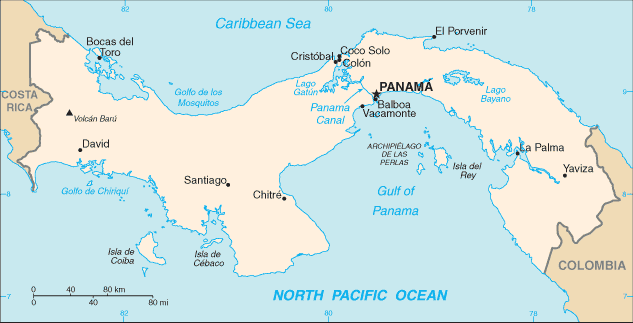
1914 – After 30 years of of digging, first by the French and later by the US, the Panama Canal is officially opened to commercial traffic, cutting the time it takes ships to travel from the Atlantic Ocean to the Pacific Ocean in half. While the canal was originally completed and owned by the United States, it reverted back to Panamanian control in 1999. Interestingly, owing to the geography of Panama, traveling through the canal from the Atlantic to the Pacific will have one traveling eastward, not westward.
panama

Famous Birthdays – Napoleon Bonaparte (1769), T.E. Lawrence (1888), Julia Child (1912), Ben Affleck (1972)

This day in history – August 14

2003 – At 4:10pm, power across 8 US states and parts of Canada goes out, resulting in the second most widespread blackout in history. The blackout extends from Massachusetts all the way to Michigan and into Ontario, Canada, effecting more than 55 million people across the two countries. Although power is restored to some areas by 11pm, it takes 2 days for power to be fully restored to all areas. An investigation later reveals that it was triggered simply by lines in Ohio coming into contact with trees, and a faulty alarm system that failed to promptly alert technicians to transfer power from the overloaded lines, resulting in a cascading overload that eventually brought down the whole system. I was in London at the time, but my colleagues often reminisce about the night they slept in the office because it was the only place that had power (backup generator) and hence AC in the 90 degree heat.

1994 – Illich Ramirez Sanchez, a Venezuelan terrorist more commonly known as Carlos the Jackal, is finally captured after more than 20 years of terrorist activity across Europe and the Middle East. Implicated in a number of assassination attempts, hostage takings, and bombings, Sanchez is eventually tried and imprisoned in France for the 1975 murder of two Paris policemen and Michel Moukharbal, a Mossad agent who had identified Sanchez to the policemen. With the assistance of local authorities, Sanchez was captured in Sudan, where he had been given asylum after being expelled from Syria in 1991. After a minor operation, Sanchez was tranquilized by his bodyguards while he slept, and handed over to the French. He remains in a French prison, his most recent appeal having been denied on June 26, 2013.
Carlos the Jackal

1935 – President Franklin Delano Roosevelt signs into law the Federal Ponzi Scheme Social Security Act. The act provides benefits to both retirees and the unemployed, to be funded by a special payroll tax imposed on both employees and employers. It is a bold assertion of heretofore unknown federal power, but legal challenges are eventually defeated in a SCOTUS 5-4 decision, one of several decisions to uphold New Deal legislative efforts that reversed an earlier trend of New Deal courtroom defeats, a reversal that coincidentally came after Roosevelt proposed legislation that would allow him to essentially pack the Supreme Court with his own justices, diluting the power of the sitting justices.
FDR signs SS

1945 – Word of Japan’s impending surrender to the Allies sparks a coup in Japan, with over 1,000 Japanese troops storming the Imperial Palace in an attempt to prevent the surrender proclamation from being announced. Troops loyal to the Emperor repulse the attacks, and the Emperor delivers the proclamation the following day. (More on which tomorrow!)

1765 – Colonists gather on the corner of Essex Street and Orange Street (later Washington Street) under an Elm tree in Boston to protest the passage of the Stamp Act, an act of the British Parliament that required colonists to purchase a British stamp for every official document obtained. The protestors hung an effigy of the local stamp-duty collector in the tree, the first public act of defiance for those who would later call themselves “Sons of Liberty” (sexists that they were), and the beginnings of the movement that would grow into the American independence movement and eventually the American Revolution. The tree, from then on to be named the Liberty Tree, became a symbol of American protest against the British, but would eventually be cut down by loyalists in 1775 when the Continental Army laid siege to the British occupied city.
Liberty Tree

This day in history – August 13

August 13 is an incredibly boring day in history. Only a couple of things worthy of note.

1982 – Cameron Crowe’s Fast Times at Ridgemont High opens in theaters across the nation. Based on Crowe’s book of the same name chronicling his undercover experiences in a San Diego high school, the film features a slew of soon-to-be household names, including Nicholas Cage, Jennifer Jason Leigh, Forest Whitaker, Phoebe Cates, Anthony Edwards, Judge Rheinhold, and most famously Sean Penn as the stoner Jeff Spicoli.

1925 – Cuban strongman Fidel Castro is born in the eastern Cuban province of Oriente. Castro will successfully lead the overthrow of the Batista government in 1959, and will survive as the dictator of Cuba until he steps down, passing power to his brother, in 2008.

1899 – Legendary film director Alfred Hitchcock is born in London. Hitchcock is best known for his suspense-thrillers as well as for his unique use of camera angles and editing techniques in order to build tension. Hitchcock also makes quick cameo appearances in all of his films, making for an interesting game of trying to find where he appears in each film. See if you can find Alfred in the opening credits of North by Northwest.
https://www.youtube.com/watch?v=xBxjwurp_04

1521 – After a 3 month siege, Hernan Cortes and his Spanish conquistadors finally capture the capitol of the Aztec empire, Tenochtitlan. The fall of the city effectively marks the end of the Aztec Empire, which lasted just under 100 years.

This day in history – August 12

1988 – Martin Scorcese’s film The Last Temptation of Christ is released. Based on a 1953 book of the same name, the film is hugely controversial for its departure from the Biblical account of Jesus’ life as told by the four gospels, and in particular a scene in which Jesus consummates his imagined marriage to Mary Magdelene. Sparking many protests, including some violence (most notably in France) several theater chains refuse to screen the film, and even after it is released on video, many video stores, including Blockbuster Video, will not carry it. Despite the controversy (or perhaps because of it) Scorsese receives an Academy Award nomination for Best Director.

1981 – IBM issues a press release announcing the introduction of its first ever personal computer. The IBM 5150 comes with 4.7 MHz CPU, 64k RAM, 0 MB fixed disk, and a floppy disk drive (remember floppy disks?!?!), and sells for about $3,000. By 2009, for the equivalent inflation adjusted price (roughly $7,000), you can get a 15,400 MHz CPU, 12,000,000 KB RAM, 5.5 million MP fixed disk, and a blue-ray DVD burner as a removable drive.

1978 – In a meaningless pre-season game between the New England Patriots and the Oakland Raiders, wide receiver Daryl Stingley is paralyzed from the neck down after getting hit by Jack Tatum when stretching for a pass on a cross pattern. The hit, which leaves Stingley unconscious on the field, broke his neck between the 4th and 5th cervical vertebrae, leaving him a quadriplegic for the rest of his life. Stingley died in 2007.
http://www.youtube.com/watch?v=a0vKO-sHZTY

1961 – On the night of August 12 and continuing into the morning hours of the next day, in an attempt to stop the flow of citizens to the west, East Germany begins stringing barbed wire and posting sentries at all points of entry into West Berlin from East Germany, completely isolating West Berlin. This marks the beginning of the building of what will come to be a classic symbol of the Cold War, the Berlin Wall. The Wall becomes the site of many iconic Cold War moments, including JFK’s “Ich bin ein Berliner” speech, Ronald Reagan’s “Tear down this wall” speech, and this classic photo of an East German border guard effecting his own escape:
east berlin escape

1944 – Joseph P. Kennedy, Jr., a Naval Aviator and son of former US ambassador to the United Kingdom Joseph Kennedy Sr., is killed over England when the bomb his plane is carrying detonates prematurely. Kennedy was being groomed by his father for a political career, with the White House being the ultimate goal. His death sets the stage for his younger brother, John, to become the standard bearer of Kennedy Sr.’s political ambitions.

1908 – The first production model of Henry Ford’s Model T automobile is produced. The Model T is the first automobile mass produced on an assembly line with interchangeable parts and marketed to the middle class. The first Model T sold for $850, the equivalent of approximately $20,000 today, and revolutionized transportation, making car travel accessible to the ordinary person for the first time.

This day in history – August 11

1999 – A very rare tornado rips through downtown Salt Lake City killing one, injuring 100, and causing over $170 million in damages. According to the National Weather service this is the first major tornado ever to hit a major urban downtown district, with buildings over 500 feet tall being effected. Vice President Al Gore blames global warming.
Salt Lake City tornado

1994 – Major League baseball players go on strike, resulting in the longest work stoppage in the history of MLB, the cancellation of the 1994 season, and the first time since 1904 that a World Series champion is not crowned. The stoppage extends until the eve of the 1995 season, but with owners preparing to field teams of replacement players, future Supreme Court justice Judge Sonia Sotomayor issues an injunction against the owners, and players subsequently agree to end the strike. I wonder if this was the kind of situation in which a wise Latina woman was positioned to make a “better” decision than those dreaded white males.

1988 – Osama Bin Laden and other mujahideen fighters from the Afghanistan war against the Soviet Union meet in Peshawar, Pakistan to discuss expanding their efforts to Islamist movements in other parts of the world. The result of the meeting is the formation of an organization called Al Qaeda.

1984 – While performing a microphone test prior to a radio address, President Ronald Reagan jokes that he “signed legislation that would outlaw Russia forever. We begin bombing in 5 minutes.” The joke is recorded and later revealed to the public. Portrayed as at best an embarrassing political gaffe and at worst an indication of Reagan’s warmongering inclinations, the American electorate doesn’t seem to care as Reagan goes on 3 months later to get re-elected, trouncing Walter Mondale and winning 49 of 50 states.

1973 – George Lucas’ American Graffiti, opens in theaters across the country. Transforming child actor Ron Howard into a legitimate adult star, it also launches the careers of Richard Dreyfus and Harrison Ford. Also notable for a cameo appearance by Suzanne Somers as the mysterious blonde in the T-Bird.

1965 – In Los Angeles a scuffle breaks out between a black motorist and a white police officer following a traffic stop for suspected DUI, sparking a reaction from the predominantly black neighborhood of Watts that grows into a six-day race riot, leaving 34 dead, over 1,000 injured and more than $40 million in property damage. The rioting eventually encompasses a 50 square mile area of South Central LA with over 30,000 people participating in looting, arson, and sniper shooting at police and firefighters. Peace is finally restored 6 days later after the National Guard is called in.
http://www.youtube.com/watch?v=B6PVzar8jw4

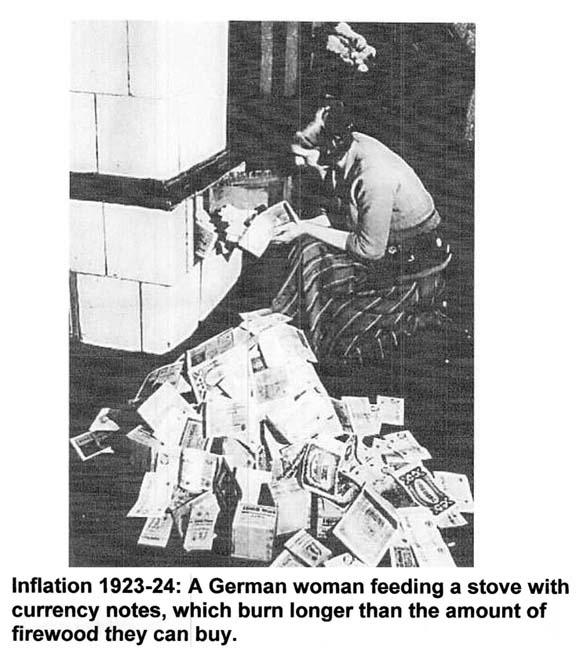
1919 – A new constitution is adopted by the national assembly in Weimar, Germany, beginning the 14 year existence of the Weimar Republic. Weimar is marked by great political turmoil including the rise of Adolf Hitler, but is perhaps most notable historically for its experience of hyper-inflation during its early years. Unable to pay its debts and war reparations, the government simply prints more and more money, resulting eventually in daily and even hourly hikes in prices of goods and services throughout Germany. Paper money becomes so worthless that it is cheaper to burn it in fireplaces and stoves than to use it to buy wood to burn.
weimar inflation

This day in history – August 10

1988 – 43 years after the end of World War II, President Reagan signs a bill providing payments of $20,000 to Japanese-Americans interned during the war. The payment is the equivalent of roughly $25 per day interned.

1984 – During the women’s 3,000 meter race at the Los Angeles Olympics, American and favorite Mary Decker trips on the heel of Britain Zola Budd, ending her quest for gold and producing an iconic photo of the agony of Olympic defeat.
Mary Decker

1984 – The movie Red Dawn is released, notable not only for its cast filled with young, future stars such as Patrick Swayze, Charlie Sheen, Lea Thompson and Jennifer Grey, but also for being the first movie ever released with a PG-13 rating. A Cold War classic, it was re-made last year.

1977 – Postal employee and serial killer David Berkowitz, aka Son of Sam, is finally arrested in Yonkers, New York after killing six and wounding seven in a series of shootings that took place over the course of a year. Berkowitz says his neighbor’s dog, possessed by a demon, told him to do it.

1948 – Allen Funt’s “Candid Camera” debut’s on ABC television. Originally a radio show called Candid Microphone, Funt’s television show would continue to be produced, either as a regular feature or as a periodic special, until 2004. When I lived in England the BBC broadcast an edgier Candid Camera-like show called Trigger Happy TV, which I thought was hilarious.

1846 – President James K. Polk signs the law establishing the Smithsonian Institution.

1792 – Mobs in Paris attack Tuileries Palace, home of Louis XVI and Marie Antoinette, forcing the King to take shelter in the Legislative Assembly. The attack marks the effective end to the Bourbon monarchy, as Louis was a arrested 3 days later, tried, and eventually executed.

This day in history – August 9

1988 – After 4 consecutive Stanley Cups, 8 consecutive MVP awards, and a list of scoring records that would make Michael Jordan envious, the reigning champion Edmonton Oilers shock the hockey world by trading Wayne Gretzky, the greatest player ever to play the game, to the Los Angeles Kings for $15 million. As part of the trade Gretsky demands that teammates Marty McSorley and Mike Krushelnyski be traded along with him. Marty McSorely – what a great name, and not just because of his namesake.

1976 – The USSR launches Luna 24, the last space craft to land on the moon to date, making the USSR responsible for both the first and last man-made crafts to land on the moon, both of which were unmanned. In the interim, however, the US managed a few successes of its own. And had more fun doing it.

1969 – Actress Sharon Tate (wife of Roman Polanksi), and 3 friends including Abigail Folger, heiress to the Folger Coffee fortune, are brutally murdered in Tate’s Benedict Canyon mansion. The murders are perpetrated by members of Charles Manson’s cultish “family” at his behest, in a bizarre attempt to spark a race war which, according to Manson, was prophesied in the songs of The Beatles. I first read about the murders as a young teenager in the book Helter Skelter by Manson prosecutor Vincent Bugliosi. I became totally fascinated with the story, and eventually with true crime stories in general.

1945 – U.S. drops the 2nd atomic bomb “Fat Man” on the city of Nagasaki, killing a reported 60,000 – 80,000 people. Following on the heels of the first use of an atomic bomb on the city of Hiroshima 3 days earlier, the bombing effectively puts an end to Japanese resistance, and within the week Japan surrenders unconditionally, finally ending WWII. Almost 70 years later debates continue to rage over whether the use of the bomb was justified.

1936 – Jesse Owens wins the last of his 4 gold medals at the Berlin Olympics, a well deserved poke in the eye of Adolf Hitler and his Aryan master race fantasies. Although apparently Owens did make good friends with one of his toughest German competitors.

1790 – The trading ship Columbia returns to Boston after a 3 year journey, the first ship to carry the U.S. flag around the world.

Leave the ‘Skins Alone!

Slate magazine today declared that the name of the Washington professional football team, the Redskins, is forever banned from its pages. The name, apparently, is simply too offensive and Slate is taking a stand.

Which is actually a bit weird. Slate admits that the name “is not an open-and-shut outrage” and that it “has a relatively innocent history.” It acknowledges that the name’s creator, original team own George Preston Marshall, “was almost certainly trying to invoke Indian bravery and toughness, not to impugn Indians,” and even that current team owner Dan Snyder probably “is[n’t] lying to us or to himself when he sees only the bright side of the name.” Why, then, is Slate so adamant about joining the bandwagon to get the Redskins to become, well, something else? Because, it says, times have changed.”[T]ime passes, the world changes, and all of a sudden a well-intentioned symbol is an embarrassment.”

Well, yes, time has passed, and the world has changed. But the only really relevant change is the fact that the term “redskin” no longer possesses whatever derogatory connotations it might once have had. Why? Precisely because it is the name of the Washington football team. When was the last time anyone heard the word used in a context outside of a sports team name, in a derogatory manner? Google the term “redskin” and the only results you will get…the only results, page after page…will be references to the football team. In fact the use of the term as a team name has pretty much eliminated its effectiveness as a slur, even if someone wanted to use it as such. To the average person in America the term means and brings to mind only one thing…the Washington football team.

It is rare to be able to take a slur (again, to whatever extent it ever was one) and eliminate the sting inherent in the word. Some critics of the name have tried to press their point by asking us to try to imagine using other ethnic slurs as the name of a sports team, like for example the Washington N-words. Absurd and offensive, of course. But imagine that just such a thing had been done in a long distant, less sensitive time, and imagine further that, as a result of its repeated and common use in that context, no one ever used the term as a racial epithet anymore. To use the word was to refer to a sports team, not to demean a black person. Wouldn’t that actually be a welcome change from our current situation in which the word – a simple word! – is so powerful and taboo that mature adults have to act like embarrassed grade schoolers reporting to the teacher that they heard someone cursing (“He said the f-word!!!”)? Of course we have no hope of that ever happening with the dreaded n-word, which will forever carry its historical implications and therefore will also always be banished from polite conversation. But that is precisely what has happened with the term redskin, even if not by design. Why shouldn’t that achievement be embraced?

Besides, consider the following:

Washington Redskins Fighting Irish

Now you tell me, which of these is a more offensive stereotype: the staid, dignified Native American of the Washington Redskins, or the impish, belligerent, and almost certainly itching-for-a-brawl drunk of the Notre Dame Fightin’ Irish? If the latter isn’t too offensive to be mentioned and seen in polite company, neither is the former. Leave the ‘Skins alone.