Morning Report: Disappointing economic data

Vital Statistics:


  Last Change
S&P futures 3962 6.4
Oil (WTI) 63.88 -1.56
10 year government bond yield   1.60%
30 year fixed rate mortgage   3.26%

Stocks are flattish this morning as we begin the March FOMC meeting. Bonds and MBS are up small.


Retail Sales fell 3% in February after a strong January. The retail sales control group, which excludes volatile items like autos, gas and building products fell 3.5%. While these numbers were a disappointment, January’s numbers were revised upward, which takes out some of the sting.


Another disappointing economic report. Industrial Production fell 2.2% in February, while the Street was looking for a 0.5% gain. Manufacturing Production fell 2.2% and capacity utilization slipped from 75.5% to 73.8%.


New home applications fell 9% in January, however they were up 9.2% from a year ago. “The economy and job market continue to improve, but new home sales activity slowed in February. Builders continue to be confronted with rising input costs and a lack of available lots, causing them to slow production,” said Joel Kan, MBA Associate Vice President of Economic and Industry Forecasting. “Applications for new home purchase mortgages decreased last month but remained over 9 percent higher than a year ago, and MBA’s estimate of new home sales, at 748,000 units, was at its slowest annual pace since May 2020. After seven consecutive months of a strong 800,000-unit sales pace, supply and demand imbalances are likely creating bottlenecks.”


5.8% of all mortgages were at least 30 days delinquent in December, according to data from CoreLogic. This is up 2.2 percentage points from a year ago. The worst states for delinquencies are the Deep South and the Mid-Atlantic. Louisiana, Mississippi, NY, NJ, and Maryland were the top 5 states. Below is a chart of delinquencies. Foreclosures are being held down due to government actions, so those numbers will definitely be going up once the restrictions are lifted.


The number of loans in forbearance fell to 5.14% from 5.2% a week ago. “One year after the onset of the pandemic, many homeowners are approaching 12 months in their forbearance plan,” said MBA Chief Economist Mike Fratantoni. “That is likely why call volume to servicers picked up in the prior week to the highest level since last April, and forbearance exits increased to their highest level since January. With new forbearance requests unchanged, the share of loans in forbearance decreased again. Homeowners with federally backed loans have access to up to 18 months of forbearance, but they need to contact their servicer to receive this additional relief.”

Morning Report: FOMC week

Vital Statistics:


  Last Change
S&P futures 3937 -1.4
Oil (WTI) 64.88 -0.76
10 year government bond yield   1.62%
30 year fixed rate mortgage   3.27%

Stocks are flattish this morning on no real news. Bonds and MBS are flat.


The big event this week will be the FOMC meeting on Tuesday and Wednesday. While no one expects to see any change in policy, a lot of attention will be drawn to the dot plot and whether we see an increase in the number of members seeing rate increases in 2023. We will also get a fresh set of economic forecasts, and economists are taking up their numbers for this year. While I won’t be surprised to see the Fed take up GDP estimates, I am more interested to see whether they take up inflation estimates.

Jerome Powell will hold another press conference, and I am curious as to whether he will discuss the effect that the supplemental liquidity ratio is having on longer-term rates, or whether the business press asks about it.


Tappable equity, or the amount of home equity that could be converted into a cash-out refinance, reached a record of $7.3 trillion at the end of 2020. This works out to be about $158,000 per homeowner. “This past year has been one of significant home price growth, to say the least,” Walden said. “But it has also occurred in a market in which the word ‘unprecedented’ has likely been used more over that same period than perhaps ever in history. Nevertheless, that growth has brought the levels of equity available to American homeowners with mortgages to…well, unprecedented levels.”

This stat is important, because it illustrates how cash-out refinances, particularly debt consolidation refis, will increase in importance as rates rise. Even if the new rate is more or less the same, if the borrower can repay credit card debt that costs in the teens with a 30 year fixed rate mortgage at 3.5%, it still makes sense to do. Don’t forget that 30 year to 15 year refis will also be popular with rates down here. There will still be plenty of business to be done.

Given the supply / demand imbalance for available homes, expect to see home prices continue to rise. I do wonder however if the new Fannie restrictions on investment and second homes affects pricing in certain areas.


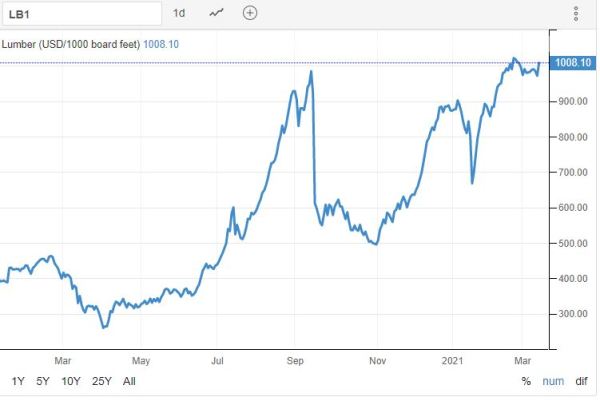
Higher input prices will be driving up the price of new homes. Lumber prices are trading around $1,000, and skilled labor wages are on the rise as well. This will affect affordability issues.


Morning Report: Yields rise on hot inflation numbers

Vital Statistics:


  Last Change
S&P futures 3913 -14.4
Oil (WTI) 65.82 -0.036
10 year government bond yield   1.60%
30 year fixed rate mortgage   3.2%

Stocks are lower this morning on no real news. Bonds and MBS are down.


The stimulus bill is signed and checks could start hitting bank accounts as early as this weekend.


Still nothing as far as guidance out of Fannie and Freddie regarding exactly how the investment limits are going to work. The MBA is supposedly aware and concerned, but that is about it. Note that the last time Fannie and Fred introduced a massive policy change (the adverse market fee), they ended up delaying it a few months so lenders could clear out their pipelines.


Unfortunately, Fan and Fred interpret the directive differently, and I am hearing that even different reps in the same company are giving different advice.


The Producer Price Index rose 0.5% MOM and 2.8% YOY, which is much higher than the Fed’s 2% inflation target. Ex-food, energy and trade services, it rose 0.2% MOM and 2.2% YOY. While one print of the PPI doesn’t mean inflation is back, bonds don’t like it and yields are up accordingly.


Foreclosure filings rose 16% MOM, but are down 77% from a year ago. This is a completely artificial number however due to foreclosure moratoriums. “Extensions to the federal government’s foreclosure moratorium and CARES Act mortgage forbearance program continue to keep foreclosure activity historically low,” said Rick Sharga, executive vice president of RealtyTrac, an ATTOM Data Solutions company. “These government actions, and the efforts of lenders and mortgage servicing companies, have helped millions of homeowners avoid foreclosure during a year-long global pandemic and a recession that resulted in 22 million lost jobs.”


Nearly half of all Americans missed a mortgage or rent payment during the pandemic.


The labor market is on the mend, with job openings rising to 6.9 million at the end of January. The quits rate, which tends to lead wage increases was stable at 2.3%.

Morning Report: Fannie limits investment / second home purchases

Vital Statistics:


  Last Change
S&P futures 3921 24.4
Oil (WTI) 65.52 1.06
10 year government bond yield   1.51%
30 year fixed rate mortgage   3.19%

Stocks are higher this morning as bonds continue to rally.


Fannie Mae sent out a letter yesterday announcing they will restrict non owner occupied guarantees to 7%. This applies to cash window sales and MBS as of April 1. I am not sure how Fannie plans to enforce this, but it will be something to watch.

This rule change stems from an order to FHFA in the waning days of the Trump Administration, which intended to limit Fannie Mae’s risk. In addition to the 7% NOO cap, it directs Fannie to limit cash window purchases to $1.5 billion per year per lender, and also to limit its high risk loans (generally LTV > 90 / FICO < 680 / DTI > 45). The latter requirement seems to be a direct shot at the HomeReady program.

The original letter gave a Jan 1 2022 date for implementation, however Fannie is interpreting the investment / second home cap as being binding now, hence the short fuse (March 10 announcement, April 1 start). The MBA is gathering input from lenders regarding the changes, and it appears that Fannie is as well. Note the Urban Institute has already issued a white paper that lists the problems with the FHFA directive.

While Urban Institute is mainly concerned with the high risk loan issue since it disproportionately affects minority borrowers, it does also push back against the investment limit. Why does Urban Institute care about landlords? It doesn’t. But, investment property loans are highly profitable for Fan and Fred, and these loans subsidize those higher risk loans that Urban wants to see made.

So, what does this mean for originators? First understand that these edicts stem from a different Administration. The Biden Admin is more sympathetic to Urban Institute’s worldview than the Trump Admin is. Janet Yellen could write a letter to FHFA rescinding the January guidance. FHFA would then tell Fannie and Fred that the limits no longer apply, and it will be business as usual.

Second, given that investment property loans are highly profitable, at least according to Urban’s numbers, someone is going to do them. The most likely outlet is probably non-QM. Interestingly this could alleviate a big issue with non-QM, which was the track record problem. The buy-side has been leery of non-QM securities because they don’t have a history of prepay speeds and delinquencies, which makes valuing them difficult. Introducing garden-variety investment properties into the mix would fix that because there is a ton of data on these loans. That said, the buy-side was not avoiding this paper for that reason only; there are other issues that need to get ironed out at the SIFMA level.

The other likely outcome is that this could jump start the private label securitization market again, and we could see banks begin to bid this paper given its profitability characteristics. On the high-risk loan issue, I imagine FHA will pick up the slack.

My guess is that the Biden Admin will not want to upset the apple cart with the economy in a precarious position and the US suffering a housing shortage. Limiting investment loans will only exacerbate that problem. The issue near-term is that COVID and the stimulus bill are front and center for DC’s attention. That said, since it doesn’t require legislation it does make things easier. Plus nobody in Blue Check Mark Twitter or the New York Times is going to get too bent out of shape if Biden reverses some Trump directive. That makes it easier.


Yesterday’s 10 year bond auction went off without a hitch, which was pretty impressive given that bonds were already up pretty big on the day. The bid-to-cover ratio was up a hair. We have a 30 year bond auction today at 1:00 pm, which will be watched closely.


Initial Jobless Claims fell to 712,000 which is still a dismal number. While everyone loves to focus on the 379,000 print in February, the constant drip of 700,000 + initial jobless claims is a big issue. We used to be around 200,000 pre-COVID, which puts that number into perspective.

Morning Report: JP Morgan calls for 7.3% growth this year

Vital Statistics:


  Last Change
S&P futures 3892 18.4
Oil (WTI) 64.42 0.46
10 year government bond yield   1.55%
30 year fixed rate mortgage   3.19%

Stocks are higher this morning after yesterday’s bond rally. Bonds and MBS are down a touch.


The big event today will be the 10-year bond auction at 1:00 PM. Yesterday’s 3 year auction went well, and stock investors will be focused keenly on the bid-to-cover ratio for today. With tech stock valuations stretched, a rise in rates can pull down valuations quite a bit.


Inflation remains largely unchanged, with the Consumer Price Index rising 0.4% MOM and 1.7% YOY. Ex-food and energy, inflation rose 0.1% MOM and 1.3% YOY. The Fed prefers to focus on the PCE inflation index, but suffice it to say the inflation scare has yet to be included in the numbers.


Mortgage Applications fell 1.3% last week as purchases increased 7% and refis fell 5%. The 30-year fixed mortgage rate climbed to 3.26 percent last week, which is the highest since last July and up 40 basis points since the start of 2021,” said Joel Kan, MBA Associate Vice President of Economic and Industry Forecasting. “Signs of faster economic growth, an improving job market  and increased vaccine distribution are pushing rates higher.”


JP Morgan was out with a note yesterday predicting that the US economy would grow 7.3% this year. That would be the fastest rate of growth since the end of the Korean War. As of the December FOMC meeting, the Fed was predicting 4.2% GDP growth. 7.3% seems quite aggressive to me, but maybe it happens. We will need to see massive job creation for this to play out, and with something like 1/3 of small businesses failing over the last year, this seems like a heavy lift. I suspect the big banks feel pressure to cheerlead the economy, and that is part of the equation as well.


The mortgage credit availability index remained depressed in February. “Credit availability in February was unchanged from January, remaining close to its lowest level since 2014,” said Joel Kan, MBA’s Associate Vice President of Economic and Industry Forecasting. “The housing market is in strong shape heading into the spring, with robust growth in purchase applications, home sales, and new residential construction. Government credit supply has increased in five of the past six months, albeit in small increments, but remains tight by historical standards. This adds another obstacle for many aspiring first-time buyers who are already navigating supply and affordability constraints.”  


Fannie Mae’s Home Purchase Sentiment Index fell 16% YOY despite the improving economy. “As we expected, the HPSI remained relatively flat in February, but underlying data indicate growing job-related optimism among consumers, especially among lower-income and renter groups,” said Doug Duncan, Fannie Mae Senior Vice President and Chief Economist. “With the growing likelihood that lockdown restrictions will continue easing as vaccination efforts ramp up, and with warmer weather on the horizon and another round of fiscal stimulus pending, these two segments of consumers may have good reason to feel more positive about the labor market. This optimism appears to be well-placed, too, given Friday’s jobs report from the Bureau of Labor Statistics, which showed the strongest net gain in payroll employment since October, although the unemployment rate remains quite high by historical standards. However, other components of the index remain well below pre-pandemic levels, so we believe there may still be room for improvement in housing and economic attitudes in the coming months, depending in part on the future path of mortgage rates.”


The National Multifamily Housing Council reported that 80.4% of apartment renters paid rent as of March 6, which is a 4.1% decrease from February. While Texas wasn’t mentioned, I wonder if the ice storm is playing a part here. While Washington is focused squarely on the side of renters, landlords are struggling.

Morning Report: Washington is worried about the rise in home prices

Vital Statistics:


  Last Change
S&P futures 3857 16.4
Oil (WTI) 65.06 -0.06
10 year government bond yield   1.54%
30 year fixed rate mortgage   3.21%

Stocks are higher this morning as techs rebound. Bonds and MBS are up strong.


The percentage of loans in forbearance fell 3 basis points to 5.2%, according to the MBA. “The pace of forbearance exits increased; this continues the trend reported in prior months,” said MBA Chief Economist Mike Fratantoni. “Of those homeowners in forbearance, more than 12 percent were current at the end of February, down somewhat from the almost 14 percent at the end of January. The improving economy, the soon-to-be passed stimulus package and the many homeowners in forbearance reaching the 12-month mark of their plan could all influence the overall forbearance share in the coming months.”


While interest rates are falling this morning, we do have some risks this week with a few Treasury auctions: a 3 year bond sale today, a 10 year on Wed and a 30 year on Thursday.


The MBA is forecasting that origination will hit $3 trillion this year, and over half of that will be purchase activity. Much of this is predicated on a sharp drop in refinance volume as mortgage rates hit 3.5% and strong economic growth. The business press and the analyst community is putting a lot of weight on the prediction that the stimulus package will unleash a massive wave of consumer spending and that unemployment will fall to 4.7% by the end of the year. Of course one major risk is that higher energy and rent consume any extra income, and that won’t be supportive of a rip-roaring recovery.


Note that Janet Yellen sees full employment in 2022, based on the stimulus package. Here is what that means. The current employment-population ratio is 57.6%. Pre-COVID, it was 61.1%. Assuming the US population is 330 million, that means we need 11.6 million people to get jobs in order to get back to pre-COVID levels. With last month’s job increase of 380k, that would take 2.5 years to get back to full employment at that pace.


The rapid rise in home prices is worrying politicians and policy wonks. “The dream of homeownership is out of reach for so many working people,” said Senate Banking Chair Sherrod Brown (D-Ohio). “Rising home prices and flat wages means that many families, especially families of color, may never be able to afford their first home.”

One think to keep in mind is that the hip new lens to view everything nowadays is the “K-shaped recovery.” The K represents the fortunes of the rich and the fortunes of the poor (one goes up while the other goes down). This is how Washington will view everything and housing policy will focus almost exclusively on low-income lending. The problem is that the banks hate FHA, and non-bank servicers can get eaten alive by FHA advances. Not sure what Washington is going to do about that, but the answer is more homebuilding.


Morning Report: The war between UWM and Rocket heats up

Vital Statistics:


  Last Change
S&P futures 3847 6.4
Oil (WTI) 65.60 -0.56
10 year government bond yield   1.59%
30 year fixed rate mortgage   3.22%

Stocks are flattish this morning on no real news. Bonds and MBS are flat.


The upcoming week is relatively data-light and we are entering the quiet period ahead of next week’s FOMC meeting. Hopefully that means less bond market volatility.


The spending bill is set to pass the House this morning. The stimulus bill has economists taking up their GDP estimates and lowering unemployment forecasts. Supposedly we are seeing record short positions in the US Treasury bond.


One thing that seems interesting to me is that we aren’t seeing a huge increase in corresponding sovereign yields. The latest spike in the US Treasuries is not being observed in German Bunds, Japanese Government Bonds or UK Gilts. This makes me skeptical on the inflation story. If we were really seeing inflationary pressures build, it would be a global phenomenon, and rates would be rising in lockstep (or at least correlating more than they are).

The issue appears to be the Supplemental Liquidity Ratio issue (which I admittedly don’t really understand). It stems back from measures taken back in the early days of COVID which were intended to make banks more likely to lend. It is coming up for expiration, and many on the left want to see it go away, as they consider it a sop to the banks. On the other hand, Democrats certainly can’t like the movement in Treasuries, as rising rates will depress the economy.


Prior to the Biden inauguration, Treasury Secretary Steve Mnuchin issued a directive to FHFA which would limit investment loans guaranteed by Fannie and Fred. This was the letter that limited cash window purchases to $1.5 billion per single originator. The directive also limits investment / second home purchase activity to only 7%. That second part is controversial given that we have a housing shortage, and raising costs isn’t going to help the affordability issue out there.


The war between United Wholesale and Rocket are heating up. Note that there has been bad blood between the two Detroit lenders for a while. United Wholesale recently issued a letter to its brokers saying that they can either work with UWM or with Rocket and Fairway. A small non-scientific survey out of the National Association of Mortgage Brokers shows that 30% of brokers will comply with UWM’s request, while 41% will ignore it and another 30% would report them for anti-competitive behavior. Here is Rocket’s response.


Urban apartment prices and rents are moving in opposite directions. I think two things are happening here. Landlords are cutting rent prices to buy occupancy and actual sales transactions are depressed and sellers pull apartments off the market to wait for better days. The other wrinkle is the anti-landlord sentiment in these cities where tenants are allowed to simply not pay rent and landlords just have to deal with it. I suspect the only properties moving in these cities are the big luxury apartments and the multi-stuff is not. This would skew the numbers.

Morning Report: Bond yields spike

Vital Statistics:


  Last Change
S&P futures 3807 40.4
Oil (WTI) 65.60 1.86
10 year government bond yield   1.60%
30 year fixed rate mortgage   3.18%

Stocks are higher this morning after a strong jobs report. Bonds and MBS are down.


The employment situation report showed the economy added 379,000 jobs in February, which was above expectations. The unemployment rate fell from 6.3% to 6.2%. The labor force participation rate declined to 61.4%, and is down 1.9 percentage points from a year ago. The employment-population ratio stood at 57.6%, which is down 3.5 percentage points from a year ago. Overall, the number of employed persons fell by 8.5 million over the past year. Ignoring normal demographics and population growth, it will take two years worth of job numbers like January just to get back to where we were a year ago.

Average hourly earnings rose 0.2% MOM and 5.3% YOY. Average weekly hours fell however from 35 to 34.6. Overall, the payroll number was nominally good, but some of the internals aren’t fantastic.


The bond market abruptly sold off yesterday during Jerome Powell’s webinar at the Wall Street Journal. The issue revolves around something called the supplemental liquidity ratio for banks. This is real inside-baseball stuff that I won’t get into, but suffice it to say that trading in all sorts of derivative interest rate markets like the repo market are trading at negative rates. The punch line is that the sudden uptick in bond yields isn’t so much due to economic fundamentals as it is to other issues which are being driven by Fed banking regulations. These regulations are being further complicated by the political mood in DC which will interpret any changes as a sop to the banks. Mortgage rates aren’t necessarily ignoring the movement in the 10 year, but they are lagging the move.


United Wholesale has said “its us or them.” Brokers can either choose to do business with United Wholesale or they can use Rocket and Fairway. They can’t do both. Matt Ishbia, CEO of United Wholesale said: “If you work with them, can’t work with UWM anymore, effective immediately. I can’t stop you, but I’m not going to help you, help the people that are hurting the broker channel, and that’s what’s going on right now. We don’t need to fund Fairway Independent or Rocket Mortgage to try to put brokers out of business. We don’t need to do that. If you want to do that as your own deal, no hard feelings, but you can’t work with UWM anymore.” Apparently this comes after reports that Fairway and Rocket were soliciting brokers and working directly with real estate agents.


Morning Report: The labor market is still struggling.

Vital Statistics:


  Last Change
S&P futures 3814 -4.8
Oil (WTI) 62.41 1.16
10 year government bond yield   1.48%
30 year fixed rate mortgage   3.14%

Stocks are flattish this morning on no real news. Bonds and MBS are down small.


Jerome Powell is scheduled to speak at a Wall Street Journal webinar today. Expect to hear dovish remarks about monetary policy and also a push-back against the “inflation is coming” narrative.


Initial Jobless Claims came in at 745,000 last week. To put that number in perspective, the ADP jobs report showed only 117,000 jobs were added last month. The 4 week moving average for initial claims is 790k, so last month that means 3.16 million jobs were lost while 117,000 were created. Meanwhile, companies announced 34,500 job cuts according to outplacement firm Challenger, Gray and Christmas.


Nonfarm productivity decreased 4.2% as output increased 5.5% and hours worked increased 10.1%. Unit labor costs rose 6%. Unit labor costs rose 6%. I think the pandemic is introducing a lot of noise into these statistics. FWIW, productivity measurement has been an issue for a while with the advent of “free” internet services which receive payment in monetizable data.


The Fed reported that economic activity grew “modestly” in January and February. “Modest” is fed-speak for “meh” which means growth probably decelerated in the first quarter from the 4% reported in Q4. “Most Districts reported that employment levels rose over the reporting period, albeit slowly.” Nothing in this report suggests that the Fed is at the point of contemplating any sort of tightening. One interesting tidbit: The Philly Fed said anecdotally that the $15 minimum wage is already here, as they are seeing warehouse jobs being advertised for $23 an hour. Still leisure and hospitality jobs are the hardest-hit area, so I am not really buying the big jump in wages arguments.

Morning Report: Day traders try and do a short squeeze in Rocket

Vital Statistics:


  Last Change
S&P futures 3855 -9.8
Oil (WTI) 60.81 1.14
10 year government bond yield   1.44%
30 year fixed rate mortgage   3.13%

Stocks are flattish this morning on no real news. Bonds and MBS are flat as well.


Rocket traded up 71% yesterday to $41.60 per share. What got into the stock? The Reddit / WallStBets crew who ramped up Gamestop took a look at the short interest in the name and decided to recommend it as a buy. I don’t know if Rocket is headed to a similar gain but the numbers the company put out were pretty good. The company also announced a special dividend, and the Street is taking up 2021 estimates (which are still too low, IMO). This could get interesting as the exchange traded funds start taking positions in the stock. The big retail ETFs like the XRT have Gamestop as their biggest holding. I could see some of the financial ETFs doing the same thing.


Mortgage applications actually increased last week despite the jump in rates. Purchases rose by 2% and refis rose by 0.5%. “Mortgage rates jumped last week on market expectations of stronger economic growth and higher inflation,” said Joel Kan, MBA Associate Vice President of Economic and Industry Forecasting. “The overall share of refinances declined for the fourth consecutive week, and conventional refinance applications fell more than 2 percent to the lowest level in four months.”


The ADP Employment report showed that 117k jobs were added in February. This is below the Street estimate of 140k for Friday’s jobs report. “The labor market continues to post a sluggish recovery across the board,” said Nela Richardson, chief economist, ADP. “We’re seeing large-sized companies increasingly feeling the effects of COVID-19, while job growth in the goods producing sector pauses. With the pandemic still in the driver’s seat, the service sector remains well below its pre-pandemic levels; however, this sector is one that will likely benefit the most over time with reopenings and increased consumer confidence.