Bernie Sanders’ sad SAD amendment

James Taranto, in his Best of the Web column yesterday, highlights Bernie Sanders’ Saving American Democracy (SAD) amendment to the constitution.

Section 1. The rights protected by the Constitution of the United States are the rights of natural persons and do not extend to for-profit corporations, limited liability companies, or other private entities established for business purposes or to promote business interests under the laws of any state, the United States, or any foreign state.
Section 2. Such corporate and other private entities established under law are subject to regulation by the people through the legislative process so long as such regulations are consistent with the powers of Congress and the States and do not limit the freedom of the press.
Section 3. Such corporate and other private entities shall be prohibited from making contributions or expenditures in any election of any candidate for public office or the vote upon any ballot measure submitted to the people.
Section 4. Congress and the States shall have the power to regulate and set limits on all election contributions and expenditures, including a candidate’s own spending, and to authorize the establishment of political committees to receive, spend, and publicly disclose the sources of those contributions and expenditures.

Taranto points out, and it seems correct to me, that if this amendment were ratified, section 1 would deny corporations of literally all constitutional protections. As Taranto puts it:

Among other things, that would mean that the government (federal or state) could subject such entities to bills of attainder and ex post facto laws, impose criminal or civil penalties on them without due process, search their premises without a warrant and seize their property without compensation.

And despite section 2’s clause limiting any potential legislation against corporate acitivty to being consistent with “freedom of the press”, it seems to me the amendment itself would, by its language, eliminate freedom of the press for any corporate media outlet. Afterall, if “the rights protected by the Constitution of the United States are the rights of natural persons and do not extend to for-profit corporations”, that means that, for example, neither the NYT, nor the WaPo, nor FOXNews is protected by the first amendment’s right to freedom of the press.

Granted this amendment has virtually no chance of ever getting passed and ratfied. But I am curious to hear what our resident lawyers have to say about this attempt by Sanders to seemingly eliminate freedom of the press as we know it.

Morning Report

Vital Statistics:

Last Change Percent
S&P Futures 1218.3 -1.9 -0.16%
Eurostoxx Index 2240.9 -20.040 -0.89%
Oil (WTI) 98.38 -1.760 -1.76%
US Dollar Index (DXY) 80.477 0.240 0.30%
10 Year Govt Bond Yield 1.96% 0.00%

Stock indices are flattish as the market digests the Fed’s statement and people watch the declining Euro. Supposedly 1.30 is some sort of magic level (the press loves big figures), but people forget that a decade earlier it was around 90 cents. Euro sovereign levels are slightly firmer and commodities are getting hit. Volumes have been light lately and will only dry up further as we head into year end.

The NYT has a story on Comedy-Bank (Commerzbank) and its capital woes. The German state already owns 25% of the company, and the European Banking Authority has said it needs another 5.3 billion euros in capital, which is a tall order when your market cap is only 6.2 billion euros to begin with. Looks like the German Government is going to have to kick in some more equity. A German broker once told me that the men’s room on the Commerzbank equity trading floor has an eye-level window in front of the urinals with a view of Deutsche Bank’s headquarters across the park. Ja, und now we piss on Deutsche Bank! I can’t verify the veracity of this, but it would be funny if it is true.

Today is Mitt Money Day with the NYC finance sector. Big shindig at Steve Schwartzman’s pad tonight, with J Tom Hill, Paul Singer, Dan Loeb and others tonight. NYC Wall Street cash is all-in with Romney and the Republican primary. Obama will raise some cash from the dyed-in-the-wool Democrats, but the Republican nominee is going to raise a ton. Don’t read too much into the initial fund raising numbers on WS yet – Romney hasn’t even gone to bat yet.

Bits & Pieces (Tuesday Night Open Mic)

The intellectual difference as to how men and women frame their personal narratives.

Can men and women just be friends?

The men answer no, but leave out the obvious answer: “Well, sure, if she’s not attractive.” 😉

I love the fact that, after listening to all these women say that men and women can be “just friends”, he asks the follow up question: “So, do you think he would hook up with you, if you gave him a chance?”

***

All the pictures you could ever want to permanently crush any hope you might have ever held for the future of humanity.

President Gingrich

I’ve noted elsewhere that lots of people don’t think Newt Gingrich has a prayer of becoming president, not even the Republican nominee.

Lee Stranahan thinks Newt Gingrich is inevitably our next president. Well, that makes two people (Newt, and now Lee). I still remain very dubious.

From back when the Gingrich campaign was imploding, The 11 Craziest Things Newt Gingrich has Ever Said.

Is This Legal?

 I ran across this at one of the lefty sites.

Offering a candidate money to stand down is one of the tools used to suppress opposition activity in banana republics. If the offer made by Michael Savage isn’t against the law, it certainly should be. From the Savage Website (all caps in the original:

SAVAGE OFFERS GINGRICH $1 MILLION TO DROP OUT OF THE RACE — WILL ANNOUNCE ON SHOW TODAY

(SUBJECT TO ALL THE TERMS AND CONDITIONS TO BE EXPRESSLY STATED BY DR. SAVAGE, INCLUDING GINGRICH DROPPING OUT WITHIN 72 HOURS OF TODAY)

Does this violate USC 18.I Ch 29 § 600?:

§ 600. PROMISE OF EMPLOYMENT OR OTHER BENEFIT FOR POLITICAL ACTIVITY

Whoever, directly or indirectly, promises any employment, position, compensation, contract, appointment, or other benefit, provided for or made possible in whole or in part by any Act of Congress, or any special consideration in obtaining any such benefit, to any person as consideration, favor, or reward for any political activity or for the support of or opposition to any candidate or any political party in connection with any general or special election to any political office, or in connection with any primary election or political convention or caucus held to select candidates for any political office, shall be fined under this title or imprisoned not more than one year, or both.

Morning Report

Vital Statistics:

Last Change Percent
S&P Futures 1237.7 8.4 0.68%
Eurostoxx Index 2273.8 4.330 0.19%
Oil (WTI) 98.44 0.670 0.69%
US Dollar Index (DXY) 79.53 -0.035 -0.04%
10 Year Govt Bond Yield 2.05% 0.04%

Markets are rallying this morning on a better-than expected bond auction in Spain. Retail Sales came in lower than expected, though. Retail Sales came in + .2% vs expectations of +.6%. Retail sales less autos and gas came in +.2%. Later this afternoon, we will get the FOMC decision. Nobody expects any changes, but the market will focus on the language. It will be interesting to see how Europe is addressed. While US banks don’t have huge exposure to Irish and Greek banks, they do have massive exposure to the UK, German, and French banks.

Best Buy is down premarket after stinking up the joint with a lousy 3Q earnings report. The miss was largely attributed to “promotional costs,” which is retailer-speak for “we had to cut prices more than expected to move the merchandise.” This has been a consistent theme – the consumer is back spending money, but they are very price-sensitive.

The MF Global hearings will continue this afternoon with testimony in front of a Senate Panel. Jon Corzine will be there, as well as MF Global’s CFO and COO. The CFO and COO have stated in prepared testimony that they don’t know where the customer funds went either.

Debtors’ Prisons

I read a couple of pieces this morning that literally shocked me.  Apparently in a few states the collection agencies have found creative ways to get around the rights of debtors.  It’s easy really, you just file a lawsuit and ostensibly serve a notice to appear, then if and when they don’t show, voila, an arrest warrant.  I could tell some stories regarding collection agencies, and maybe I will, but for now suffice it to say when we get calls here at work asking for our collection business, I’m uncharacteristically rude.

First I read this:

Take, for example, what happened to Robin Sanders in Illinois.
She was driving home when an officer pulled her over for having a loud muffler. But instead of sending her off with a warning, the officer arrested Sanders, and she was taken right to jail.
“That’s when I found out [that] I had a warrant for failure to appear in Macoupin County. And I didn’t know what it was about.”

Sanders owed $730 on a medical bill. She says she didn’t even know a collection agency had filed a lawsuit against her.

“We hear time and again from the legal aid lawyers who ultimately find out often about these people when they’re in jail that people didn’t even know there was a lawsuit against them, let alone a judgment had been entered,” Madigan told WBEZ. Her office is investigating agencies that may be abusing the law, and said judges need to be fully aware of debtors’ rights before such hearings.
Madigan said such practices could lead to modern-day debtors’ prisons, and the Illinois Department of Financial and Professional Regulation hopes to ban the practice altogether next year.
Arrest warrants for debtors are “flourishing statewide,” Madigan told the Wall Street Journal, but Illinois is not alone. The paper reports that judges in nine counties across the country have signed off on 5,000 debt-related warrants since 2010. 

And then this: 


With a slow economy, the number of debtors going to jail in Illinois is on the rise.
It’s illegal in Illinois to throw a debtor in jail for not being able to pay, but some creditors are getting around that. A collection agency can file a lawsuit which might require a court appearance. If the debtor doesn’t appear at the hearing, a warrant can be issued for their arrest.
Illinois Attorney General Lisa Madigan said in some cases, the court notices aren’t being served.

This one’s behind the WSJ paywall:

Illinois Attorney General Lisa Madigan, in an interview, vowed to push state-court judges to quash arrest-warrant requests by lawyers representing the fast-growing debt-collection industry. Ms. Madigan also said she will file enforcement actions against companies that “abuse” their power to seek arrest warrants under Illinois law.
“We can no longer allow debt collectors to pervert the courts,” said Ms. Madigan, a Democrat who took office in 2003. 

Another WSJ piece I was able to read:

Earlier this year, Vanderburgh County, Ind., Superior Court Judge Robert Pigman asked Indiana’s highest court to review the legality of debt-related warrants after law-enforcement officials complained they can’t quickly access arrest orders for dangerous criminals because their computer system is clogged with debt cases. The Indiana Supreme Court hasn’t responded to the request.
In September 2009, Jeffrey Stearns, a concrete-company owner, answered a knock at the door from a Hancock County, Ind., deputy sheriff. The deputy was holding a warrant to arrest Mr. Stearns for not paying $4,024.88 owed to a unit of American International Group Inc. on a loan for his pickup truck.
After being handcuffed in front of his four children, Mr. Stearns, 29 years old, spent two nights in jail, where he said he was strip-searched and sprayed for lice. Court records show he was released after agreeing to pay $1,500 to the loan company. “I didn’t even know I was being sued,” he said, though he doesn’t dispute owing the money. “It’s the scariest thing that ever happened to me.”

Does anyone else find this as alarming as I do?

Bits & Pieces (Monday Night Open Mic)

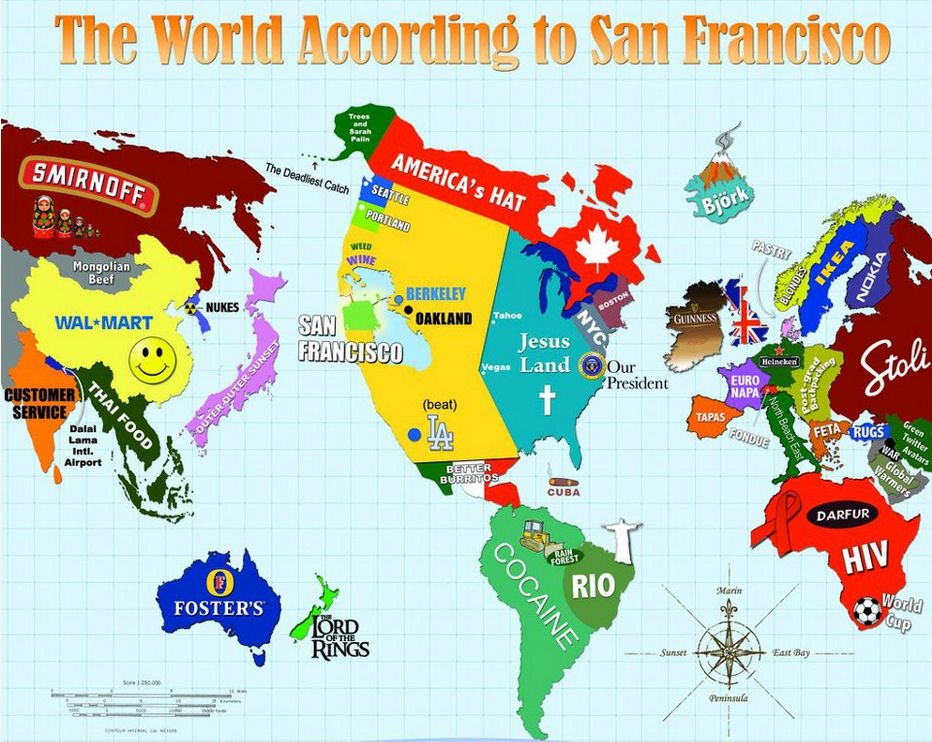
Hat tip to Ace of Spades HQ. I have never been to San Francisco, but this was still very funny.

Note that police did NOT crush the protest…is Putin losing his stranglehold?

From The Economist:
Protest in Russia
A Russian awakening

AFTER several days of tension, clashes and arrests following Russia’s rigged parliamentary election (http://www.economist.com/node/21541455) on December 4th, yesterday something unexpectedly good happened. Tens of thousands of middle-class Muscovites held a peaceful rally in the centre of Moscow, the biggest such event since the early 1990s.

Astonishingly, there was not a single arrest. Indeed, some of the thousands of
policemen and interior-ministry troops showed sympathy for the protestors.
This was an uplifting display of both dignity and indignation. Citizens were riled not
only about the electoral fraud, but at being treated as imbeciles by their leader,
Vladimir Putin. There was anger at the Kremlin, calls for “Russia without Putin” and
against the ruling United Russia party (“the party of thieves and crooks”), but no
aggression. The crowd contained not only liberals but also Communists, anarchists
and some nationalists. But protestors were almost conspicuously polite towards each
other.

Some carried white flowers, which they tried to give to the police. They made jokes.
146% of Muscovites are for free elections one sign read. Another said: I did not
vote for these bastards. I voted for other bastards. I demand a recount.


The speakers included liberal politicians, such as Vladimir Ryzhkov and Boris Nemtsov,
but also Boris Akunin, a famous writer, and Leonid Parfyonov
(http://www.economist.com/blogs/easternapproaches/2010/11/russian_media) , a
celebrated television journalist. They demanded the immediate release of more than
1,000 political activists arrested during last week’s protests, a full investigation into
electoral fraud allegations, a new election, the sacking of Vladimir Churov (head of the
electoral commission) and the registration of all opposition parties, not just the ones
sanctioned by the Kremlin.

The government is unlikely to meet any of these demands. But the rally has already
achieved its most important result: the political awakening of Russia’s urban middle
class. Over the past decade these people have devoted their energy to making
money, consuming and travelling, allowing Mr Putin to consolidate unprecedented
power, eliminate alternative sources of influence and turn television into a tool of
propaganda.

But yesterday the protestors showed themselves to be a political force. “We exist! We
exist!” they chanted. They were educated and affluent—many of them carried iPads—
and were keen to make their voice heard. The protest had been organised on social
networks, but yesterday this Facebook crowd turned its virtual agitation into political
reality.

The rally was a rare example of all sides showing sense. The authorities allowed the
demonstration to go ahead and showed restraint in policing it. The organisers went
out of their way to stop provocations and keep the event peaceful. Even the statecontrolled media, which had completely ignored all previous demonstrations and
suggestions of electoral fraud, reported the rally in a balanced and accurate way.
A small group of radicals who tried to hold their own event at Revolutionary Square
were ignored by everyone, including the police. Their leader, Eduard Limonov, bitterly
complained that his revolution had been stolen. But for a few hours yesterday,
Russia’s capital felt democratic, despite the heavy police presence.

Similar, if smaller, rallies were held in some 90 cities across Russia. (Some ended with
arrests). Almost everywhere protestors chanted “Russia”. This is what United Russia
members were encouraged to do by Mr Putin at their recent party conference. But
yesterday it had a very different sound, and it was a very different Russia.

Gay Rights from some differing perspectives

Ruth Marcus tells us that gay marriage is good politics.   William Baude, in his maiden voyage at Volokh, gives us some insight into the complexity of purely legal issues regarding marriage, gay marriage, and DOMA.  Baude continues tomorrow for those inclined to follow legal arguments, as I am.

Were I a state legislator, I would vote to legalize gay marriage in my state.  As a federal constitutional issue, despite my idea of what good politics is, I would be very hesitant to impose an “equal rights” argument.  Not because that argument has no appeal for me, but because marriage itself is not a constitutional issue.  I full well know that Loving made it one in the case of race, and I think that was justified on 14th A grounds, from the historical perspective.  But that does not necessarily apply to all other conditions of distinction.

So now I will tell a funny story about an old war I lost in Austin.

In the late 70s and early 80s I represented Braniff’s then wholly owned Driskill Hotel.  Did their employment stuff, mainly.  Well, gay activists began dancing mano a mano and femme a femme in the 1886 Club, and Braniff wanted it stopped, because it pissed off the pilots who always frequented the club.

The hotel’s manager, to whom I directly answered, was gay, and had not thought about it until the big cheeses in Dallas came down on him.

Austin had just passed its first anti-discrimination law based on sexual orientation or preference.  I advised my client to quietly break up all same sex dancing couples and offer them a free drink or an escort out of the club, setting up the confrontation.

The City prosecuted.  We went to trial before a jury of 6.  The City was represented by its own attorneys and a volunteer from a SF, CA Gay Rights organization.

On cross examination, I elicited testimony from the dancing gays that each could have physically chosen to dance with someone of a different gender.  Some had done so – mano a femme gay dancing.  Thus I was able to obtain the admission that it was not their sexual orientation that kept them off the dance floor.

On my defensive case, I put on a gay dance instructor from Arthur Murray who explained that he was gay, but that he taught traditional dance, with steps, patterns, and a lead and follower role.  He said that in traditional ballroom dancing, a male and a female were the dancers.  I had set up the prosecution to ask more questions, and they did.  They crossed my “expert” by asking him to admit he would prefer to dance with a man.  He answered that he preferred sex with men, but formal ballroom dancing was not about sex, it had rules.  He preferred to dance with women, otherwise it was not dancing.  He  persisted in saying that same sex dancing was not about dancing, but about sex.  He allowed as how PDA is offensive.  The more he spoke, the more the jury giggled.  I thought that was a good sign – they obviously liked the guy. The prosecutors asked about Middle Eastern formal dancing, with men only.  My expert brightened up and said if that was what 1886 Club had prohibited they would be wrong, because that was traditional dancing.

They had no experts on dance.

Lost 6-0.  Liberal Austin jurors were not buying.  Politically, same sex dancing had come to  Austin.  I thought I had made a record for appeal, however, and told the manager.  He said he was happy to have put up a good fight but happy to have lost [not to tell that to Braniff, however].  And so it went.